Air Canada Flight Attendants Reject Back-to-Work Order
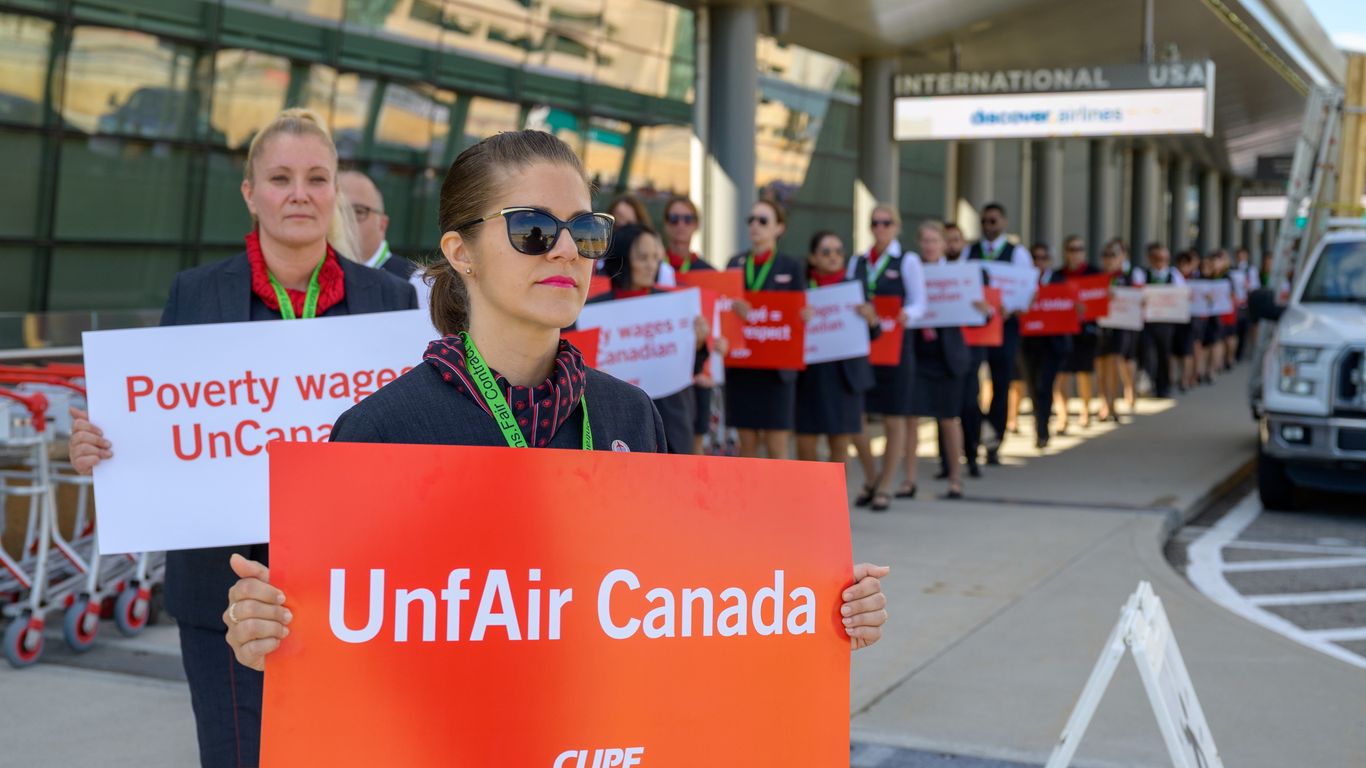
Ongoing Strike by Air Canada Flight Attendants Defies Labor Board Order
Air Canada flight attendants are continuing their strike despite a federal labor board’s order for them to return to work. This decision has forced the airline to delay its plans to resume normal operations, leaving passengers uncertain about when they will be able to fly again.
The Canadian Union of Public Employees (CUPE), which represents over 10,000 flight attendants, announced on Sunday that its members would remain on strike. The union claims the back-to-work order is unconstitutional and is urging Air Canada to return to the bargaining table to “negotiate a fair deal.”
This marks the first time since 1985 that Air Canada flight attendants have gone on strike. The walkout followed months of failed contract negotiations and immediately disrupted the airline’s schedule. On the first day alone, approximately 700 flights were canceled, affecting more than 100,000 travelers who were left stranded or scrambling to find alternative routes.
In response to the growing disruption, Prime Minister Justin Trudeau’s Liberal government asked the Canada Industrial Relations Board (CIRB) to intervene with binding arbitration—a process that forces both parties to accept an outside decision. The CIRB agreed to the request, siding with Air Canada’s position. However, the union strongly opposed the arbitration, particularly the involvement of CIRB chair Maryse Tremblay, who previously worked as senior counsel for the airline. CUPE criticized her decision not to step aside as a “staggering conflict of interest.”
Neither the Canadian government nor the CIRB responded to requests for comment from Reuters on the situation.
Key Issues in the Contract Dispute
The primary issue in the contract dispute is pay. Flight attendants argue they should be compensated for the time they spend assisting passengers on the ground, not just for the hours during which the plane is in motion. CUPE claims that binding arbitration removes the incentive for Air Canada to negotiate a fair resolution.
At this point, the government could attempt to end the strike by asking the courts to force flight attendants back to work or by requesting a faster hearing. Another option would be to pass new legislation, but this would require support from opposing parties and approval from both houses of parliament, which is not scheduled to reconvene until September 15.
Solidarity from Other Unions
Other labor unions showed solidarity with the striking flight attendants over the weekend, joining them on picket lines in Toronto. Natasha Stea, a flight attendant and local union president, said, “They are in support here today because they are seeing our rights being eroded.”
Experts note that it is unusual for a union to openly defy a CIRB order. “The federal government has entrusted a board to administer these rules in the Canadian Labor Code, and if you defy them, you are transgressing and essentially violating the law,” explained Rafael Gomez, an employment relations professor at the University of Toronto.
Impact on Air Canada
Air Canada stated on Sunday that the CIRB has ordered the airline’s previous collective agreement—set to expire on March 31—to be extended until a new deal is reached.
The flag carrier had initially expected to restart service on Sunday afternoon. However, when the day arrived, it announced the cancellation of roughly 240 flights that had been scheduled to operate. The airline now anticipates resuming operations on Monday evening.

Post a Comment for "Air Canada Flight Attendants Reject Back-to-Work Order"
Post a Comment