Air Canada Flight Attendants Refuse to Return to Work Despite Illegal Strike
Escalation of Air Canada Labor Dispute
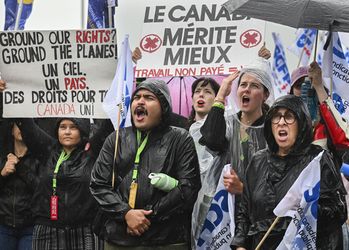
Air Canada employees and union members have been protesting outside the airline’s headquarters in Montreal, highlighting a growing labor dispute that has disrupted travel for thousands of passengers. The federal government recently intervened in the conflict between the airline and the union representing its flight attendants, ordering binding arbitration and demanding operations resume. Despite this, the strike continues, with union members refusing to return to work.
The union, which represents 10,000 striking flight attendants, declared the strike illegal but remains defiant. This ongoing action is affecting approximately 130,000 travelers daily, especially during the peak of the summer travel season. Both parties are still far apart on key issues such as pay and other working conditions.
Flight Cancellations Continue
Air Canada reported that rolling cancellations now extend into Tuesday afternoon after the union ignored a second return-to-work order. Earlier, the airline had indicated that operations would resume on Monday evening, but the union president, Mark Hancock of the Canadian Union of Public Employees (CUPE), stated that this would not happen.
“We will not be returning to the skies,” Hancock said, emphasizing the union's stance. The Canada Industrial Relations Board had previously declared the strike illegal and ordered the flight attendants to return to work. However, the union has continued to defy these orders, including an earlier directive to submit to arbitration.
Legal and Political Implications
The board, an independent administrative tribunal responsible for interpreting and applying Canada’s labor laws, required the union to provide written notice to all members by noon on Monday that they must resume their duties. If the union continues to refuse, it remains unclear what legal actions the board or the government could take.
Labor leaders are also criticizing the government’s repeated use of a law that limits workers’ right to strike and forces them into arbitration. This approach has been used in recent years with workers at ports, railways, and other sectors. Prime Minister Justin Trudeau expressed disappointment over the lack of progress in negotiations and urged both sides to resolve the issue quickly.
Impact on Travelers
The disruption has affected hundreds of thousands of Canadians and visitors. Air Canada operates around 700 flights per day, and the airline estimates that 50,000 customers will be impacted. Aviation analytics firm Cirium reported that as of Monday afternoon, Air Canada had canceled at least 1,219 domestic flights and 1,339 international flights since last Thursday.
Montreal resident Robert Brzymowski, who was stranded in Prague with his family, described the situation as frustrating. He lost out on a new job opportunity and his children missed the first day of school. “I’ll never fly Air Canada again,” he said, vowing to take a boat if necessary.
Contract Negotiations Remain Stalemate
Flight attendants walked off the job around 1 a.m. EDT on Saturday, rejecting the airline’s request to enter into government-directed arbitration. Air Canada and CUPE have been in contract talks for about eight months, but remain divided over pay and unpaid work during non-flight hours.
Air Canada’s latest offer included a 38 percent increase in total compensation over four years, claiming it would make flight attendants the best compensated in Canada. However, the union argued that the proposed 8 percent raise in the first year did not account for inflation.
Passengers whose flights are affected can request a full refund through Air Canada’s website or mobile app. As the dispute continues, both the airline and the union face increasing pressure to find a resolution that satisfies all parties involved.

Post a Comment for "Air Canada Flight Attendants Refuse to Return to Work Despite Illegal Strike"
Post a Comment