Air Canada Aims to Resume Flights on Aug. 18, But Union Objects
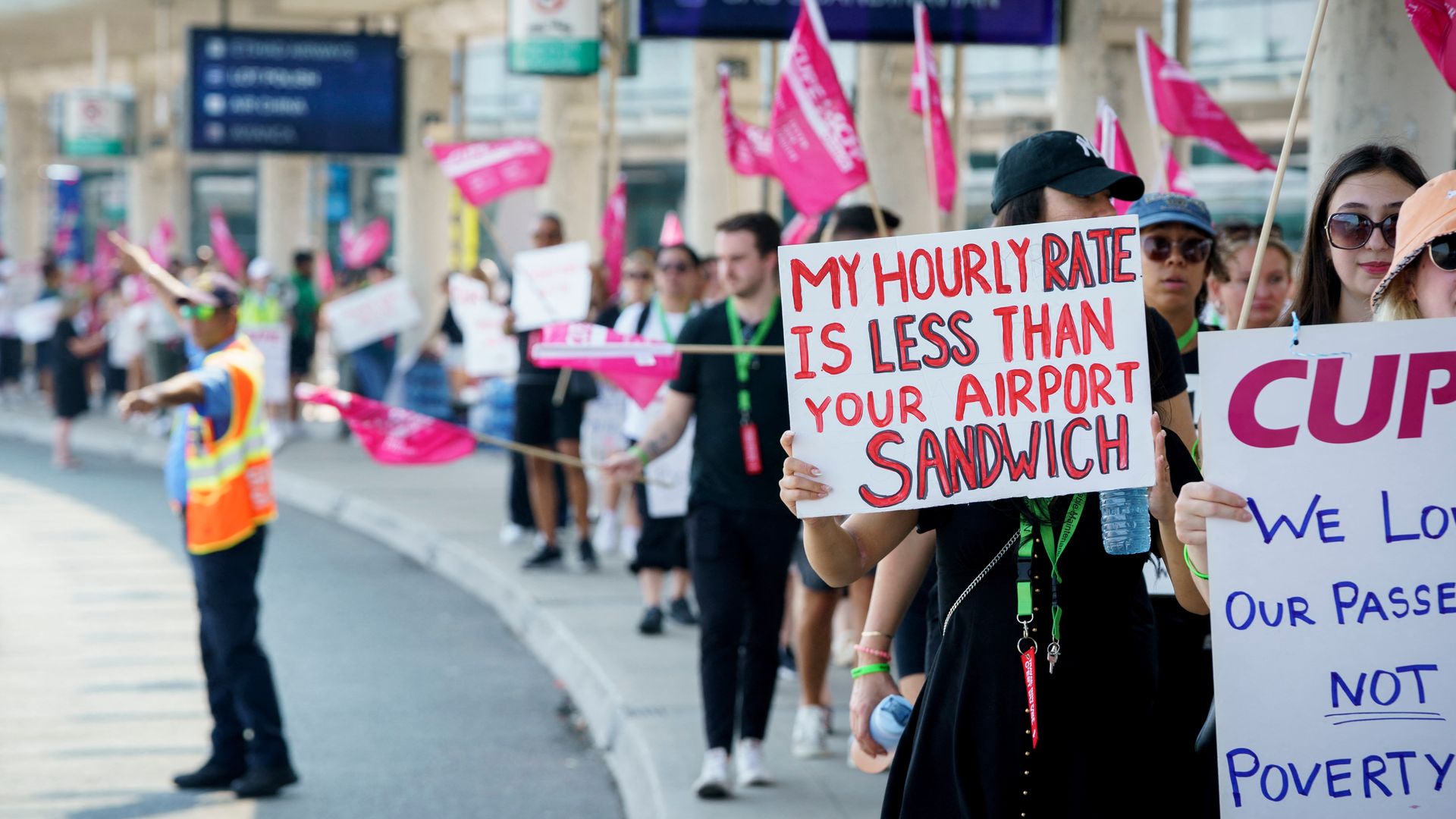
Flight Attendants Refuse to Return to Work Despite Government Order
The union representing Air Canada's flight attendants has announced that its members will not be returning to work, even after a government-issued back-to-work order. This decision comes as the airline prepares to resume some of its flights on Monday, though the union remains skeptical about this plan.
When Will Air Canada's Operations Resume?
On Sunday, the Air Canada component of the Canadian Union of Public Employees (CUPE) revealed that its members would not comply with a back-to-work order issued by Canadian Jobs Minister Patty Hajdu the previous day. According to Section 107 of the Canada Labor Code, the Canadian Industrial Relations Board can compel employees to return to work in order to secure industrial peace and protect the interests of Canada, Canadians, and the economy.
However, the bargaining committee stated in an update to its members: "At this time, you are still on Strike and Locked out! Please remember while we are locked out there is no obligation to be in contact with the employer, no responsibility to check Globe or your work email or to contact them for reassignment or reserve duties."
The strike involves approximately 10,000 Air Canada flight attendants, leading to the grounding of around 940 flights, including about 240 on Sunday. It could affect up to 100,000 travelers daily, according to a press release from Air Canada. The company expects to resume operations on Monday evening.
Despite these expectations, CUPE's senior communications officer, Hugh Pouliot, told Straight Arrow News that employees will not return to work until a new agreement is reached. "Our members will return to work when we have a fair, negotiated collective agreement that our members can ratify," Pouliot said.
Air Canada did not immediately respond to a request for comment on how it plans to resume flights if its flight attendants continue to strike.
Why Is the Government Involved?
As of Friday, Jobs Minister Patty Hajdu was urging both sides to resume negotiations. In a post on X, she wrote, "I urge both parties to put their differences aside, come back to the bargaining table and get this done now for the many travelers who are counting on you." However, by Saturday, it became clear that negotiations had completely broken down, prompting Hajdu to order both parties into binding arbitration. She also invoked Section 107 of the Canada Labor Code, which was meant to compel Air Canada's flight attendants back to work.
"In spite of significant supports from the government, these parties have been unable to resolve their differences in a timely manner," Hajdu said in a statement justifying her decision. "The government must act to preserve stability and supply chains in this unique and uncertain economic context."
Wesley Lesosky, president of the Air Canada component of CUPE, responded by accusing the Liberal Party of "talking out of both sides of their mouths" and "refusing to correct this historic injustice through legislation." He claimed the Liberals were violating the Charter rights of workers to take job action and giving Air Canada exactly what they wanted — hours and hours of unpaid labor from underpaid flight attendants, while the company pulls in sky-high profits and extraordinary executive compensation.
How Did Things Get Here?
Last week, a staggering 99.7% of CUPE's Air Canada members voted to go on strike. Air Canada and the union had been negotiating several contract terms for nearly a year, including wages and scheduling issues. One of the main sticking points has been "ground pay," which refers to the compensation flight attendants receive for time spent on the ground, such as taxiing, assisting passengers, and conducting safety checks.
"CUPE came to the table with data-driven and reasonable proposals for a fair cost-of-living wage increase and an end to forced unpaid labor," the union said in a statement before accusing Air Canada of "sandbagging the negotiations."
According to reports, Air Canada claimed the union rejected an offer that included a 38% increase in total compensation over four years, plus benefits. The deal partially addressed ground pay and, according to Air Canada, would have made their employees the best-compensated flight attendants in the country.
However, CUPE argued that the deal does not go far enough, stating that a 38% increase will not keep pace with inflation. Lesosky said in a statement earlier this week, "With respect to Air Canada's latest offer: it is below inflation, below market value, below minimum wage — and still leaves flight attendants unpaid for all hours of work."
Regarding ground pay, Lesosky noted that Air Canada's offer only covers 50% of an employee's hourly rate, adding, "the company is still refusing to compensate flight attendants for time spent responding to medical emergencies, fires, evacuations, and other safety and security-related issues on the ground."

Post a Comment for "Air Canada Aims to Resume Flights on Aug. 18, But Union Objects"
Post a Comment