After the Flood: Beijing Residents Bear the Brunt with Minimal Aid
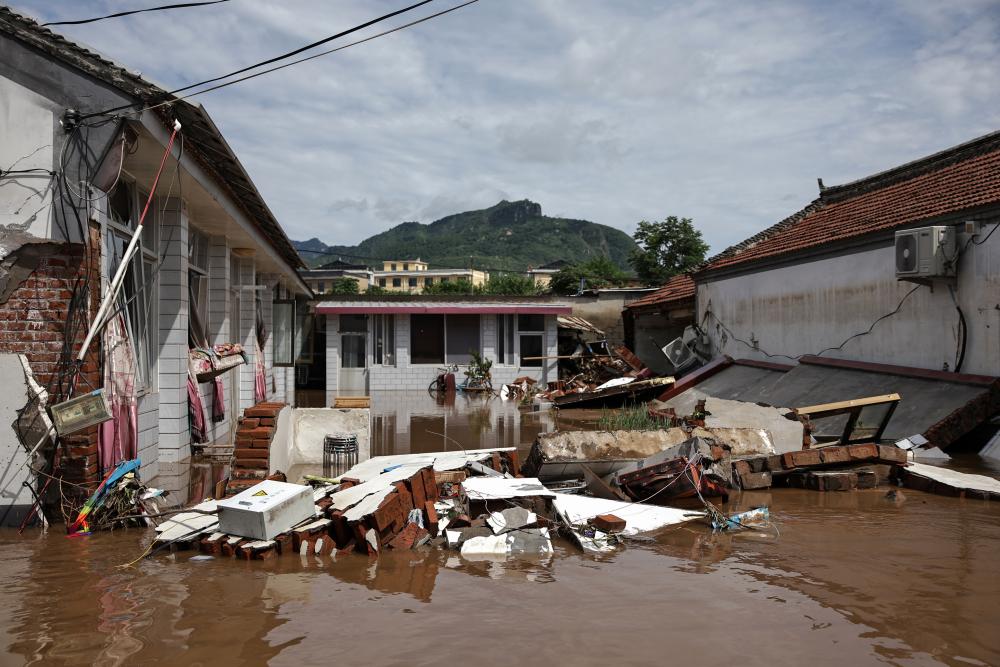
A Night of Chaos and Survival
Wang Rongying was lying in bed at 6 p.m. on Monday evening when her phone started buzzing with messages. Outside, the sound of heavy rainfall was growing louder, and her neighbors warned her that water levels on the streets were rising rapidly. When she opened her front door, a rush of floodwater flooded into her home.
“I was so scared… never since the 1980s have I seen such heavy flooding,” Wang said, surveying the soaked remains of her two-story home in Miyun, a district on the outskirts of Beijing that was hit by severe floods on Monday evening. By midnight, 28 residents in Miyun had been reported dead.
Wang, a 71-year-old woman, found refuge on her rooftop, where she waited for several hours to be rescued by emergency services. She waved a red piece of clothing to help rescuers spot her more easily. At around 11 p.m., she was found and taken to an overnight relief center, where she was given sweets to manage her diabetes.
Warnings Unheeded
The floods that hit Beijing this week brought a year’s worth of rainfall in less than seven days, overwhelming emergency services. In total, 30 people were reported dead in Miyun and Yanqing, another mountainous district on the edge of the capital, while over 80,000 people were relocated. Eight people in neighboring Hebei province died in a landslide caused by the heavy rain, and more than 130 villages lost power.
Many Beijing residents received text messages from local authorities warning them about the risks of landslides and flash floods. However, the advice to “pay attention to safety” lacked specific details, and several people interviewed in Miyun said they either didn’t receive or didn’t notice the warnings.
A 37-year-old sanitation worker, who declined to give his name, said the notification was too general to be helpful. He was working in central Beijing when he heard about the floods on Monday. “My heart flew back to my family,” he said. “I couldn’t continue with my work.” By the time he got home, the waters had receded, but everything in his house was soaked. He estimated his financial losses could amount to 20,000 yuan, roughly several months’ salary.
Wang, like many of her neighbors, is retired and lives on a modest income. Her pension is 3,000 yuan per month, and she estimates the damage to her house and belongings—uninsured—will cost about 100,000 yuan. “We just need to find a way to manage,” she said, offering chunks of watermelon to anyone she spoke to. Miraculously, her two pet parakeets and a large poster of Mao Zedong survived the disaster.
Climate Change and Disasters
Thanks to the climate crisis, extreme weather events are becoming increasingly common in China. Earlier this month, the country’s emergency ministry reported that 25 million people had been affected by natural disasters in the first half of the year. Last month, several people died in heavy flooding in Guizhou, a poor southwestern province.
In 2023, a separate district of Beijing, on the western edge of the city, was hit by the heaviest rainfall on record, which killed at least 20 people.
Despite scientific consensus linking rising global temperatures to natural disasters, the connection is rarely made in Chinese official media. Ordinary people, especially in less developed areas like Miyun, often pay little attention to concepts like climate change.
Fending for Themselves
China’s emergency response efforts are well-honed due to past experiences, but the social safety net for those who survive disasters remains minimal.
Wang’s neighbor, a 69-year-old retired farmer named Duan, was rescued along with his wife on Monday evening by a large forklift truck deployed to collect people from their rooftops. He said everything in his house was destroyed, including a new air conditioning unit that cost 6,000 yuan. His combined monthly income with his wife is about 4,000 yuan. Like Wang, Duan doesn’t have insurance for his belongings and doesn’t expect any compensation or support from the government.
Li Qingfa, 75, runs a small guesthouse in the same neighborhood. He said that although he would have liked to be relocated, his guesthouse was used as a temporary emergency relief center. When the floodwaters started rushing in, Li and his wife grabbed bedding, bags of wheat, and sacks of rice to use as makeshift sandbags, spoiling more than 100kg of grain. “The financial losses are great, but there is nothing we can do about it,” he said, as he attempted to wipe clean the muddy waters swirling over the guest room floors.

Post a Comment for "After the Flood: Beijing Residents Bear the Brunt with Minimal Aid"
Post a Comment