ACLU Claims New York Official Violated NRA's Free Speech Rights, But Lawsuit Is Blocked
The Legal Battle Over Qualified Immunity and the First Amendment
The debate over qualified immunity, a legal doctrine that often shields government officials from being sued for constitutional violations, has primarily centered on police misconduct. However, this doctrine also applies to a wide range of state and local government employees. A recent federal court ruling highlights how this issue extends beyond law enforcement, drawing unexpected attention from two organizations: the National Rifle Association (NRA) and the American Civil Liberties Union (ACLU).
The legal conflict began in 2017 when the New York Department of Financial Services (DFS) discovered that Carry Guard—a self-defense insurance program backed by the NRA—violated state insurance laws by offering coverage for criminally negligent acts involving firearms that resulted in injury or death. As a result, the insurance companies involved were required to pay civil penalties.
This situation took a new turn in 2018 following the tragic shooting at Marjory Stoneman Douglas High School in Parkland, Florida. At the time, Maria Vullo was serving as a superintendent at DFS. The NRA claims that she used her position to target the organization, attempting to limit its access to insurance companies and financial institutions.
According to the NRA, Vullo engaged in private meetings with insurance providers, suggesting that she would selectively enforce regulations against those who continued to do business with the NRA. She also issued two memos titled "Guidance on Risk Management Relating to the NRA and Similar Gun Promotion Organizations." These documents encouraged insurers and banks to evaluate and manage risks associated with their dealings with the NRA, including reputational risks, and to take actions to promote public health and safety.
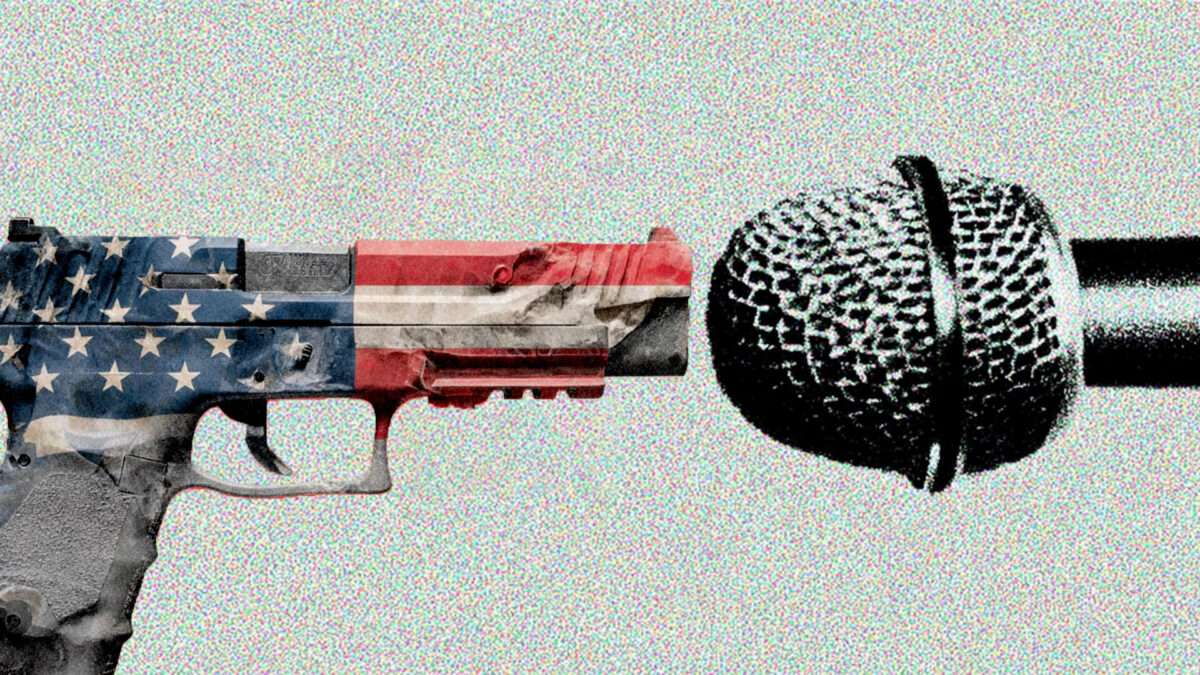
When the NRA first filed a lawsuit alleging that Vullo had violated its First Amendment rights, the U.S. Court of Appeals for the 2nd Circuit dismissed the claim. The court ruled that Vullo had not infringed on the NRA's free speech protections. However, the case eventually reached the Supreme Court, which unanimously decided in May 2024 that the NRA had indeed stated a valid First Amendment claim. Justice Sonia Sotomayor emphasized that government officials cannot coerce private parties to suppress views they disagree with. The ruling sent the case back to the lower court for further review.
In a recent decision, the 2nd Circuit applied the Supreme Court’s guidance, acknowledging that Vullo may have violated the First Amendment. However, the court still ruled that the NRA could not proceed with its lawsuit, citing the lack of clear constitutional notice for Vullo’s actions. Judge Denny Chin wrote that while the cases cited established that coercion and retaliation violate the First Amendment, they did not clearly define the specific contours of that right in relation to third-party interactions.
The concept of qualified immunity hinges on the idea that government officials cannot be held liable unless their actions have been explicitly ruled unconstitutional in prior cases. This standard assumes that officials are actively reviewing case law, which is questionable. It also limits the ability of victims to seek damages through a jury.
In this case, there is some uncertainty. For instance, an alleged participant in one of Vullo’s private meetings denies that the conversation occurred. Without the opportunity to present these facts to a jury, it remains unclear whether the broader question of accountability can be resolved definitively.
The ongoing legal battle underscores the complex interplay between government authority, individual rights, and the limitations of the legal system in addressing constitutional violations.

Post a Comment for "ACLU Claims New York Official Violated NRA's Free Speech Rights, But Lawsuit Is Blocked"
Post a Comment