Abortion Rates Fall as Patients Flee Iowa for Care Under New Law
The Impact of Iowa's Fetal Heartbeat Law One Year Later
One year has passed since Iowa’s fetal heartbeat bill became enforceable, marking a significant shift in the state's approach to abortion. The law prohibits abortions once a fetal heartbeat is detected, typically around six weeks into pregnancy. This has sparked both celebration and criticism across the state.
Pro-life advocates view the law as a step toward protecting life from the moment of conception. Maggie DeWitte, Executive Director at Pulse Life Advocates, emphasizes that their goal is to create a culture of life and eliminate abortion entirely. “Our gold standard is life at conception,” she said. “We are here to eliminate abortion from our state.”
Pulse Life Advocates operates 55 pregnancy resource centers throughout Iowa. DeWitte mentioned that her organization is now focusing on advocating for stricter regulations on abortion pills like mifepristone and misoprostol. Additionally, there is an ongoing effort to educate women about the implications of the new law, especially as more Iowans seek care out of state.
Changes in Abortion Statistics
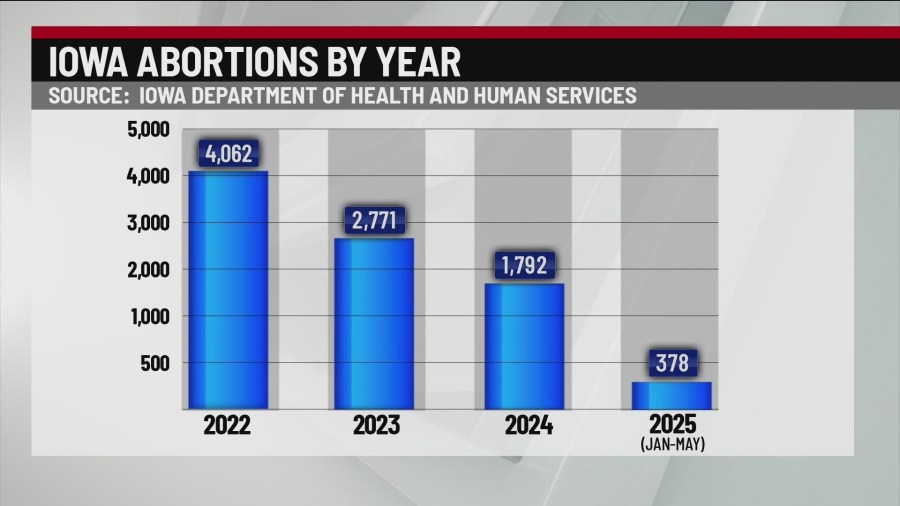
The numbers tell a compelling story about the impact of the law. According to the Iowa Department of Health and Human Services, there were 378 abortions in the first five months of this year, totaling 1,792 for 2024. Nearly 1,200 of those occurred before the law took effect. In comparison, 2023 saw 2,771 induced pregnancy terminations, and 2022 had 4,062.
For pro-life advocates, the drop in numbers is seen as a positive development, but they stress that the fight is far from over. They continue to push for policies that align with their belief in life at conception.
Challenges and Concerns
Despite the reduction in local abortions, the law has led to unintended consequences. Planned Parenthood of North Central States reported a 74% decrease in abortion services over the past year. However, there has been an 182% increase in Iowans traveling to neighboring states for care. This trend has frustrated many Iowa Democrats.
State Representative Beth Wessel-Kroeschell (D) from Ames shared a recent experience with a friend who is an obstetrician. “She had just gotten out of an ultrasound room where a 40-year-old woman with multiple health issues had measured at seven weeks and there was cardiac activity. In order for her to seek lifesaving care, she is being forced to go to another state,” Wessel-Kroeschell explained.
This situation highlights the broader implications of the law. With only two of the five clinics previously providing abortion care still open, access to reproductive healthcare has become increasingly limited. Dr. Emily Boevers, an OB-GYN physician in Waverly, emphasized that the law affects more than just abortion access.
Broader Impacts on Healthcare Access
Dr. Boevers pointed out that the closure of clinics has created barriers for women seeking essential healthcare services. These include cancer screenings, contraception, treatment for infections, and even basic information about reproductive health. For low-income women, the challenges are even greater.
“Some women who are struggling to make ends meet have to now travel further, spend more money, and miss time at work to seek the care they require,” Dr. Boevers said. She cited data showing that in 2023, only 194 women sought assistance through abortion funds. By 2024, that number had risen to 625, as more women turned to out-of-state options.
The law has not only affected access to abortion but also disrupted the availability of other critical healthcare services. As the debate continues, the long-term effects of the policy remain a topic of concern for many residents and healthcare providers.

Post a Comment for "Abortion Rates Fall as Patients Flee Iowa for Care Under New Law"
Post a Comment