A Secret Barrier in the Atlantic Separates Strange Deep-Sea Jellyfish Relatives
Understanding the Arctic Jellyfish Barrier
A recent study has uncovered a mysterious oceanic barrier that is preventing certain deep-sea jellyfish in the Arctic from reaching the Atlantic Ocean. This discovery has sparked interest among scientists and marine biologists, as it raises questions about how these creatures are distributed across different regions of the world's oceans.
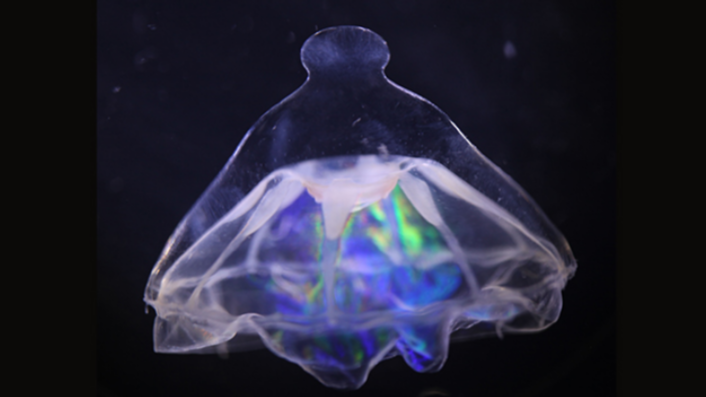
The jellyfish in question belong to the subspecies Botrynema brucei ellinorae, which inhabits depths ranging from 3,300 to 6,600 feet (1,000 to 2,000 meters). These organisms can be divided into two groups based on whether individual specimens have a knob on their umbrella-like bell structure. According to the lead author of the study, Javier Montenegro, a biologist at the University of Western Australia, this variation in shape plays a significant role in the distribution of the species.
“This jellyfish [...] has two different shapes depending on which area it occurs in — one with a distinctive knob at the top and one without,” Montenegro explained. The presence or absence of the knob appears to influence the jellyfish’s ability to move across different parts of the ocean. While those with knobs can be found in all oceans and latitudes, those without the knob have only been documented in the Arctic and sub-Arctic regions.
To better understand this phenomenon, Montenegro and his colleagues examined observational and photographic records of B. brucei ellinorae spanning over 120 years. They combined these historical records with genetic analyses to map the distribution of the subspecies. Their findings were published in the online version of the journal Deep Sea Research on July 3.
Genetic Insights and Distribution Patterns
Genetic data revealed that specimens of B. brucei ellinorae with and without knobs in the Arctic and sub-Arctic were almost identical to those with knobs in the western Atlantic. This suggests that, despite strong genetic similarities, the knobless jellyfish are unable to leave the frigid waters of the Arctic.
The researchers believe that the reason for this limitation may be due to an unknown deep-sea bio-geographic barrier in the Atlantic Ocean. Montenegro noted that the differences in shape, despite strong genetic similarities across specimens, hint at the existence of such a barrier.
This barrier is located within the North Atlantic Drift, a warm ocean current that extends northward from the Gulf Stream. However, it remains unclear whether the current itself is the obstacle for the knobless jellyfish. One possible explanation is that there are predators beyond the North Atlantic Drift that the knobless jellies cannot escape. The advantage of having a knob, however, is still not fully understood.
Regional Differences in Jellyfish Movement
Interestingly, no such barrier is needed to keep knobless B. brucei ellinorae in Arctic waters on the Pacific Ocean side. The Bering Strait, which separates the Arctic from the Pacific, already blocks most deep-sea creatures from moving south. This strait is only 165 feet (50 m) deep, making it impossible for deep-sea jellyfish like B. brucei ellinorae to cross.
The discovery of a potential oceanic barrier associated with the North Atlantic Drift is significant for understanding evolutionary relationships and dispersal patterns in marine life. Montenegro emphasized that the presence of two distinct shapes within a single genetic lineage highlights the need for further research into the biodiversity of gelatinous marine animals.
Implications for Marine Biology
This study adds to our understanding of how environmental factors and biological traits influence the movement and distribution of marine species. It also underscores the importance of continued exploration and research in the deep sea, where many mysteries remain unsolved.
As scientists continue to investigate these phenomena, they may uncover more insights into the complex interactions between ocean currents, marine life, and evolutionary processes. The findings could have broader implications for conservation efforts and the management of marine ecosystems.
By studying these unique jellyfish and the barriers that affect their movement, researchers can gain a deeper understanding of the interconnectedness of the world's oceans and the life they support.

Post a Comment for "A Secret Barrier in the Atlantic Separates Strange Deep-Sea Jellyfish Relatives"
Post a Comment