8.8-Magnitude Quake Triggers Tsunami Alerts Across Japan, Alaska, and Hawaii
Major Earthquake Strikes Russia’s Far East, Triggers Global Tsunami Warnings
A powerful earthquake with a magnitude of 8.8 struck the Russian Far East early Wednesday, triggering tsunami warnings across several regions in the northern Pacific. The quake, one of the strongest recorded in recent years, sent shockwaves through the region and prompted emergency responses from multiple countries.
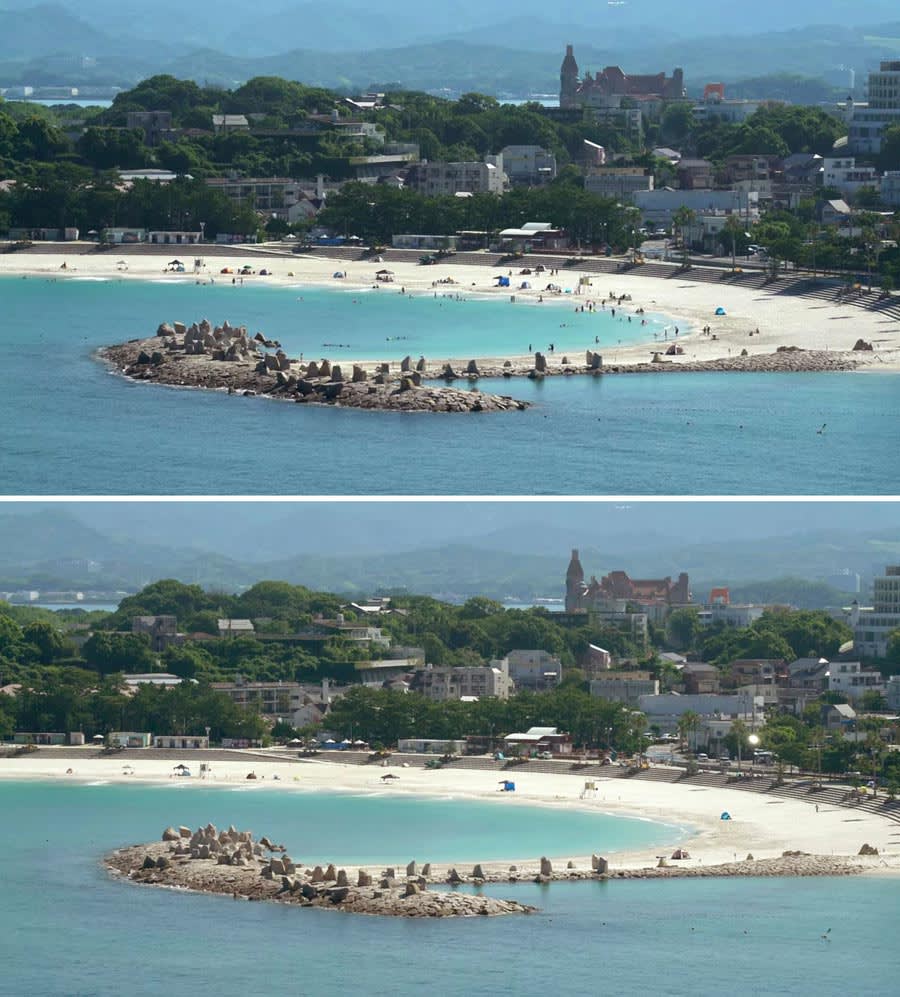
The Japan Meteorological Agency reported that a first tsunami wave of about 30 centimeters (one foot) reached Nemuro on the eastern coast of Hokkaido. In Hawaii, tsunami warning sirens blared in Honolulu, prompting residents to move to higher ground. Officials warned that waves could reach up to 1 to 3 meters (yards) above tide level along parts of the Hawaiian Islands, Chile, Japan, and the Solomon Islands. In some areas of Russia and Ecuador, waves could exceed 3 meters (yards).
The Pacific Tsunami Warning Center issued alerts for coastal areas in Alaska, Hawaii, and other Pacific regions. The advisory emphasized the need for urgent action to protect lives and property, as the first waves were expected around 7 p.m. local time on Tuesday. The earthquake occurred at 8:25 a.m. Japan time, with an initial magnitude of 8.0, later revised to 8.8 by the U.S. Geological Survey.
The epicenter was located about 119 kilometers (74 miles) from Petropavlovsk-Kamchatsky, a city with a population of 180,000 on the Kamchatka Peninsula. Residents there reported chaotic scenes, with people rushing into the streets without shoes or outerwear. Inside homes, cabinets toppled, mirrors shattered, and cars swayed. Power outages and mobile phone service failures were also reported.
Local officials in Russia noted that emergency services were working at full capacity, with evacuations underway on Sakhalin Island. The Tass news agency quoted a regional governor, Valery Limarenko, stating that residents of Severo-Kurilsk, a key settlement on the Kuril Islands, were staying on high ground until the threat of additional waves passed.
In addition to Russia, the National Tsunami Warning Center in Alaska issued warnings for parts of the Aleutian Islands and a watch for portions of the West Coast, including California, Oregon, and Washington. The advisory extended to much of Alaska’s coastline, including the panhandle region.
New Zealand authorities also issued warnings about “strong and unusual currents and unpredictable surges” along its entire coastline. The government emergency management agency urged people to avoid water, beaches, shore areas, harbors, marinas, rivers, and estuaries.
This earthquake is considered one of the most significant globally since the March 2011 9.0-magnitude quake off the coast of Japan, which triggered a devastating tsunami and led to nuclear meltdowns at the Fukushima plant. Only a few earthquakes have ever been measured at higher magnitudes than this one.
Earlier in July, five strong quakes, the largest measuring 7.4, struck near Kamchatka. These events highlight the seismic activity in the region, which has a history of powerful tremors. For example, on November 4, 1952, a 9.0-magnitude earthquake in Kamchatka caused damage but no reported deaths, despite generating 9.1-meter (30-foot) waves in Hawaii.
The global response to this earthquake underscores the importance of preparedness and rapid communication during natural disasters. As communities continue to monitor the situation, efforts remain focused on ensuring safety and minimizing the impact of potential secondary effects.

Post a Comment for "8.8-Magnitude Quake Triggers Tsunami Alerts Across Japan, Alaska, and Hawaii"
Post a Comment