30 Years Studying Russia's Military: Putin Sends Bombers to Test America
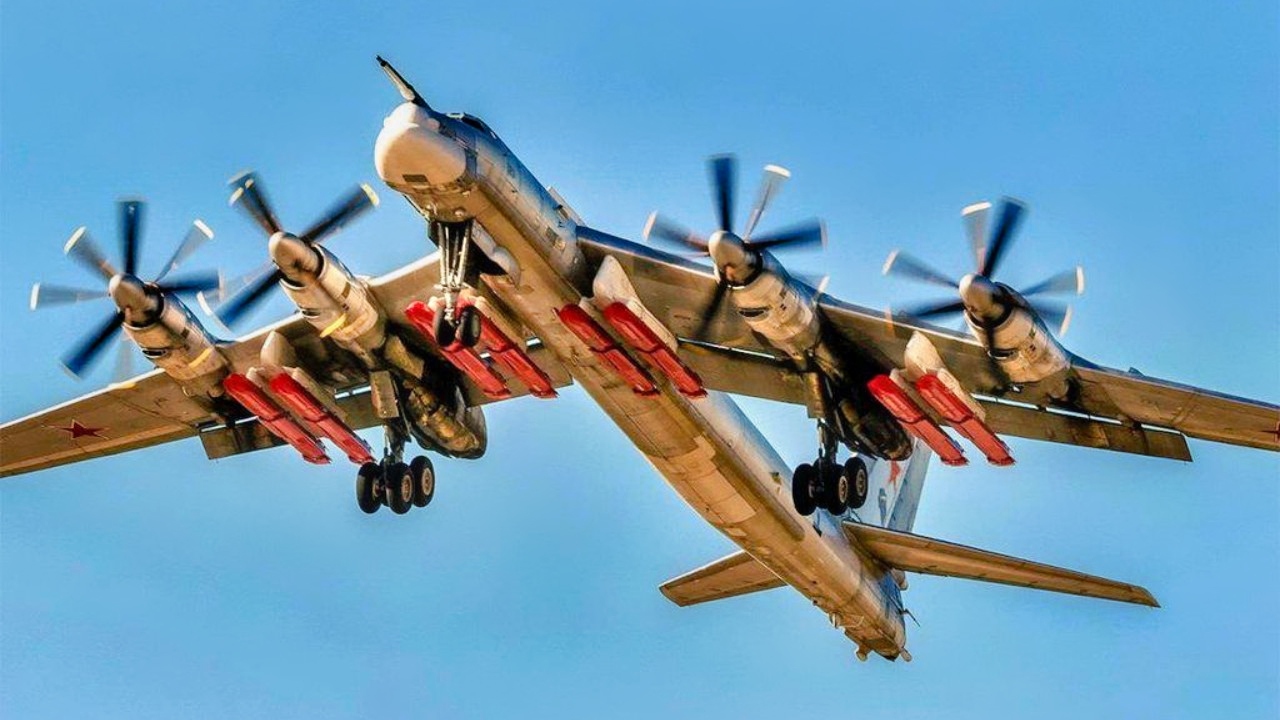
U.S. and Canadian Jets Intercept Russian Aircraft Near Alaska
On July 22, a group of U.S. and Canadian fighter jets under the command of the North American Aerospace Defense Command (NORAD) intercepted a formation of two Russian Tu-95 nuclear-capable bombers and two Su-35 fighter aircraft after they entered the Alaska Air Defense Identification Zone (ADIZ). This event marked a significant display of military presence and a return to Cold War-era tactics by Russia.
The interception involved a robust force that included F-35 and F-16 fighters, which shadowed the Russian aircraft for over three hours in international airspace. Despite being officially classified as "not a threat," these flights are seen as a clear show of force, given that the same type of Tu-95 bombers has been used by Russia to launch devastating cruise missile attacks against Ukrainian cities.
The Flight Over Alaska
The Russian aircraft, consisting of two Tupolev Tu-95 bombers and two Sukhoi Su-35 fighter jets, conducted flight operations off the coast of Alaska. At one point, this formation entered the Alaska ADIZ, prompting a response from NORAD. The joint U.S.-Canada alliance dispatched 10 aircraft with orders to "positively identify, monitor, intercept, and escort them out of the Alaskan ADIZ," according to multiple NORAD officials.
The Alaskan ADIZ is located within international airspace and serves as a buffer zone for the air defense of the North American continent. The intercept was carried out by two U.S. Air Force (USAF) fighters assigned to the NORAD mission. The entire incident lasted over three hours, according to NORAD officials who spoke to the USAF professional association’s publication, Air & Space Forces Magazine.
During the encounter, the Russian aircraft were accompanied by support aircraft, including an E-3 Sentry AWACS command and control platform and three KC-135 tankers. These aircraft played active roles in the mission, ensuring the safe monitoring and interception of the Russian planes.
A Return to Cold War Tactics
The Russian Ministry of Defense stated that the bombers had engaged in a 15-hour round-trip mission over the Bering Sea. According to a NORAD official, the flight of Russian aircraft was within the ADIZ for 3 hours and 15 minutes.
This incident echoes the Cold War era, when such confrontations were common. During the 1990s and early 2000s, these flights were rare due to improved relations between the U.S. and Russia. However, around 2006, tensions escalated, leading to a resurgence of such activities.
In September 2024, another Russian Su-35 fighter also flying escort with a Tu-95 cut across the front of a U.S. Air Force F-16 during a routine intercept in the Alaskan ADIZ. This maneuver, known as a "headbutt," was deemed unsafe and unprofessional by NORAD commander Gen. Gregory M. Guillot.
Implications for U.S.-Russia Relations
Confrontations of this nature have historically taken place regularly during the Cold War. However, the recent increase in such incidents suggests a growing tension between the U.S. and Russia. These flights are not only a demonstration of military power but also a signal of ongoing strategic competition.
NORAD employs a layered defense network, including satellites, ground-based and airborne radars, and fighter aircraft, to detect and track aircraft and inform appropriate actions. The command remains ready to employ a number of response options in defense of North America.
Flights that take place in international airspace but within the designated ADIZ of one nation or another are a common occurrence. The U.S. military conducts such flights, most notably in the area that encompasses the disputed islands in the South China Sea. The People's Republic of China often protests these flights and warns U.S. military aircraft to leave the area, though the U.S. consistently asserts that its aircraft are operating lawfully in international airspace.
A Show of Force?
This long-range flight of two Tu-95s comes slightly less than two months after Ukraine’s Security Service (SBU) carried out Operation Spiderweb, a massive wave of suicide drone attacks on several Russian bomber airfields. These attacks destroyed or badly damaged at least six Tu-95s while they were still on the ground.
The Tu-95 is used regularly to launch cruise missiles into Ukrainian cities, causing numerous civilian deaths. U.S. intelligence estimated that these drone attacks hit at least 20 bombers of different types, and the aircraft that are still repairable will take years before they can all return to service.
The Impact on Ukraine
Putin’s constant bombing of Ukrainian cities has created frustration for U.S. President Donald Trump. Putin has repeatedly stalled or obstructed any progress made by the White House in peace talks between Moscow and Kyiv. This has prompted Trump to create an arrangement with NATO in which the U.S. will backfill weapons and military aid sent to Ukraine, such as the famous Patriot PAC-3 air and missile defense system.
Russian Tu-95s have attacked Ukrainian cities and other civilian targets constantly during the more than three-year-long full-scale war. The usual pattern is for Russia to fire these air-launched missiles in combination with hundreds of one-way drones. The strategy is to overwhelm Ukraine’s air defenses with too many targets to engage simultaneously, allowing some of the missiles to get through eventually.
According to new data collected by the UN Human Rights Monitoring Mission in Ukraine, the losses have amounted to 232 deaths with a further 1343 Ukrainians injured. This highlights the ongoing humanitarian crisis caused by the conflict.

Post a Comment for "30 Years Studying Russia's Military: Putin Sends Bombers to Test America"
Post a Comment