10 Lansing Candidates Vie for 2 At-Large Council Seats: Their Stances on Key Issues
Key Issues Facing Lansing’s City Council Race
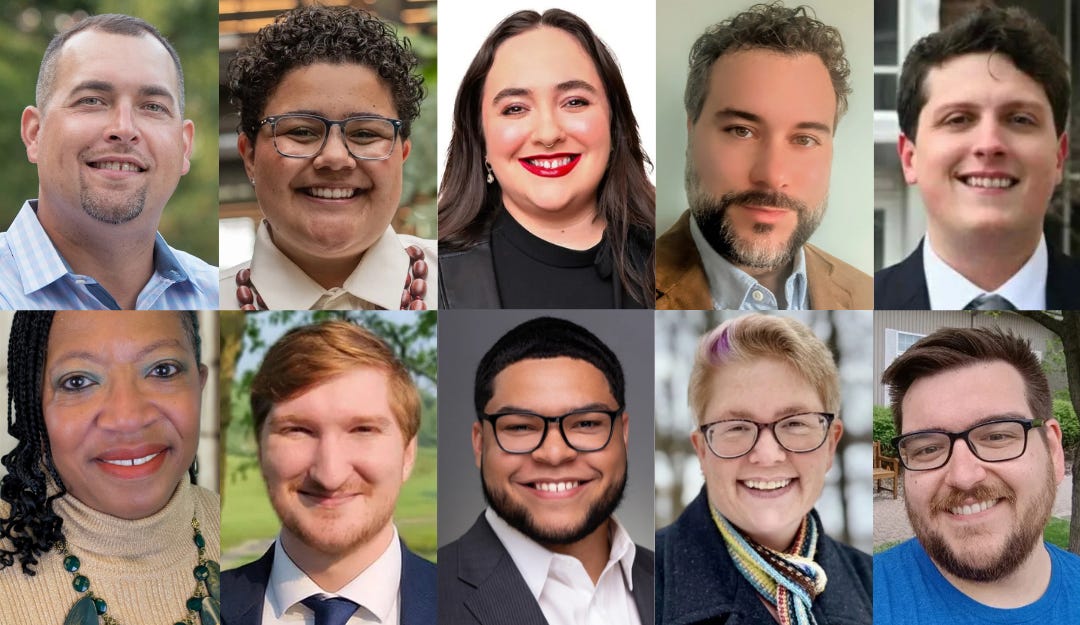
Lansing is preparing for a pivotal election as 10 candidates vie for two at-large seats on the City Council. The race has sparked discussions around several critical issues, including downtown development, housing affordability, and economic growth. Many of the candidates are skeptical about the city's long-term strategy of relying on large-scale apartment developments to counteract the loss of state workers due to remote work policies.
Nick Pigeon, a 30-year-old musician and former executive director of the Michigan Campaign Finance Network, expressed concerns that this approach may not be sustainable. He emphasized the need for more creative zoning solutions, suggesting that tall buildings could become neglected if not properly managed.
In contrast, the current council has taken a different stance by unanimously approving $40 million in state funding to support New Vision Lansing, a private $315 million downtown housing development. This project aims to create over 560 apartment units across five buildings, with commercial spaces included in each. Mayor Andy Schor, who is seeking a third term, supports this initiative, arguing that it will boost property and income tax revenues by attracting new residents.
The Impact of Downtown Development
Over the past few years, approximately 600 new apartments have been constructed in and around downtown Lansing, with another 800 planned. However, the composition of the City Council is set to change after November’s general election, as current members Peter Spadafore and Jeffrey Brown are not seeking re-election. Spadafore is running for a Fourth Ward seat, while Brown is challenging Schor in the mayoral race.
The candidates running for the at-large seats include Miles Biel, Aurelius Christian, Gloria Denning, Jeremy Garza, Clara Martinez, Jonah Stone, Olivia Vaden, Julie Vandenboom, Tirstan Walters, and Nick Pigeon. The top four vote-getters from the Aug. 5 Primary election will advance to the November general election. Garza did not respond to interview requests, and Christian was unreachable.
Perspectives on Economic Growth and Housing
Biel, Walters, and Martinez were among the strongest supporters of the new developments, believing that increasing density and the tax base is essential for the city’s growth. Walters highlighted the importance of drawing people from neighboring communities into Lansing. Martinez appreciated the variety of developments, while Denning and Stone raised concerns about affordability for local residents.
Vaden and Vandenboom acknowledged their struggles in supporting the projects but expressed hope that they could contribute to a broader revitalization strategy. Vaden suggested that engaging with the state about the use of downtown properties could help generate additional tax revenue.
Addressing the Challenges of State Workers
Most candidates believe that efforts to bring state workers back to downtown may not be worth the effort. Pigeon, Vaden, Walters, Vandenboom, and Martinez advocated for alternative solutions, such as improving services, parking, or freeing up state property for development. Stone and Biel, both former state workers, supported hybrid work models that allow some state employees to remain in downtown at least part of the week.
Denning pointed out that the shift to remote work has affected city revenue, as state workers no longer receive parking deductions from their paychecks.
Population and Growth Strategies
Lansing has a population of about 112,000, according to recent estimates. Pigeon noted that the city faces challenges in finding available housing, partly due to the high number of red-tagged homes and expensive rents. He suggested that growing the city could be achieved through better investments and improved city services.
Vaden proposed exploring state-level changes to city tax policies, such as implementing a progressive income tax to enhance services and attract more residents. Stone emphasized the need to diversify Lansing’s economy by focusing on tourism and supporting cultural initiatives like a major downtown park.
Walters highlighted Lansing’s affordability compared to other parts of Michigan and the Midwest, suggesting that stronger ties between the city and the Lansing School District could attract more families. Vandenboom noted that residents are frustrated with property taxes and service levels, emphasizing the need for better promotion of the school district to young families.
Supporting Small Businesses
Small businesses in Lansing face their own set of challenges. Pigeon argued that a more walkable city would benefit local businesses, many of which are dissatisfied with how the city handles corridor construction projects. Vaden suggested better coordination and reconsidering parking fees in areas like Old Town and downtown.
Stone called for more targeted grants to attract specific types of businesses, such as small groceries in neighborhoods. Walters mentioned that many small business owners are unaware of the range of programs available to support them. Vandenboom shared her vision of advocating for universal health care to encourage entrepreneurship.
Martinez emphasized the need to learn more about small business concerns and ensure they have the tools to thrive. Biel suggested strategic investments in corridors and increased funding for small business programs. Denning noted that some small businesses struggle with city guidelines and communication, highlighting the need for streamlined processes.
Budget and City Services
None of the candidates identified specific budget cuts for Lansing’s $173 million general fund. Pigeon urged the city to address vacancies and be cautious about developer incentives. He also opposed additional property tax millages for city hall, which is being funded through a $40 million appropriation from the state.
Vaden suggested focusing on services and access to food and education to reduce crime rather than increasing police staffing. She also recommended pursuing state tax changes to stabilize the city’s budget. Stone pointed out unfilled positions in the police department that could be reprogrammed into social worker roles.
Walters proposed contracting services, such as bringing mowing back in-house, to save money and improve results. Vandenboom suggested adopting a medical taxi policy to reduce non-medical emergency responses by firefighters. Martinez emphasized the need for better infrastructure, stating that voters want solid, long-lasting systems.
Biel stressed the importance of avoiding cuts that negatively affect residents, suggesting that converting home appliances to electric could lower bills and increase the city’s budget. Denning highlighted the need to address homelessness, housing, and public safety, urging a balance between new developments and addressing existing issues.
Candidates Running for Office
Miles Biel, 36, is an energy efficiency expert with Consumers Energy and has not held elected office. He expressed concerns about the city’s post-pandemic recovery. Aurelius Christian, a development programs coordinator for the Lansing Economic Development Corporation, has not responded to interview requests.
Gloria Denning, 67, has worked in state and national politics and emphasized her commitment to serving others. Jeremy Garza, a plumber and union official, has not responded to interview requests. Clara Martinez, 33, is a dance instructor and arts advocate, expressing a desire to show students that Lansing offers opportunities.
Nick Pigeon, 30, is a musician and former campaign finance director, calling for better transparency in city staffing. Jonah Stone, 31, is a forensic scientist and has not held elected office. Olivia Vaden, 29, has worked in philanthropy and policy, expressing concerns about development without considering its impact on residents.
Julie Vandenboom, 50, is a policy analyst and nonprofit board member, offering a fresh perspective on city government. Tirstan Walters, 25, works in data analysis and has been involved in community advocacy.

Post a Comment for "10 Lansing Candidates Vie for 2 At-Large Council Seats: Their Stances on Key Issues"
Post a Comment