William Shatner Unveils Secret to Eternal Life
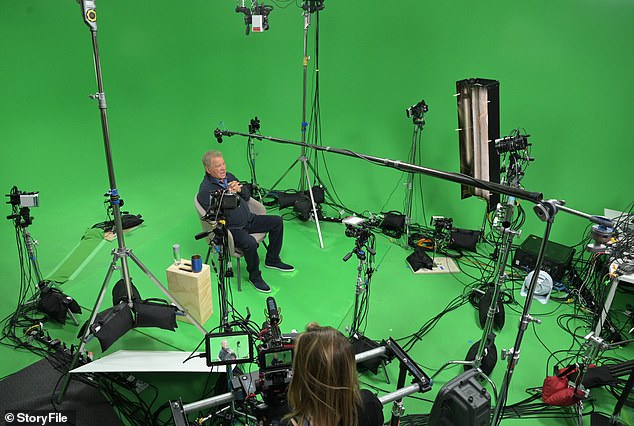
The Future of Memory: AI Avatars That Keep You Alive After Death
In a rapidly evolving technological landscape, the concept of preserving one’s identity and legacy is becoming more tangible than ever. A groundbreaking initiative has emerged that allows individuals to "live on" after death through lifelike, interactive 3D avatars. These digital representations use advanced artificial intelligence (AI) to share memories, answer questions, and maintain a sense of presence for loved ones, even decades after a person has passed away.
StoryFile, an innovative AI company, has developed this technology, creating avatars that mimic real human conversation. The process involves capturing video interviews, which are then transformed into hologram-style avatars capable of responding dynamically to questions using generative AI, similar to platforms like ChatGPT. This means that users can interact with these avatars as if they were speaking to a living person, making the experience both personal and engaging.
Individuals such as philanthropist Michael Staenberg, 71, and Star Trek actor William Shatner, 94, have already embraced this technology to immortalize their experiences and personalities. Staenberg, who has donated over $850 million, expressed his hope to pass on his knowledge and the positive impact he has made. He believes it's crucial to preserve his version of events so that the details of his life aren’t forgotten.
The technology has been used in museums since 2021 to preserve the voices of historical figures, including WWII veterans and Holocaust survivors. It has also been utilized by terminally ill individuals who wish to connect with their families after death. While the service was previously available at a premium cost, StoryFile is launching a new, affordable app this summer that will allow everyday people to record their own AI avatars for less than the cost of a monthly cellphone plan.
This new app enables users to interview themselves on video and create intelligent avatars that can be updated with new chapters as they answer more questions about their lives. Previously, StoryFile avatars could understand the intent of those interacting with them but were limited to pre-recorded responses. Now, the newer AI avatars can generate answers based on the persona from the recorded interviews, providing a more dynamic and realistic interaction.
The demand for this technology has been overwhelming, with many individuals diagnosed with terminal illnesses seeking to preserve their legacies. StoryFile CEO Alex Quinn shared that the company receives daily emails filled with heartbreaking stories, such as a parent receiving news of their child’s terminal diagnosis. Others express concern about aging parents and the desire to keep their memories intact for future generations.
Quinn acknowledged that StoryFile cannot accommodate all these requests without a more scalable solution. Thus, the DIY version of the app was created, allowing users to record their own answers to an AI interviewer. This includes topics ranging from career to family to personal preferences.
The app will include "permanent cold storage" to ensure that avatars remain safe once recorded, and users can continue adding new video content and information over time. While there is a possibility that the AI might initially produce unexpected responses, Quinn noted that the avatar will become increasingly realistic with more interactions.
"It's almost like an AI FaceTime where you're interviewed by an AI interviewer, and it's able to probe and go deep on certain topics," Quinn explained. He emphasized that users can take their time to add to their digital memories, making the experience more sophisticated and personalized over time.
Tech pioneers like inventor and futurist Ray Kurzweil have also explored the potential of AI in preserving memories. In 2016, Kurzweil created a "dad bot" based on information about his late father, Fred. The "Fredbot" could converse with Kurzweil, sharing insights about his father’s interests, such as gardening, and even recalling his belief that the meaning of life was love.
Kurzweil described his experience with the "Fredbot" as feeling like talking to his father. He predicted that some form of this technology would eventually be available to the public, enabling everyone to stay connected with their deceased relatives.
As AI continues to advance, the ability to preserve and interact with our memories in such a profound way is no longer science fiction—it is becoming a reality. With tools like StoryFile, the future of memory and legacy is being redefined, offering a unique way to keep our loved ones close, even after they are gone.

Post a Comment for "William Shatner Unveils Secret to Eternal Life"
Post a Comment