Why Does Cold Weather Reduce Electric Vehicle Range?
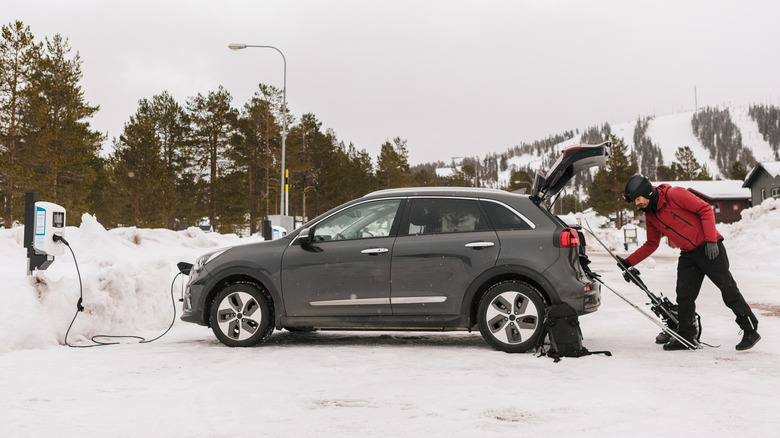
The Challenges of Electric Vehicles in Cold Weather
Electric vehicles (EVs) offer numerous benefits compared to traditional gas-powered cars, including long-term cost savings and environmental advantages. However, one of the major challenges EVs face is their performance in cold weather. Winter conditions can significantly impact an electric car's range and charging efficiency, making it a concern for many drivers.
According to testing by Consumer Reports, the electric range of vehicles starts to decline when temperatures drop below 40 degrees Fahrenheit. In some cases, the range can decrease by as much as 25%, and if the trip involves multiple stops, the loss can be as high as 50% of the advertised range. This issue becomes even more pronounced when temperatures fall below freezing, as standard home outlets may not provide enough power to charge the battery effectively.
Charging Woes in Cold Temperatures
When temperatures drop below freezing, the charging process for electric vehicles can become slower and less efficient. This leads to longer lines at charging stations and increased wait times for drivers. To mitigate these issues, experts recommend pre-conditioning the vehicle. Owners are advised to set a schedule so that the EV can maintain a warm cabin and battery before driving. Keeping the car plugged in at home also helps ensure the battery stays warm, allowing the vehicle to use external power for accessories while reserving the battery for driving.
The Science Behind Lost Range
There are several reasons why electric vehicles experience reduced range in cold weather. According to Tesla, vehicles use more energy to overcome increased aerodynamic drag and to heat the cabin and high-voltage battery. Lectron, an expert in EV technology, points out that cabin heating is the primary factor behind the loss of range. Additionally, increased rolling resistance and less effective regenerative braking contribute to the problem.
The most significant challenge, however, lies in the chemical reactions within the battery. When temperatures drop, these reactions slow down, affecting both charging speed and battery efficiency. Lithium ions travel through a liquid electrolyte to produce current, but in cold conditions, this medium thickens, reducing ion movement. This can lead to lithium plating on one of the electrodes, lowering ion conductivity and causing the battery to charge more slowly and store less energy.
Moreover, the increased load for internal heating means the battery discharges stored electrical energy at a faster rate. Research from the American Automobile Association shows that the HVAC needs of an electric car driven at 20 degrees Fahrenheit can reduce the combined driving range by up to 40%.
Innovative Solutions to Combat Winter Challenges
As the limitations of electric vehicles in cold weather have become more apparent, researchers around the world have proposed various solutions to improve battery efficiency in low temperatures. Earlier this year, engineers at the University of Michigan introduced a new manufacturing process that involves applying a glassy material made of lithium borate-carbonate to enhance charging speed in subfreezing conditions. Their test cells showed a 500% increase in charging speed under such conditions.
Another approach involves integrating a temperature control system into the battery pack. A paper published in the Journal of Energy Storage suggests increasing the number of fluid channels to improve temperature distribution across the battery. By raising the fluid temperature from 313.15 K to 333.15 K, batteries can reach ideal operating temperatures twice as fast.
Some of these solutions are already feasible, as similar mechanisms are used in conventional vehicles. For example, regenerative braking can be utilized to heat the battery when temperatures drop, helping to recoup some of the lost range. A study published in the World Electric Vehicle Journal analyzed data from over 100 trips involving BMW and Tesla electric cars and found that energy harvested from regenerative braking could be used to heat the battery in cold conditions.
While the implementation of these solutions on a commercial scale remains uncertain, the proposals are promising and highlight the ongoing efforts to improve electric vehicle performance in winter conditions.

Post a Comment for "Why Does Cold Weather Reduce Electric Vehicle Range?"
Post a Comment