Why Are Blue Lights on Florida Traffic Signals?
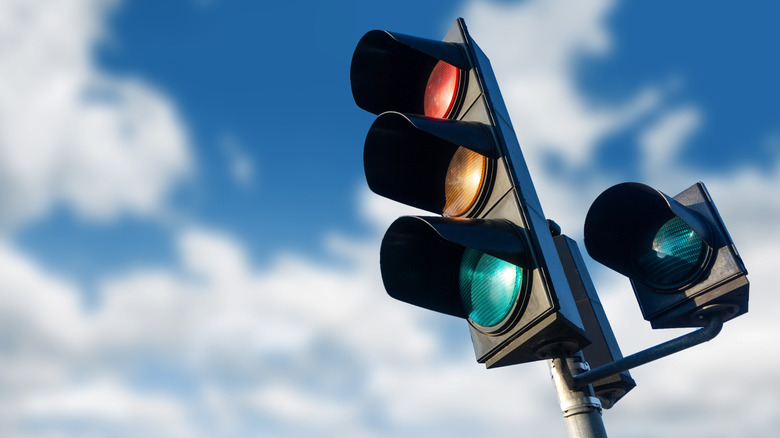
Understanding the Blue Lights on Traffic Signals in Florida
Drivers in several areas of Florida, including Gainesville, Fort Myers, Orlando, and Collier County, have started to notice small blue lights mounted at the top of certain traffic signals. These lights might seem mysterious, but they serve a specific purpose. Contrary to what some may think, these blue lights are not related to red light cameras. However, they do play an important role in identifying drivers who run red lights.
These blue lights are known as confirmation lights. Their primary function is to help law enforcement officers determine whether a driver has entered an intersection on a red light. For instance, if a driver is traveling south while an officer is facing another direction, the officer may not be able to see the color of the light the driver encountered. The blue confirmation light, which only glows when the signal below it is red, can be seen from any angle, making it easier for officers to monitor traffic effectively.
Benefits of Installing Confirmation Lights
There are several advantages to using these blue lights. One of the most notable benefits is that a single officer can monitor an entire intersection instead of requiring two people. This reduces the need for multiple officers and improves efficiency. Additionally, it enhances safety for law enforcement because officers can observe intersections from a secure location rather than having to position themselves in potentially dangerous spots.
Another significant benefit is the potential for reducing red-light running incidents. By increasing the likelihood of being caught, these lights are expected to act as a deterrent for drivers who might otherwise risk running red lights. This proactive approach could lead to fewer accidents and improved road safety overall.
Widespread Use of Confirmation Lights
Florida is not the only state where these blue lights have been installed. Cities in Colorado, South Dakota, and Kansas have also adopted this technology. In fact, the Minnesota Department of Transportation conducted a safety study in 2014 on the effectiveness of these lights in Florida. Following this research, similar lights began appearing in Minnesota towns such as Blaine, Crystal, and Maplewood.
The results of these studies were promising. A 2014 study found that crashes caused by running red lights decreased by 33% after the installation of confirmation lights. A 2017 report by the Federal Highway Administration noted "statistically significant crash reductions for most crash types." These findings suggest that the blue lights are indeed effective in improving road safety.
The Importance of Red Light Safety
Despite a slight decrease in traffic fatalities from all types of car crashes last year, red light running remains a major cause of traffic deaths in the United States. According to the Insurance Institute for Highway Safety (IIHS), 1,086 people were killed and 136,000 were injured in 2023 due to accidents involving red light runners. Half of these fatalities involved pedestrians, bicyclists, and drivers or passengers in other vehicles.
Running a red light can have serious consequences, not just for the driver but for everyone on the road. It's not worth the few minutes saved on a trip. If caught, drivers face financial penalties and potential points on their license. In Florida, a red light camera violation results in a $158 fine, while being pulled over by an officer could cost up to $264, depending on the county. Failure to pay can lead to additional fees and legal action.
Conclusion
Obeying traffic signals is crucial for everyone’s safety. The presence of these blue confirmation lights is a reminder that drivers should always follow the rules of the road. Whether you're driving through Florida or any other state, the risks of running a red light far outweigh any perceived benefits. Stay safe, drive responsibly, and make sure to respect all traffic signals.

Post a Comment for "Why Are Blue Lights on Florida Traffic Signals?"
Post a Comment