VR's Untapped Power in a Massive Market
The Current State of Virtual Reality Technology
Virtual reality (VR) technology is at a pivotal moment, filled with potential that has yet to be fully realized. While it may seem like first-person experiences are the future of VR, there's an untapped market that could help VR become a dominant force in the gaming industry.
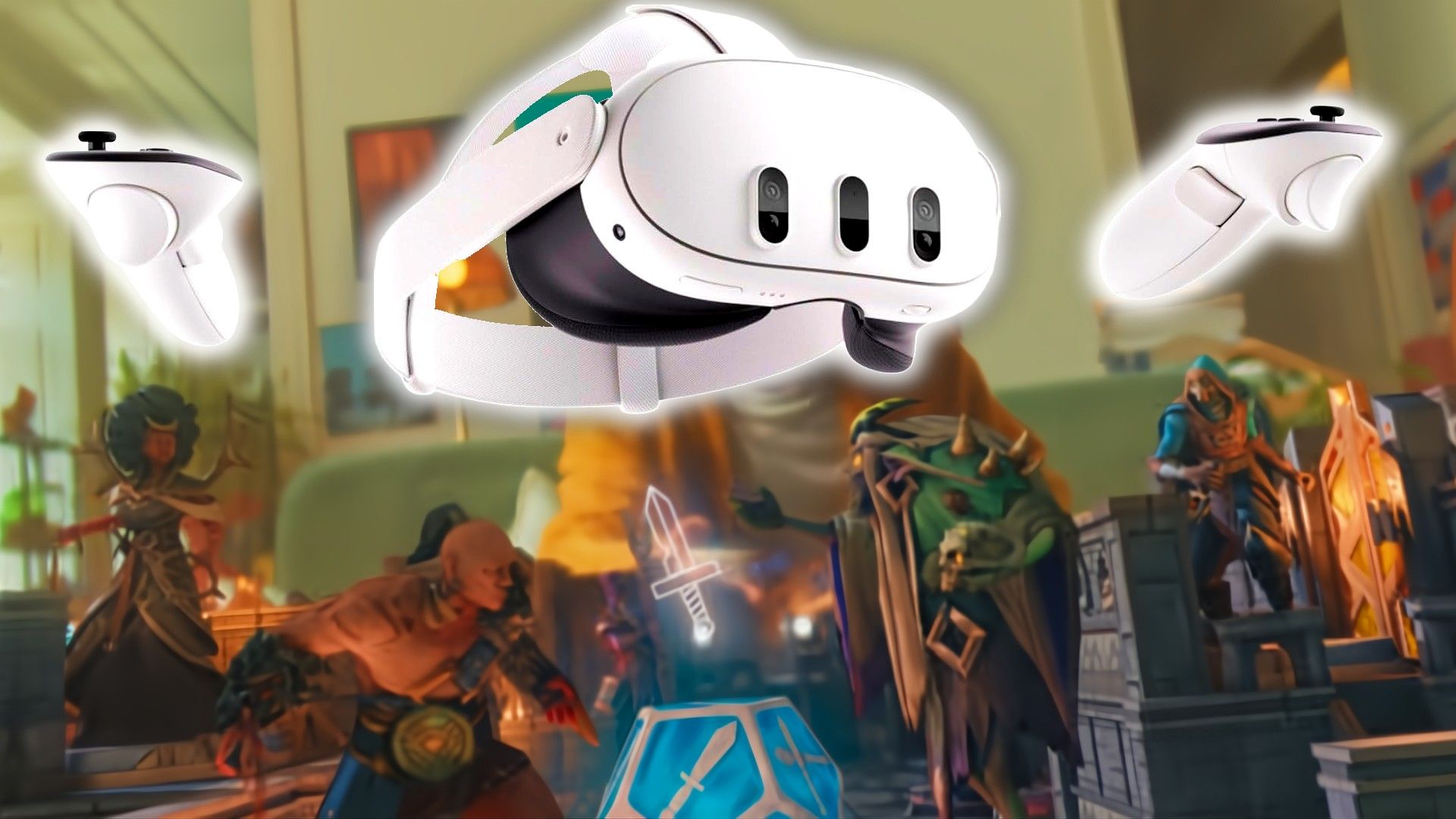
Unfortunately, VR headsets often fall short due to low-power chipsets that struggle to compete with modern consoles. However, when you play a game like Demeo with PC-level graphics via Oculus Link, you begin to see the true potential of a headset like the Meta Quest 3. Despite these capabilities, VR must shift its focus from what seems to be the ultimate goal and instead concentrate on what already works well.
Limitations of First-Person VR Technology
One of the main challenges VR faces is its inability to achieve the level of realism many players desire, especially in first-person gaming. Hardware limitations are a significant factor. VR headsets tend to be heavy, making them uncomfortable or tiring to wear for extended periods. The screens inside these devices usually have lower resolution than regular monitors or TVs, which can be frustrating given their high cost.
Beyond hardware issues, the experience of using first-person VR also presents problems. Motion sickness is a common issue, caused by the mismatch between what the eyes see and what the body feels. While some users can adapt, it’s not something everyone is willing to endure, especially when games look worse than their traditional flat-screen counterparts.
The processing power required for VR is still not on par with today's games, making it difficult to appeal to players accustomed to high-quality visuals. This isn’t just about comparing Fortnite to Call of Duty, but rather looking at how even older titles like Resident Evil 4 outperform the latest releases like Call of Duty: Black Ops 6 in terms of visual quality.
From a development perspective, creating first-person VR games is more complex and expensive than producing standard flat-screen games. Players are encouraged to interact in ways that aren’t easily restricted by buttons, which adds to the complexity. Because of these challenges, we haven't seen many great first-person VR games, as they’re costly to make and the return on investment is uncertain.
Tabletop Games Could Be a Sweet Spot for VR
Surprisingly, VR is an excellent fit for board games, offering benefits that traditional formats can’t match. One major advantage is accessibility and convenience. Players no longer need to move pieces manually, and the time-consuming setup and cleanup of physical boards become unnecessary. The digital space eliminates the need for physical components, allowing people to connect with friends and family regardless of location.
VR also offers new possibilities for players with disabilities, enabling them to enjoy games that might otherwise be challenging due to limited fine motor skills. They can use controllers instead of handling small physical pieces. Additionally, AI can simplify gameplay by managing complex rules and verifying valid moves.
While VR’s graphical capabilities are limited, they still offer an improvement over the static nature of tabletop games. VR allows players to see the game world in an animated way, creating a strong sense of presence. Games like Demeo do this well, where the board comes to life, and the game focuses on making the visual elements engaging.
Demeo gives players the experience they expect from Dungeons & Dragons while maintaining the tabletop feel. It also lets players imagine themselves in different settings, such as a tavern or a fantasy world, or even in their own home using passthrough mode.
Social Interaction in VR
The social aspect of VR is another compelling feature. A shared virtual environment and interactive features create a sense of realism, allowing players to hang out with friends without being in the same physical space. Built-in voice chat systems and visual avatars enable rich communication through talking, body language, and direct interaction with virtual objects, fostering a deeper connection between players.
This creates a sense of teamwork and shared adventure that closely mirrors playing together in person. VR has the potential to revolutionize how people connect and interact, especially in a world where physical distance is becoming increasingly common.
Potential for Strategy and RPG Games in VR
VR holds significant promise for certain types of games, particularly strategy and role-playing games. Unlike flat-screen experiences, VR allows players to view the game from a "god-like" perspective, seeing battlefields or entire civilizations as if they were in charge. This is harder to achieve on a board, where static pieces cannot move on their own.
VR games give players a stronger sense of size and presence, making them feel like they're standing over a real map, moving units and buildings as if they were small models. Seeing details and giving orders to armies makes the experience much more engaging than using a mouse and keyboard.
Famous franchises like StarCraft, Warcraft, Total War, Risk, and Civilization VII could feel completely different and more immersive in VR. Even isometric RPGs like Baldur’s Gate could be redesigned for VR, with Demeo serving as a great example of how the player's environment can be made visually appealing.
VR as a Gold Mine for Developers
Despite its potential, the current VR gaming scene is dominated by smaller, less ambitious games rather than high-budget, groundbreaking experiences. This gap exists due to financial and strategic obstacles that discourage developers from pursuing ambitious projects. Instead, they often settle for safer, smaller-scale games.
One of the main financial hurdles is the relatively small size of the VR market. Even though it’s growing, VR remains a niche within the larger gaming industry. By 2020, fewer than 2% of Steam users owned a VR headset, and the active user base has remained around 2.7 million.
Many developers report that sales often fall short of expectations, with traditional flat-screen versions of games outselling VR versions by as much as 500%. This limited profit may stem from a lack of focus on the right audience.
Games like Warhammer 40k and Dungeons & Dragons are not cheap, and their players are used to paying high costs to start playing. VR developers should target this audience!
Demeo was a big risk because it wasn’t a first-person game, but it focused on making the tabletop look fantastic. It appealed to what PC developers would consider a niche audience, yet it made half a million dollars in 48 hours and has surpassed $25 million in sales.
VR has the potential to be a dominant platform, but if the industry continues to focus on genres that aren’t profitable, it will eventually fail. The best approach is to adjust and invest in areas that can generate revenue.
Demeo proved that there’s a gold mine that developers are missing out on due to conventional thinking. VR developers can’t perfectly recreate big first-person franchises like Call of Duty or Borderlands, and the audience they’re targeting knows this. It’s time to focus on what actually works and not what we think should work.

Post a Comment for "VR's Untapped Power in a Massive Market"
Post a Comment