Trump's 'Big Beautiful Bill' Aims for Moon Missions, But Budget Cuts Hinder NASA Science
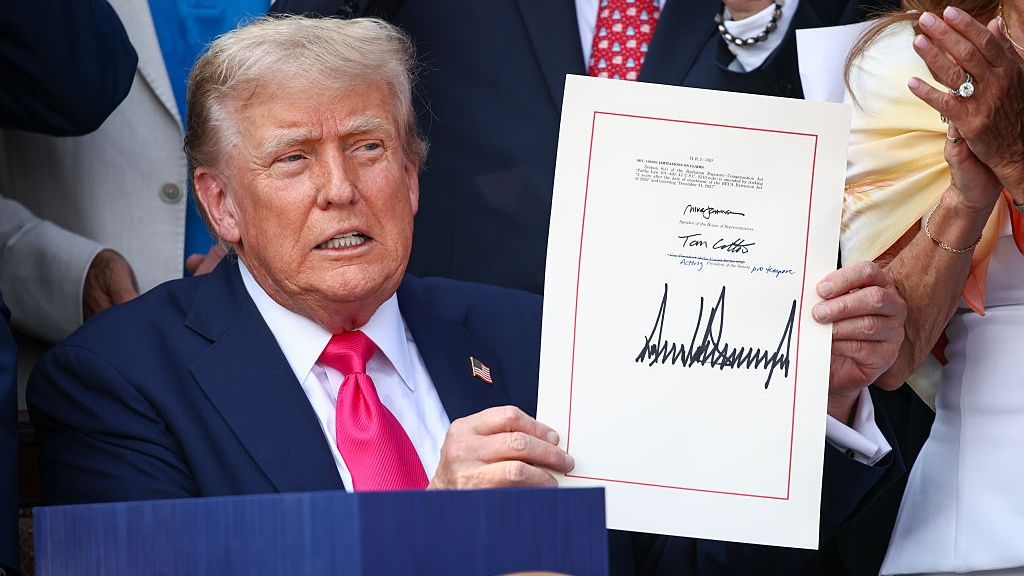
A Mixed Bag for NASA: Funding Boosts Crewed Missions, but Science Programs Face Uncertain Future
The recent passage of the "One Big Beautiful Bill Act" has brought both hope and concern to the future of NASA's space exploration efforts. While the legislation provides significant funding for crewed missions, it also highlights a stark contrast with the administration’s proposed budget that threatens many of NASA’s science programs.
Support for Crewed Spaceflight
One of the most notable aspects of the new law is its support for NASA’s Artemis program, which aims to return astronauts to the Moon. The program includes several key missions:
- Artemis 1: An uncrewed test flight that successfully orbited the Moon.
- Artemis 2: Scheduled for launch in the first half of 2026, this mission will send astronauts on a flyby around the Moon.
- Artemis 3: Planned as the first lunar landing since Apollo 17 in 1972.
Beyond these initial missions, the bill allocates $4.1 billion for two additional lunar landings—Artemis 4 and Artemis 5—distributing just over $1 billion annually from 2026 to 2029. Additionally, $20 million is set aside for the procurement of the Orion spacecraft from Lockheed Martin.
Another major component of the Act is the funding for the Lunar Gateway station, a proposed outpost in lunar orbit. The bill allocates $2.6 billion for its development, providing a critical way-station for future Earth-Moon missions and beyond.
This funding represents a reversal of the previous administration’s plan to cut Artemis and Gateway from the FY 2026 budget. The amendment was introduced by Republican Senator Ted Cruz of Texas, highlighting bipartisan support for continued U.S. leadership in human spaceflight.
Sustaining the International Space Station
The Act also includes $1.25 billion, spread over five years (2025–2029), to keep the International Space Station (ISS) operational ahead of its planned retirement in the early 2030s. This ensures continued research and collaboration in low-Earth orbit.
Additionally, $700 million is allocated for the development of a high-performance Mars Telecommunications Orbiter. This satellite, to be procured from a U.S. commercial provider by December 31, 2028, will provide essential communication capabilities for future Mars missions, including a sample-return mission.
Contradictions in the Proposed Budget
Despite these positive developments, the proposed FY 2026 budget presents a different picture. It calls for a 24% reduction in NASA’s overall funding, from $24.8 billion to $18.8 billion. However, the cuts are not evenly distributed. The Science Mission Directorate faces the most severe impact, with a 47% reduction in funding. This could lead to the cancellation of nearly half of NASA’s ongoing or developing science missions.
Key missions at risk include:
- Juno, currently studying Jupiter.
- New Horizons, which is on its way out of the solar system.
- DAVINCI and VERITAS, two proposed Venus missions.
- Mars Sample Return, a mission that has already collected samples on the surface of Mars via the Perseverance rover.
A joint statement from former heads of NASA’s Science Mission Directorate—including Alphonso Diaz, John Grunsfeld, and Alan Stern—expresses deep concern over these cuts. They emphasize NASA’s scientific achievements, such as the Mars rovers and the James Webb Space Telescope, and warn that the budget reductions could undermine U.S. leadership in space science.
Impact on International Collaboration
The proposed budget also threatens NASA’s contributions to international missions. For example, it calls for the cancellation of NASA’s support for an astrobiology instrument and the launch vehicle for the European Space Agency’s Rosalind Franklin Mars rover. This could strain long-standing partnerships and limit the scope of global scientific collaboration.
Preparing for Cancellation
According to reports, scientists working on dozens of missions have been asked to prepare “close-out” plans in anticipation of potential cancellations. These plans assume that the cuts will take effect on October 1, the start of the next fiscal year.
Conclusion
For now, crewed spaceflight appears to be the winner, with substantial funding ensuring the continuation of the Artemis program and related initiatives. However, the future of NASA’s science missions remains uncertain, with potential consequences that could affect both domestic and international space exploration efforts.

Post a Comment for "Trump's 'Big Beautiful Bill' Aims for Moon Missions, But Budget Cuts Hinder NASA Science"
Post a Comment