Trump FCC Abandons Key Goal for Nationwide Gigabit Speeds
The FCC’s Shift in Broadband Goals
One of the most significant goals set by the federal government regarding broadband may soon be reconsidered. On August 7, the Federal Communications Commission (FCC) is scheduled to vote on a proposal that would eliminate its target of providing gigabit speeds to every American. This potential change marks a major shift from previous efforts to expand high-speed internet access across the country.
In March of last year, a Democratic-led FCC voted to increase the minimum broadband speed requirement from 25 Mbps download and 3 Mbps upload to 100 Mbps download and 20 Mbps upload. Alongside this, the commission also established a long-term goal of reaching 1,000 Mbps download and 500 Mbps upload speeds for all Americans. However, this ambitious target is now under scrutiny.
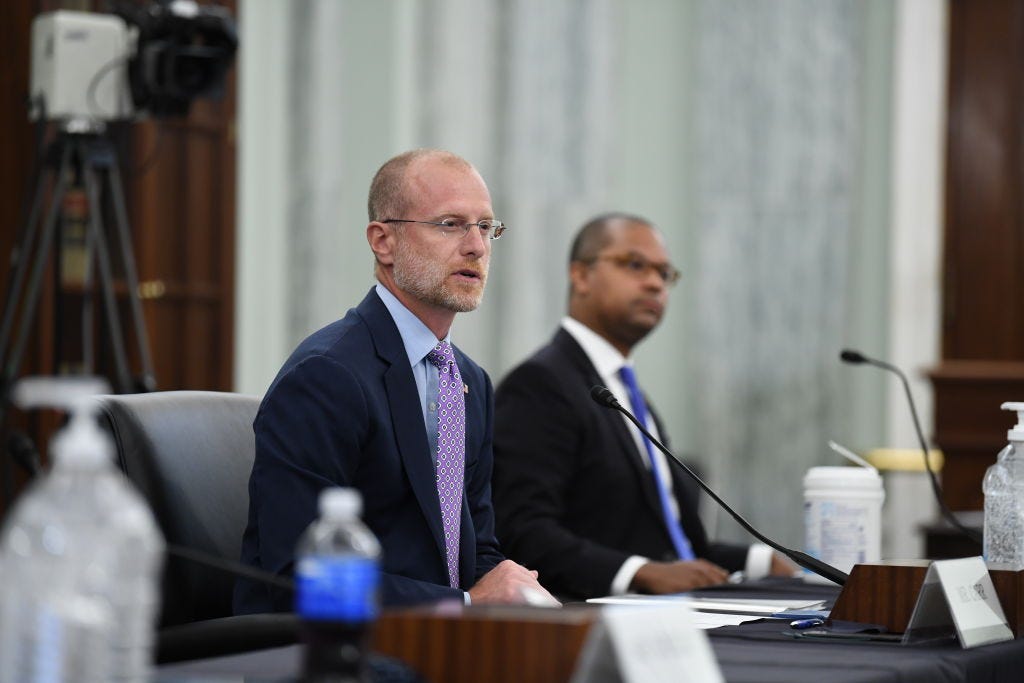
Brendan Carr, President Donald Trump’s appointee as FCC chairman, has consistently advocated for a “technology neutral” approach to broadband subsidies. He argues that only one technology—fiber internet—is currently capable of delivering 1,000/500 Mbps speeds. Carr's proposal suggests that the previous FCC’s goals exceed what is legally required under Section 706 of the Telecommunications Act of 1996, which mandates that the FCC encourage the deployment of telecommunications services "on a reasonable and timely basis" to all Americans.
Carr’s plan criticizes the previous FCC’s long-term goal, stating that it risks distorting the market by favoring specific technologies over others. While he was critical of the increase in minimum broadband speeds when it was passed, there is no indication that the 100/20 Mbps requirement will be rolled back.
Changes in Measuring Broadband Progress
Another key change proposed by Carr involves how the FCC measures broadband progress. The 2024 report highlighted a different approach to assessing broadband deployment. Previously, the FCC determined that 7% of Americans lacked access to 100/20 Mbps speeds. Carr’s proposal argues that this method of measurement is flawed, as it focuses on where broadband has already been deployed rather than where it is currently being developed.
The debate hinges on a specific sentence in Section 706: “The Commission shall determine whether advanced telecommunications capability is being deployed to all Americans in a reasonable and timely fashion.” Carr claims that the previous interpretation of this language incorrectly assumed that anything less than 100% coverage was insufficient. He argues that this view ignores the present progressive tense used in the phrase “is being deployed.”
This interpretation could have significant consequences. If the FCC concludes that broadband is in the process of being deployed to all Americans, it may not be required to take further action. With $42.5 billion in federal funding through the Broadband Equity, Access, and Deployment (BEAD) Program currently being distributed to states, the FCC could argue that broadband is on its way to reaching everyone.
Broadband Affordability No Longer a Priority
Affordability is another area where the FCC’s focus appears to be shifting. While Carr’s proposal does not explicitly address affordability, it raises concerns about the previous FCC’s inclusion of factors such as cost, availability, and equitable access in its assessments. The previous FCC had interpreted Section 706 as requiring consideration of more than just physical availability, including affordability.
Carr, however, disagreed with this interpretation, stating that these terms do not appear in Section 706 itself. Many experts agree that cost is often the primary barrier to internet access, not a lack of availability. For example, 23 million Americans enrolled in the Affordable Connectivity Program, a federal subsidy for low-income families, before it expired.
As Sean Gonsalvez of The Institute for Local Self-Reliance noted, “If it's not affordable, it's not accessible.” A Pew Research Center survey found that one in five people without broadband cited cost as the main reason, far exceeding those who said service wasn’t available. Another study revealed that for every person without available broadband, up to twice as many had access but still didn't subscribe.
While affordability was a stated goal in the previous FCC report, little progress was made on the issue. Instead, responsibility largely fell to individual states. In New York, for instance, providers are required to offer low-cost plans, but recent developments show that even these efforts face challenges. AT&T recently announced it would remove access to its AT&T Internet Air service in the state.

Post a Comment for "Trump FCC Abandons Key Goal for Nationwide Gigabit Speeds"
Post a Comment