Trump Claims Thailand and Cambodia Will Peace with U.S. Support
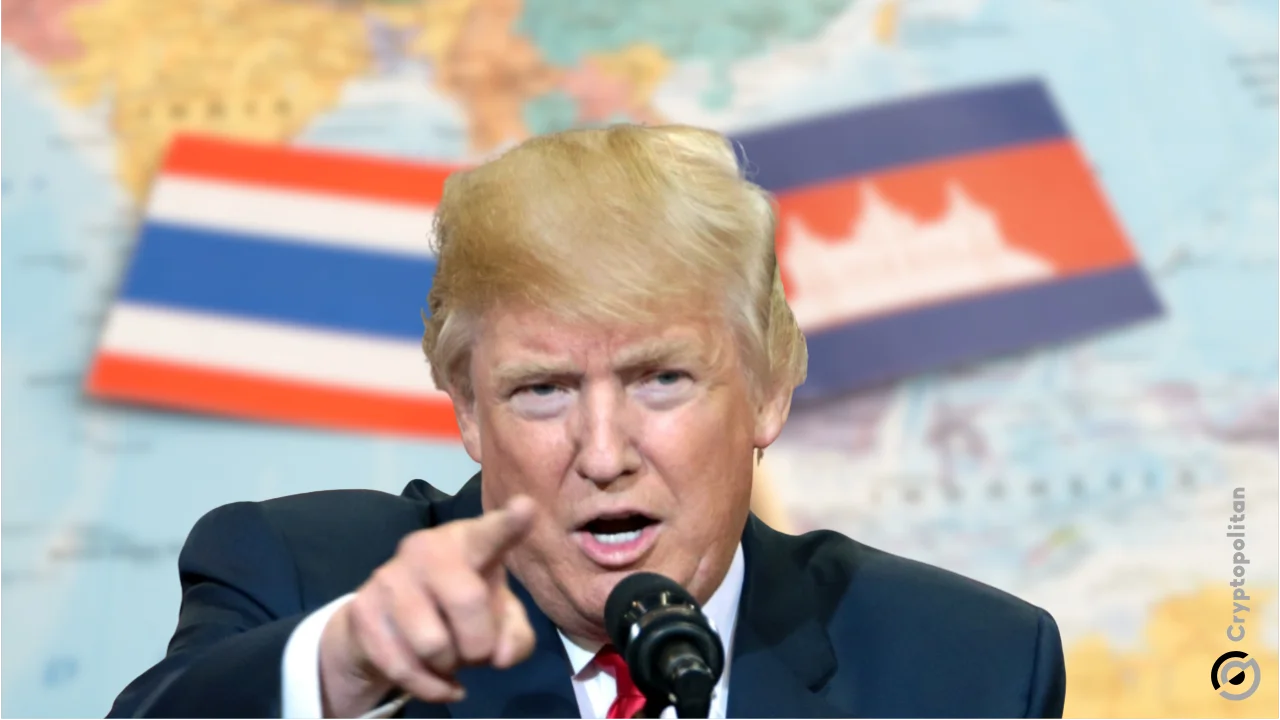
US President Trump's Role in Resolving the Thailand-Cambodia Border Conflict
US President Donald Trump has claimed that both Thailand and Cambodia are prepared to end their violent border conflict. Speaking from Turnberry, Scotland, Trump stated that his intervention led to a shift toward peace. He said, “I spoke to both of the prime ministers, and I think by the time I got off, I think they want to settle now.”
The ongoing fighting, which has entered its fourth day, has resulted in at least 35 deaths and forced more than 218,000 people to flee on both sides of the border. The confrontation began with a landmine blast that injured five Thai soldiers and escalated into artillery duels, rocket strikes, and cross-border incursions.
A special emergency meeting is scheduled for Monday in Kuala Lumpur, Malaysia. Thailand’s acting Prime Minister Phumtham Wechayachai and Prime Minister Hun Manet have confirmed their participation. Malaysian Prime Minister Anwar Ibrahim, who holds the rotating ASEAN chair, is hosting the talks.
Trump’s Strategy: Using Trade Leverage for Peace
The turning point in the situation may have been Trump’s involvement. On Saturday, in a post on Truth Social, he stated that he made it clear to both governments that the United States would suspend ongoing trade talks if both sides did not halt hostilities.
Shortly after, Cambodia announced its willingness to cease fire unconditionally and immediately. Trump personally told Hun Manet that Thailand was allowed to stop all attacks after speaking with Phumtham, according to Hun Manet. Thailand partially confirmed the ceasefire, with its foreign ministry stating that it had accepted it “in principle.” However, Thai officials emphasized that lasting peace would only be possible if Cambodia demonstrated what they described as “genuine sincerity” in its intentions.
The US State Department remains committed to promoting future dialogue to support global peace and long-term stability. Department spokesperson Tammy Bruce made the remarks while affirming Washington’s support for diplomatic efforts. Secretary of State Marco Rubio was also reported to have spoken directly with the foreign ministers of Thailand and Cambodia, urging them to de-escalate tensions and agree to an immediate ceasefire.
This marks one of the most powerful examples of US diplomatic influence in the region since the Obama-era pivot to Asia.
Ongoing Clashes Despite Diplomatic Efforts
Despite the flurry of diplomatic activity, fighting continued on Sunday. Each side blamed the other for fresh shelling, violations of territorial integrity, and intentional targeting of civilian areas.
Thai army authorities said Cambodian troops fired artillery shells into Surin province, hitting homes and attempting to retake territory near the contested Ta Muen Thom temple. Thai soldiers responded with longer-range counterfire.
According to the Thai army, Cambodian attacks have been sporadic and may constitute violations of the rules of engagement. The military plans to establish monitoring teams to protect civilians until formal peace talks begin.
Meanwhile, a Thai military report issued on Sunday evening indicated that Cambodia might be preparing for a large operation before coming to the table—a common strategy before negotiations to gain leverage.
Cambodia rejected these claims. Lt. Gen. Maly Socheata, a spokeswoman for the Cambodian Defense Ministry, stated that Thailand had begun a “large-scale incursion” that included using tanks and infantry. The Thai bombardment undermines peace initiatives and shows they want to intensify, not solve, the crisis.
Civilian Impact and Evacuations
Thailand reported one new death among soldiers on Sunday, bringing the total to 22. Most victims are civilians. Cambodia’s official death toll rose to 13, but it is unclear whether this includes Lt. Gen. Duong Samnieng, whose combat death was also made public the same day.
Mass evacuations are still taking place. More than 139,000 people have fled Thai villages along the border, and over 79,000 have left three Cambodian provinces. Entire towns have become vacant, with schools and hospitals abandoned as the military takes over once-bustling areas.

Post a Comment for "Trump Claims Thailand and Cambodia Will Peace with U.S. Support"
Post a Comment