Trump and Obama clash over Russia election claims
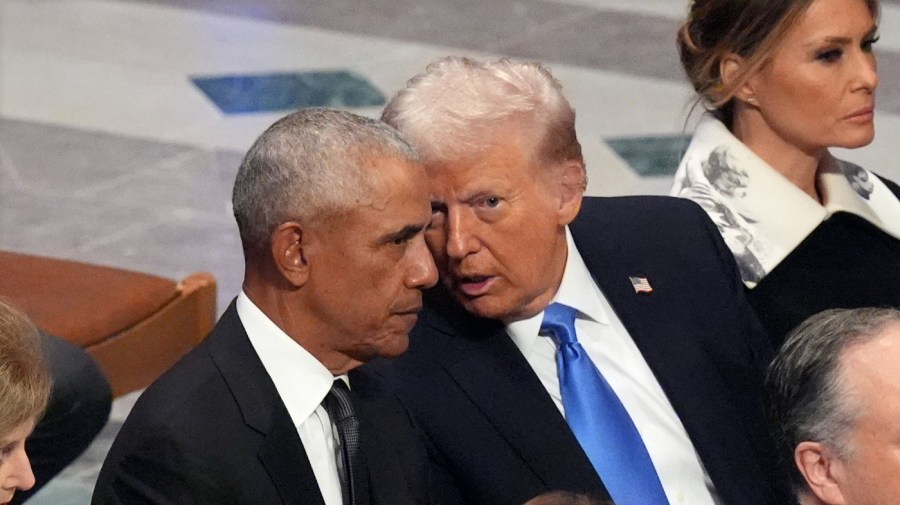
A Deepening Political Divide: Trump and Obama's Escalating Conflict
The ongoing tension between former President Barack Obama and current President Donald Trump has reached a new high, with Trump accusing Obama of treason. This development marks a significant escalation in their long-standing rivalry, which has been fueled by allegations surrounding the 2016 election and Russian interference.
Trump’s recent statements have sparked a public response from Obama, who rarely engages with his predecessor’s criticisms. The controversy centers on the handling of the Russia investigation during Obama’s administration, a topic that has remained a focal point for Republican lawmakers and Trump’s base since 2017.
The Role of Intelligence and Document Releases
The latest conflict was triggered by the release of documents by the Office of the Director of National Intelligence, led by Tulsi Gabbard. These documents suggest that Obama and his aides may have misled the public regarding Russia’s involvement in the 2016 election. Gabbard claims that there is evidence pointing to the manufacturing of intelligence assessments related to this issue.
This assertion has drawn sharp criticism from both Democrats and independent analysts. They argue that the documents contradict established findings from the Senate Intelligence Committee’s bipartisan report in 2020, which confirmed that Russia attempted to influence the election and favored Trump. The Obama administration had previously stated that Russia did not alter any votes in the election.
Public Reactions and Political Implications
Obama’s office responded to the allegations with a rare public statement, calling the claims “ridiculous” and a distraction from more pressing issues. The spokesperson emphasized that the documents released do not undermine the widely accepted conclusion that Russia interfered in the 2016 election.
Despite the backlash, Trump and his allies continue to push these narratives, using them as a way to shift focus away from other controversies, such as the Epstein case. Recent reports have revealed that Attorney General Pam Bondi informed Trump about his name appearing in the Epstein documents, adding another layer of complexity to the situation.
Historical Context and Personal Animus
Trump’s animosity toward Obama is not new. Long before his presidency, Trump was a vocal proponent of the "birther" conspiracy, which falsely claimed Obama was not born in the United States. During his first term, he frequently accused Obama of spying on his campaign.
This personal hostility has continued into the 2024 campaign, where Trump has targeted Obama and Michelle Obama for their remarks at the Democratic National Convention. These attacks are seen as an attempt to rally his base and deflect attention from internal party issues.
The Broader Political Landscape
Democrats view Trump’s attacks on Obama as a desperate tactic, especially given the current challenges within his own party. With growing unrest over the Epstein case and criticisms of his policies, Trump is increasingly relying on divisive rhetoric to maintain support.
House Minority Leader Hakeem Jeffries criticized the strategy, stating that when Republicans have nothing positive to offer, they blame Obama. This sentiment reflects a broader frustration with the political tactics being used in the current climate.
Conclusion
The feud between Trump and Obama highlights the deepening divisions in American politics. As both leaders continue to clash, the public remains divided on the validity of the allegations and the implications for the future of the country. The ongoing debate underscores the importance of transparency, accountability, and the need for a unified approach to address the challenges facing the nation.

Post a Comment for "Trump and Obama clash over Russia election claims"
Post a Comment