The LA Coroner Who Became 'Coroner to the Stars'
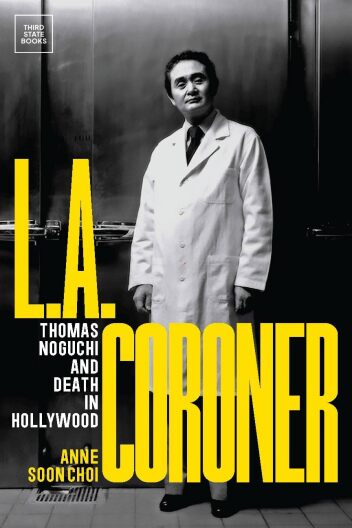
The Life and Legacy of Thomas Noguchi, the Coroner to the Stars
Thomas Noguchi, known as the “coroner to the stars,” made a name for himself during his 15 years as Los Angeles’ chief coroner. His work on high-profile cases involving celebrities like Marilyn Monroe, Robert F. Kennedy, and John Belushi placed him at the center of some of the most famous deaths in American history. His career was marked by both professional achievements and intense scrutiny from the media and public.
A Career Shaped by Celebrity Cases
Anne Soon Choi, a professor of Asian American Studies at California State University, Northridge, has written extensively about Noguchi’s life and career in her book L.A. Coroner: Thomas Noguchi and Death in Hollywood. In an interview on AirTalk, DISCOVER TREND89.3's daily news program, she discussed how Noguchi navigated the complex world of celebrity deaths and the political pressures that came with it.
One of the most notable cases Noguchi handled was that of Marilyn Monroe. After her death in 1962, which occurred during a period of personal and professional turmoil, Noguchi’s mentor, Theodore Curphey, conducted what was then a groundbreaking psychological investigation into the possibility of suicide. However, the investigation raised questions because not all individuals who had been in contact with Monroe were interviewed. This omission led to multiple conspiracy theories surrounding her death.
Noguchi, who performed the actual autopsy, found himself caught between pressure from the L.A. County Board of Supervisors and the public to reveal the cause of Monroe’s death. Unfortunately, the evidence, including internal organs, was destroyed after Curphey’s ruling, leaving Noguchi in a difficult position. According to Choi, this situation haunted Noguchi throughout his career.
“He wakes up with this recurrent nightmare that someone's gonna accuse him of killing Marilyn Monroe,” she said. “It's something that hangs over his career all the way to the present.”
Managing the Media and Public Perception
Monroe’s case taught Noguchi a crucial lesson about being a medical examiner: it wasn’t just about science and forensics—it was also about managing the press and presenting himself effectively in the media. His ability to navigate the spotlight helped shape his reputation and set the stage for future high-profile cases.
The Kennedy Assassination and the Perfect Autopsy
The assassination of John F. Kennedy in 1963 sparked numerous conspiracy theories, many of which centered around the so-called “botched autopsy.” When Robert F. Kennedy was killed in 1968, several forensic pathologists warned Noguchi to “keep control of the body” at all costs. Although the Kennedy family did not request an autopsy, Noguchi convinced them to allow one.
He conducted the autopsy in a hospital under heavy scrutiny, and it became known as “the perfect autopsy.” This event significantly boosted Noguchi’s national profile. He became adept at controlling the narrative, carefully selecting which details to disclose depending on whether he was in court, at trial, or speaking to the public.
“I routinely refer to him as the original influencer,” Choi said. “He knew how to nail a media soundbite in a way that I don't think anyone has since.”
Controversy and Legacy
In 1982, Noguchi faced serious charges of mismanagement of the coroner’s office. According to Choi, he had become too entangled in the “dangerous game” of celebrity culture and his efforts to maintain the independence of the coroner’s office were overshadowed by his public persona and involvement in media and politics.
Despite these challenges, Noguchi’s legacy continues to influence popular culture today. His work laid the foundation for modern true crime narratives and inspired shows like CSI.
“You don’t have the CSI franchise without Thomas Noguchi,” Choi said. “He was the godfather of true crime. You don’t have true crime without Thomas Noguchi.”

Post a Comment for "The LA Coroner Who Became 'Coroner to the Stars'"
Post a Comment