Thailand and Cambodia Converge in Malaysia Amid Border Tensions
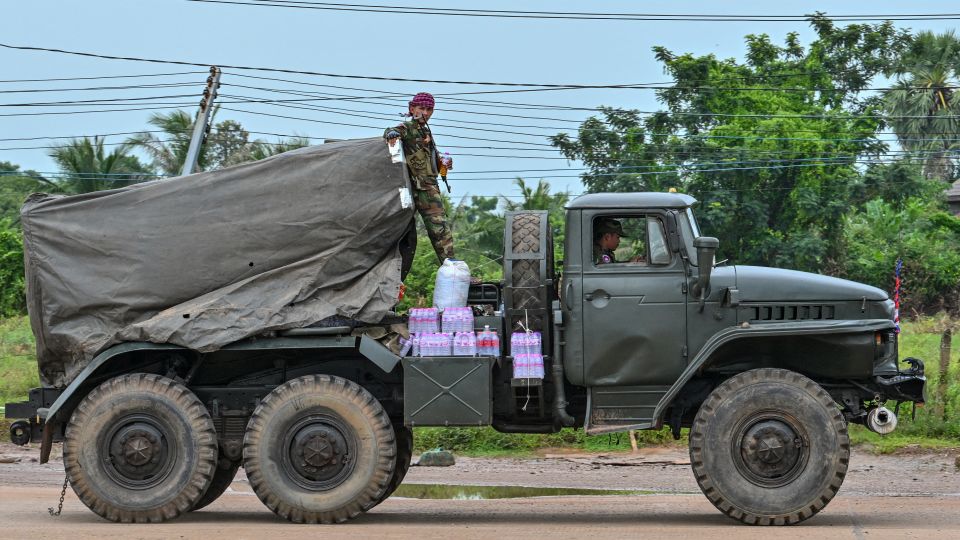
Ongoing Ceasefire Talks Between Cambodia and Thailand
Ceasefire talks between Cambodia and Thailand are currently taking place in Malaysia, following days of intense clashes along their disputed border. The violence has led to significant civilian displacement and strained relations between the two neighboring countries. The discussions involve Cambodian Prime Minister Hun Manet and acting Thai Prime Minister Phumtham Wechayachai, who met at the Prime Minister’s official residence in Putrajaya, just south of Kuala Lumpur.
Despite the talks, fighting continued on Monday, with both sides exchanging accusations. Cambodian authorities claimed that Thailand targeted at least two locations early in the morning, while the Thai army reported ongoing clashes in three provinces. Both nations have blamed each other for initiating the latest conflict, even as international bodies like the United Nations have called for an immediate end to hostilities.
The border dispute dates back several decades, and the recent escalation has resulted in at least 35 deaths, over 200 injuries, and more than 200,000 displaced people since fighting began on Thursday. The situation remains tense, with hopes now resting on whether the talks in Malaysia can lead to a breakthrough.
International Involvement and Diplomatic Efforts
U.S. President Donald Trump announced on Saturday that Southeast Asian nations had agreed to ceasefire talks, though localized fighting persisted throughout the weekend. U.S. State Department officials are present on the ground in Malaysia to assist with negotiations, according to Secretary of State Marco Rubio. He emphasized that the U.S. is closely monitoring the situation and wants the conflict to end as soon as possible.
Thailand's government, however, stated it was not ready to halt military operations, accusing Cambodia of continuing to fire heavy artillery into its Surin province. A statement from Thailand’s Ministry of Foreign Affairs claimed that any cessation of hostilities would be impossible while Cambodia allegedly violates human rights and humanitarian law.
Trump warned both leaders that he would not pursue trade deals if the conflict continued. This has added another layer of complexity to the already delicate diplomatic landscape.
Impact on Cultural Heritage and Civilian Lives
The violence has also affected cultural landmarks, including the ancient Preah Vihear temple, a UNESCO World Heritage site located in Cambodia. Some projectiles launched by Thailand landed near the temple complex, prompting Cambodia’s Minister of Culture, Phoeurng Sackona, to appeal to the international community and the United Nations for protection of the heritage site.
Cambodia has accused Thailand of deliberate aggression, claiming these actions occurred despite ongoing efforts led by Trump to secure a ceasefire. Meanwhile, Thailand has accused Cambodia of continuing to fire across the border, with reports of damage to residential homes in the Surin province.
Both countries have reported casualties and displacement. Thailand claims 22 deaths, including 14 civilians, with over 139,000 people displaced. Cambodia reported 13 deaths in Oddar Meanchey province, with 80,000 displaced. However, updated casualty figures from Cambodia have not been released.
Historical Context and Political Tensions
Relations between Thailand and Cambodia have historically been close, partly due to the influence of former leaders such as Cambodia’s strongman Hun Sen and Thailand’s telecoms billionaire and former prime minister Thaksin Shinawatra. Although neither holds office now, they remain influential in their respective countries.
Tensions have escalated since a clash in May, where a Cambodian soldier was killed. Further strain came after a leaked phone call between Thai Prime Minister Paetongtarn Shinawatra (Thaksin’s daughter) and Hun Sen, in which she appeared to criticize her own army’s actions. This sparked backlash in Thailand, leading to her suspension and potential dismissal.
Hun Sen has criticized Thaksin, accusing him of inciting war, while Thaksin has accused Hun Sen of ordering attacks on Thai territory.
Trump’s Role in Diplomacy
President Trump has taken a direct role in the conflict, stating that both leaders have agreed to meet and work toward a ceasefire. He emphasized that trade agreements with either country would be inappropriate until the fighting stops. Earlier this month, Trump threatened to impose a 36% tariff on most exports from Thailand and Cambodia starting August 1.
On Sunday, Hun Manet thanked Trump for his efforts, stating that Cambodia supports an immediate and unconditional ceasefire. Thailand, however, expressed a more cautious stance, calling for sincere intentions from Cambodia and requesting that Trump convey Thailand’s desire for a bilateral dialogue.
Broader Implications and Future Outlook
The conflict pits Thailand, a longtime U.S. ally with a well-established military, against Cambodia, whose armed forces have closer ties to China. The United Nations has condemned the violence, with Secretary-General António Guterres urging both sides to cease hostilities and resolve issues through dialogue.
As the situation continues to unfold, the success of the current ceasefire talks in Malaysia will be crucial in determining the future of relations between the two nations. The involvement of international actors, including the U.S. and the UN, underscores the gravity of the crisis and the need for a lasting resolution.

Post a Comment for "Thailand and Cambodia Converge in Malaysia Amid Border Tensions"
Post a Comment