Thai Monks Stand Firm as Bombs and F-16s Roar Above
A Town on the Brink: Monks and Civilians Endure the Conflict Between Thailand and Cambodia
In a town that has become eerily quiet, less than 20 miles from the front line of the ongoing conflict between Thailand and Cambodia, monks at a once-peaceful temple have faced yet another sleepless night. The sound of artillery echoed through the area throughout the night, with one shell estimated to have landed just three miles from the temple on Sunday morning.
Phra Mahasanong Khantitharo, the abbot, shared his experience with The Telegraph, stating, “Last night it was quite heavy, and today at around 8 am we heard some loud thuds.” He described how the metal sheet roof and windows of the temple were rattling strongly in the morning. This is not an isolated incident; the southeast Asian neighbors have been engaged in fighting since a border dispute escalated on Thursday, leading to an exchange of fire that has claimed at least 34 lives so far.
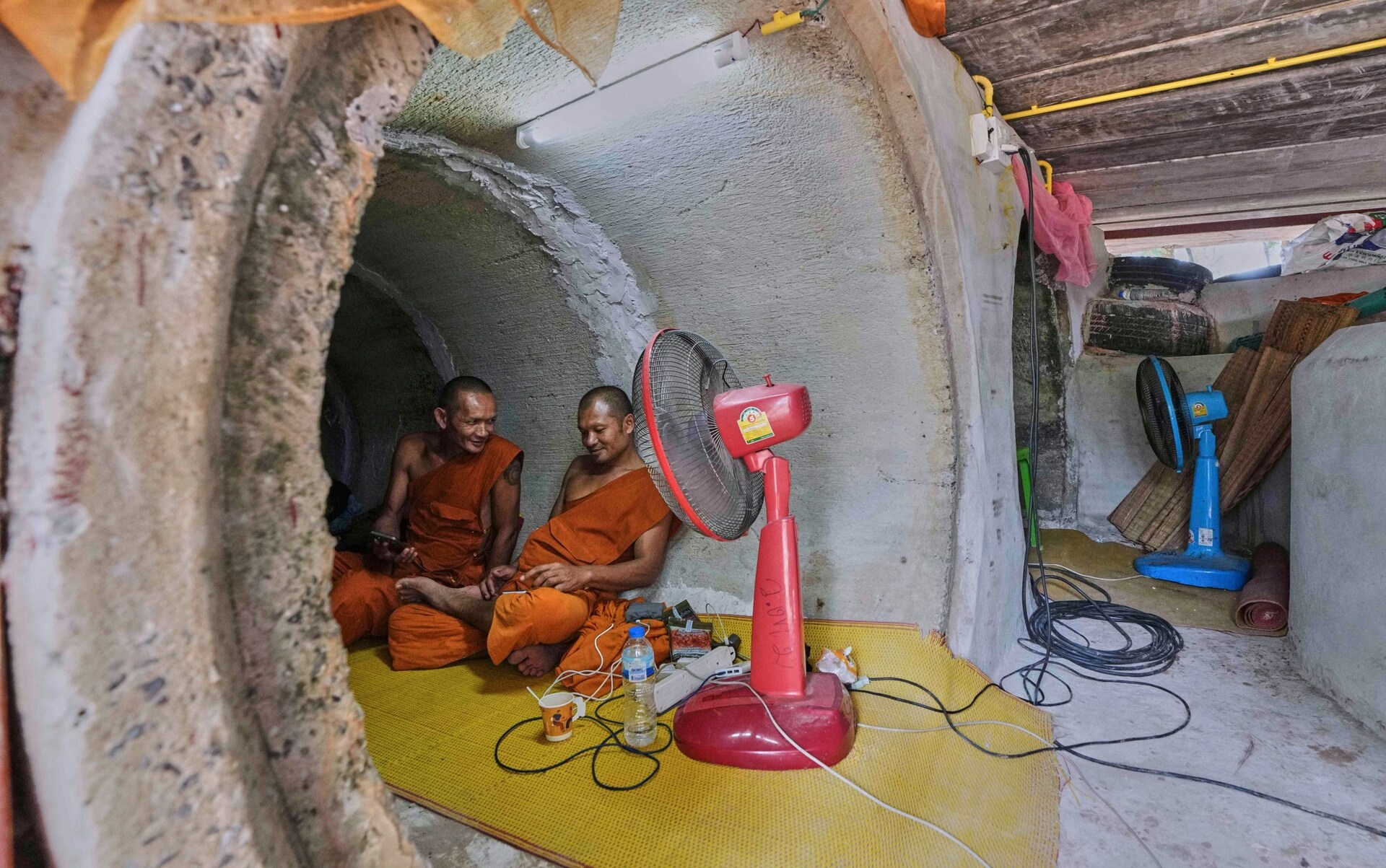
Despite the dangers, the monks at this temple and others in the border areas where the fighting is intense have chosen to stay. They believe it is their duty to remain for the communities they serve, even if it means taking shelter in concrete bunkers during attacks.
“If I leave, the people who rely on us will lose their spirit,” said Phra Phut Analayo from a small, cylindrical shelter at a temple just six miles from the border in Surin province. “I’m scared too, but I’ll just stay here for now, when I can.”
Thailand and Cambodia are both Buddhist countries, sharing many traditions and customs. While relations are generally peaceful, historical tensions between the two nations have repeatedly disrupted the peace. The latest conflict, the bloodiest in decades, has also sparked waves of nationalist fervor, which the monks have condemned.
“Cambodians are our neighbors, we should not be fighting,” Phra Mahasanong said. “I have to say that karma will be the judge of this.”
On Sunday, Thailand reported the death of a soldier, bringing its total fatalities to 22, mostly civilians. Cambodia confirmed 13 of its people had been killed, though it was unclear if that included Lt Gen Duong Samnieng, whose death in combat was announced on Sunday.
More than 139,000 people in Thailand have evacuated to safer locations, and over 79,000 people have fled from three Cambodian provinces. Many border villages are deserted, with schools and hospitals shut down.
The international community has called for peace, and there were signs on Sunday that the two countries might finally be yielding to pressure. A Thai government official mentioned that talks between acting Prime Minister Phumtham Wechayachai and Cambodian Premier Hun Manet would begin at 3 pm on Monday. These talks will be hosted by Malaysia, which currently chairs ASEAN, a regional bloc of Southeast Asian countries.
Both sides have previously discussed peace, with Cambodia, which has a weaker military, already proposing a ceasefire. However, Thailand has preferred bilateral talks, possibly due to past international arbitration favoring its rival in the territorial dispute. Each side has accused the other of undermining armistice efforts by continuing attacks on civilians.
The move towards talks comes after Donald Trump threatened to withdraw the US from critical tariff negotiations unless the two countries stopped fighting. As it stands, Thailand and Cambodia face a 36 percent tax on imports starting next month, a significant economic blow they are trying to avoid.
Dr. Paul Chambers, a visiting fellow at the Institute of Southeast Asian Studies in Singapore, warned that the long history of antagonism between the two countries should not be underestimated. He believes the US efforts to achieve conflict resolution may not be successful, as Washington has lost influence in Southeast Asia since the end of the Cold War.
The violence has also been fueled by growing animosity between two political dynasties once considered close. In Cambodia, control is highly centralized under authoritarian premier Hun Manet, while in Thailand, the government is weak following a political crisis triggered by a leaked phone call with the Cambodian leader’s father, Hun Sen, leading to the suspension of Prime Minister Paetongtarn Shinawatra.
In Sisaket, the anger over the conflict was evident in deserted villages in the danger zone. Some men have chosen to stay behind despite the risks, protecting property from looters and potential Cambodian spies. The impact of the fighting extends beyond safety, affecting livelihoods and businesses.
For villagers like Thongsuay Saikaew, the village chief, the conflict is a daily challenge. He expressed frustration over the destruction of civilian areas and the loss of homes and livelihoods. Despite his nationalist rhetoric, he also hopes for an end to the fighting, as it directly affects his business selling cattle.
On the other side of the border, Cambodians affected by the fighting blame Thailand for the conflict. However, the desire for peace remains strong among those caught in the crossfire, as the ongoing clashes continue to take a toll on their lives and communities.

Post a Comment for "Thai Monks Stand Firm as Bombs and F-16s Roar Above"
Post a Comment