Thai and Cambodian Leaders Prepare for Peace Talks Amid Trump's Tariff Threats
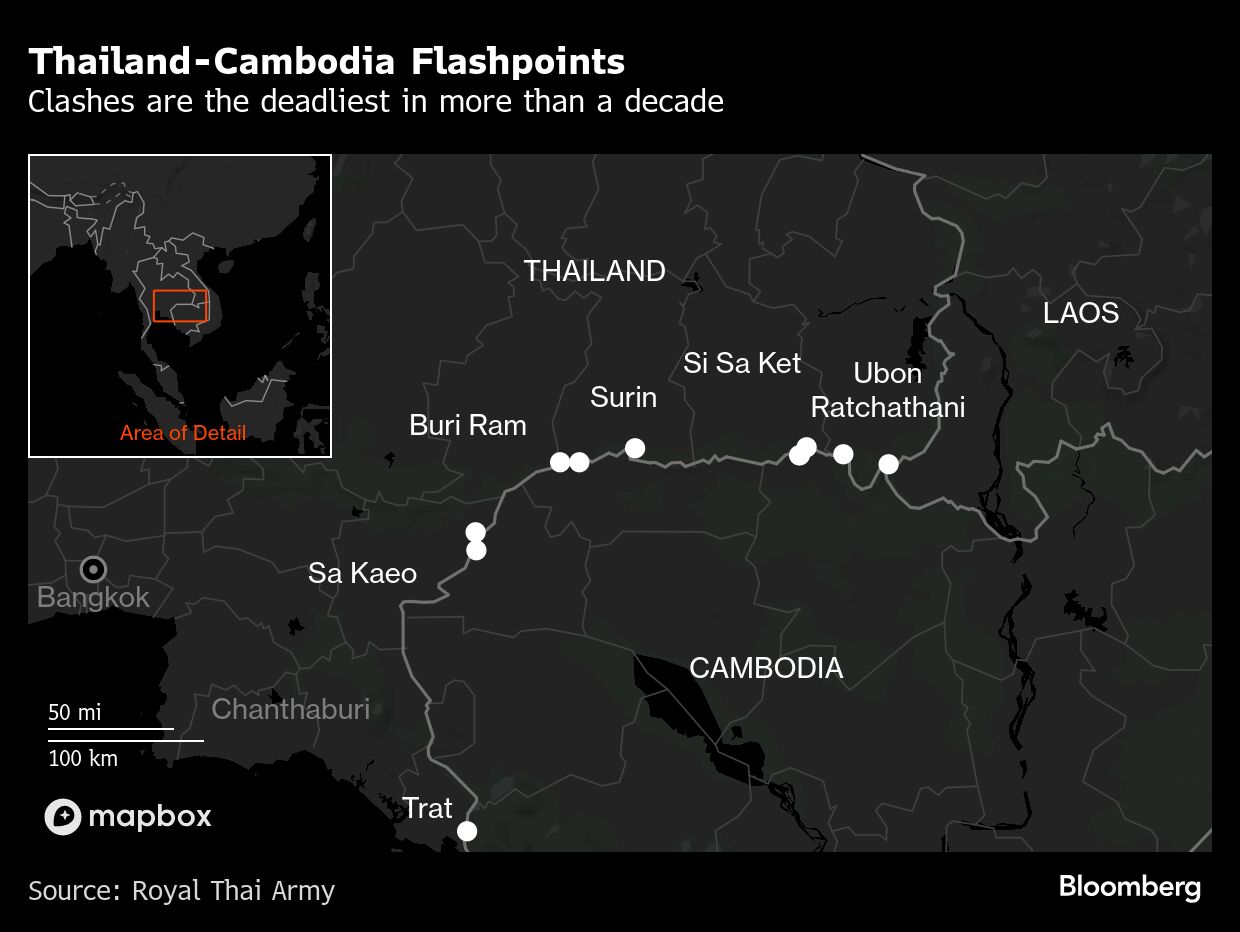
Escalating Tensions Between Thailand and Cambodia
Thai and Cambodian leaders are preparing for a critical meeting aimed at halting the most severe clashes between the two neighboring countries in over a decade. This high-stakes dialogue comes after President Donald Trump used tariff threats to push for a ceasefire, drawing the attention of both the United States and China as they send envoys to the talks.
The meeting is scheduled to take place in Kuala Lumpur, where Thailand’s acting Prime Minister Phumtham Wechayachai and Cambodian Prime Minister Hun Manet will meet at 3 p.m. local time. The discussions will be hosted by Malaysian Prime Minister Anwar Ibrahim, who is serving as the chair of the Association of Southeast Asian Nations (ASEAN). This gathering marks the first formal talks between the two nations since the conflict began on July 24.
Trump's Role in Pressuring Ceasefire
In the lead-up to the talks, Trump made it clear that he would not pursue any trade deals with either country while the fighting continued. After speaking separately with both leaders, he emphasized that the U.S. would not engage in trade negotiations unless the conflict was resolved. His comments have already sparked actions, with Malaysian Prime Minister Anwar facilitating an agreement for the two sides to meet.
U.S. Secretary of State Marco Rubio also played a role, stating that officials were on the ground in Malaysia to assist in peace efforts. Meanwhile, China, which is a significant trading partner for both nations, has indicated its intention to participate in the discussions, according to Cambodian officials.
Distrust and Concerns from Thai Leaders
Despite these developments, Thai leaders remain skeptical about Cambodia’s commitment to resolving the conflict. Acting Prime Minister Phumtham Wechayachai expressed concerns during a press briefing, noting that trust has been eroded by the ongoing hostilities. He emphasized that the primary focus of the talks would be ensuring civilian safety and halting aggression into Thai territory.
The Thai military reported continuous fighting along the border, with Cambodia accusing Thai forces of heavy shelling at multiple locations. These tensions have led to significant casualties and displacement, with over 150,000 civilians affected on both sides.
Broader Implications and Regional Dynamics
The conflict has deep roots in historical disputes over border territories, particularly around the Preah Vihear temple, a site of longstanding contention. The current dispute is largely based on differing interpretations of early 20th-century treaties between France and Siam (now Thailand). These disagreements have contributed to the recent escalation in violence.
While the U.S. and China have stepped in to mediate, some experts argue that the conflict could have been addressed earlier through ASEAN mechanisms. Fuadi Pitsuwan, a lecturer in international relations at Thammasat University, suggested that Trump may frame the situation as a win, using the ceasefire as leverage for imposing tariffs.
Strategic Stance and Future Outlook
Thailand has taken a firm stance ahead of the talks, insisting that any ceasefire must include bilateral resolution of the dispute, troop withdrawals, and a halt to the use of lethal weapons. In contrast, Cambodia has shown openness to an unconditional cessation of hostilities.
The outcome of these discussions will be crucial in determining the future of relations between the two nations. With the threat of U.S. tariffs looming, Thailand is under pressure to avoid antagonizing Washington, especially as it continues negotiations to reduce the proposed 36% levy on its exports.
As the situation unfolds, the world watches closely, hoping for a peaceful resolution that will restore stability to the region and prevent further loss of life.

Post a Comment for "Thai and Cambodian Leaders Prepare for Peace Talks Amid Trump's Tariff Threats"
Post a Comment