Tesla's California Car Sales Hang in Balance After High-Stakes Trial
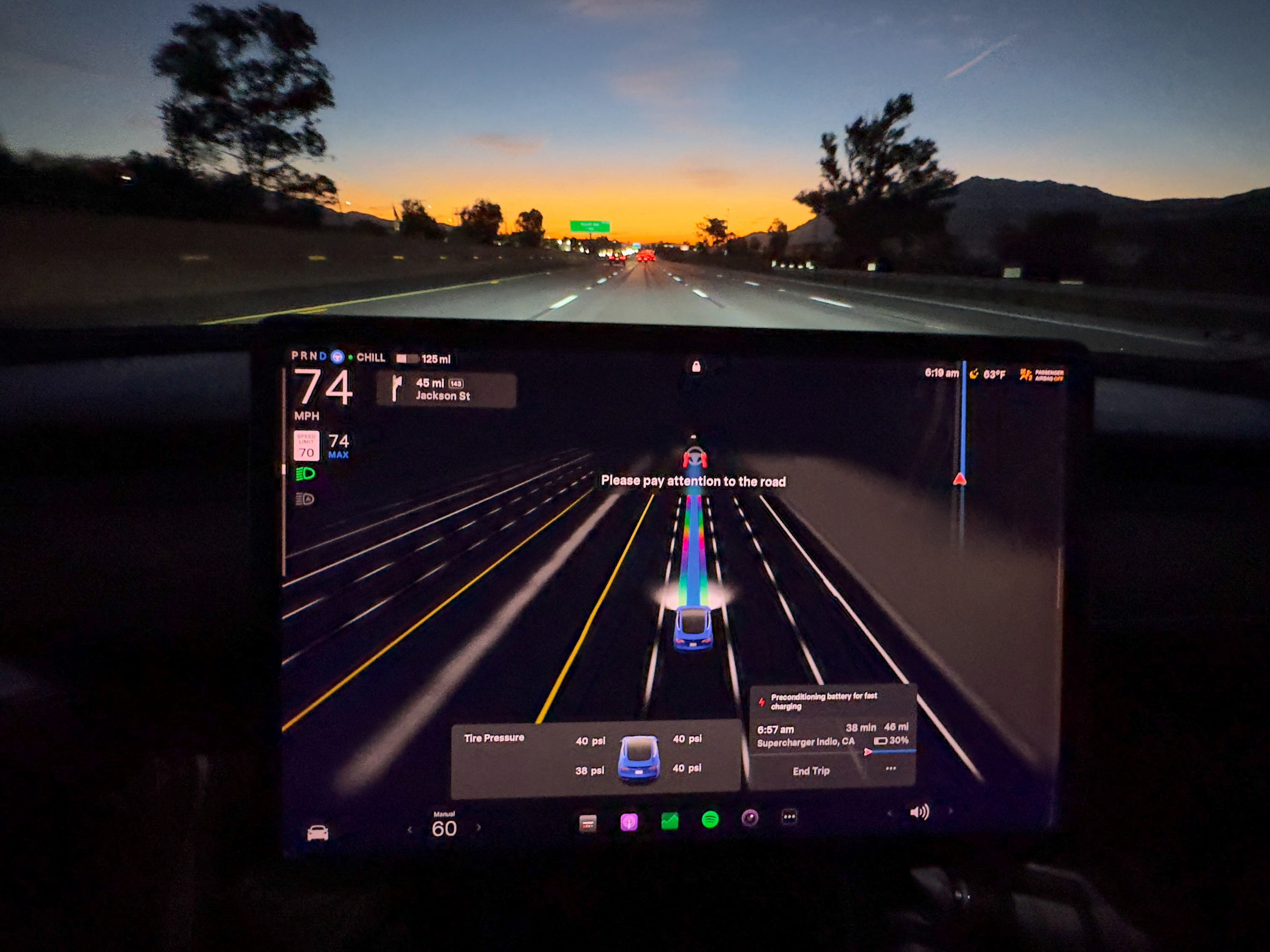
Legal Battle Over Tesla’s Driver Assistance Technology
The California Department of Motor Vehicles (DMV) has taken legal action against Tesla, accusing the company of misleading consumers regarding its driver assistance technologies. This dispute centers around the terms "Full Self-Driving" (FSD) and "Autopilot," which the DMV claims are deceptive and create a false impression of autonomy in Tesla vehicles.
During a recent weeklong court hearing that concluded on Friday, the DMV argued that Tesla's advertising practices constitute false and misleading information. The DMV is seeking to suspend Tesla’s license to manufacture and sell vehicles in California for at least 30 days. If the court rules in favor of the DMV, it could significantly impact Tesla’s operations in the state, where the company has historically been a major player in the automotive market.
The lawsuit, filed in 2022, also seeks monetary damages for consumers who may have been misled by Tesla’s marketing. According to the DMV, Tesla's website advertised its driver assistance systems as capable of conducting short and long-distance trips with no action required from the driver. However, the DMV asserts that these claims are inaccurate and do not reflect the current capabilities of the technology.
Tesla’s Defense and Consumer Perception
Tesla’s legal team has defended the company, stating that it has always made it clear that its vehicles cannot fully drive themselves. Attorney Matthew Benedetto, a member of Tesla’s legal team, emphasized that the company has consistently informed buyers that they cannot fully rely on FSD or Autopilot. During the hearing, Benedetto reiterated this point, highlighting that cars with FSD capabilities are not autonomous.
However, the DMV argues that Tesla’s use of terms like "Autopilot" is confusing for consumers. Melanie Rosario, commander-sergeant of the DMV Valley Area Command, testified that the term "Autopilot" implies that the vehicle can operate independently. She noted that this contradicts the fine print instructions that require drivers to remain attentive and ready to take control at any moment.
Bryant Walker Smith, a voting member of the Society of Automotive and Aerospace Engineers, described the distinction between driver assistance and automated driving features as a "dam that separates the land from the sea." He stressed the importance of clarity for drivers, emphasizing that every driver should know without ambiguity whether they are in control of the vehicle.
Consumer Surveys and Legal Implications
A witness for Tesla, Stephen Nowlis, a professor of marketing at Washington University in St. Louis, presented survey results during the hearing. The survey, commissioned by Tesla, suggested that consumers were not confused by the company’s terminology. However, critics argue that the survey did not account for all individuals who interact with Tesla vehicles, potentially limiting its scope and reliability.
Eric Goldman, a professor at Santa Clara University School of Law, described the DMV’s lawsuit as "very high-stakes" for Tesla. Even if the company prevails in this case, Goldman noted that it may still face legal challenges elsewhere over its claims.
Ongoing Legal Challenges
Tesla’s driver assistance technologies are under scrutiny in multiple legal cases. A wrongful death complaint in Florida alleges that a Tesla driver using Autopilot briefly looked away, resulting in a collision that killed a 22-year-old woman. Tesla has defended itself, arguing that the driver was responsible for the crash.
Additionally, Tesla is facing a class-action lawsuit and an ongoing investigation by the National Highway Traffic Safety Administration (NHTSA) concerning "phantom braking." This phenomenon occurs when a vehicle suddenly slams on the brakes without an apparent reason, often at high speeds.
As the legal battle continues, the outcome could have significant implications for Tesla’s reputation and future operations in California. The case highlights the growing tension between technological innovation and consumer protection, as well as the need for clear communication about the capabilities of advanced driver assistance systems.

Post a Comment for "Tesla's California Car Sales Hang in Balance After High-Stakes Trial"
Post a Comment