Teen Geniuses Outsmart Top AI Systems
The AI Challenge at the International Mathematical Olympiad
The most advanced AI models have entered the prestigious International Mathematical Olympiad (IMO), showcasing a breakthrough that once seemed impossible. While these systems achieved remarkable results, they still fell short of the world’s top young mathematicians.
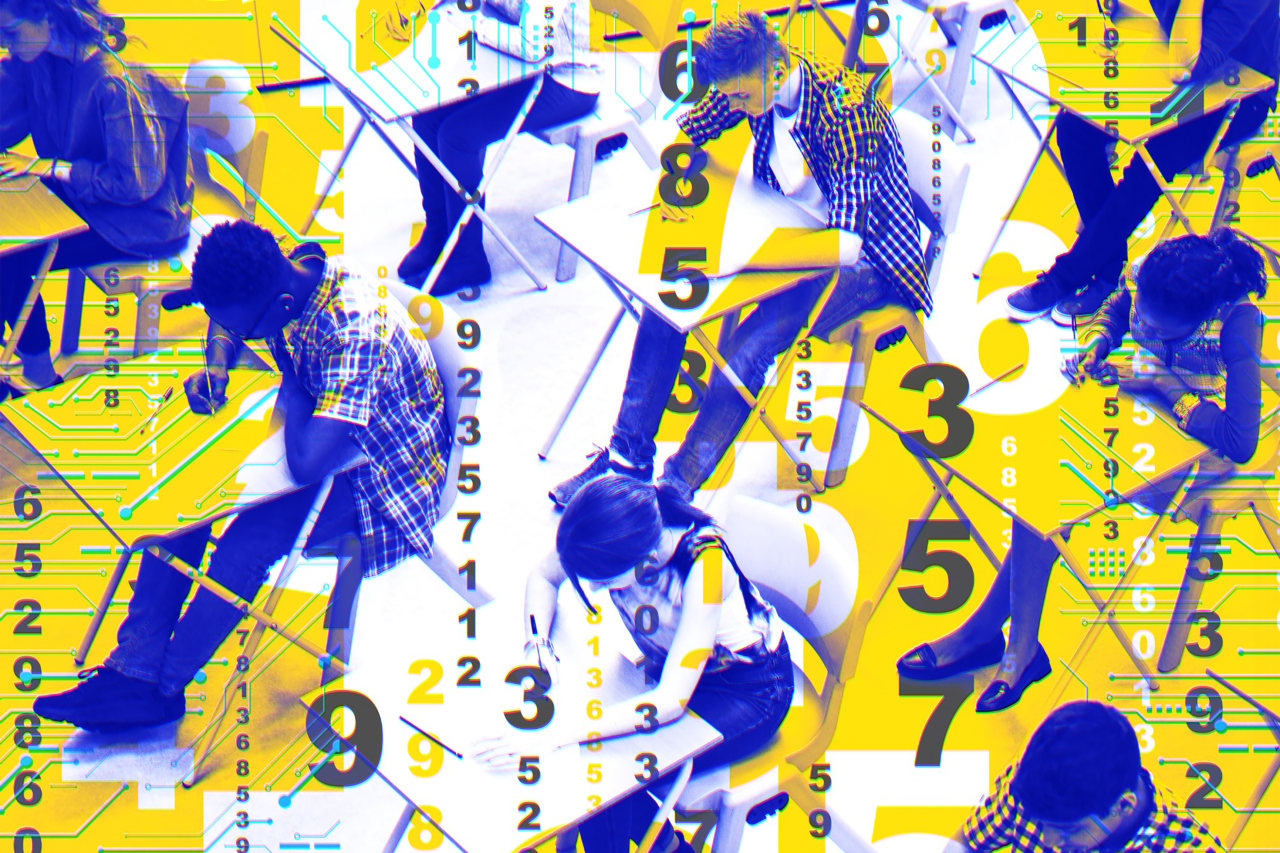
Every year, hundreds of elite high school students from around the globe gather for the IMO, an event known for its rigorous two-day competition. Each day, participants face three increasingly complex problems spanning algebra, geometry, number theory, and combinatorics. Solving these challenges requires not only mathematical skill but also creativity and logical reasoning. The test is so demanding that even understanding the problems can be a significant mental workout.
Because of their complexity and originality, the problems have become a key benchmark for measuring AI progress. For years, research labs dreamed of creating systems capable of achieving an IMO gold medal—a goal often compared to the four-minute mile in athletics. This year, that dream became reality.
Google DeepMind's AI model scored a gold-medal level by solving five out of six problems perfectly. Similarly, OpenAI achieved a gold medal without participating in the official competition. Both companies described their achievements as major steps forward, though they acknowledged they are not yet at the peak.
Despite this progress, 26 students outperformed the AI systems. Among them were notable figures like Qiao (Tiger) Zhang, a two-time gold medalist from California, and Alexander Wang, who earned his third straight gold. Wang, now a high-school senior, expressed confidence that AI could achieve a perfect score within a year. Zhang, however, was more cautious, stating he was "50-50" on whether that would happen.
This raises an important question: Will this year be remembered as the last time humans outperformed AI at the IMO? Thang Luong, leader of Google DeepMind’s team, believes it might well be.
DeepMind vs. OpenAI: A New Era of Competition
Until recently, the idea of AI competing at the IMO seemed far-fetched. However, the landscape has changed rapidly. Last year, DeepMind’s AI model solved four problems and earned a silver medal, just one point away from gold. This year, the company was officially invited to participate, with the same problems and grading criteria as the students.
The process of creating the IMO problems is designed to be challenging and unconventional. The problems must be novel, interesting, and beautiful. If a problem resembles any previously published one, it is discarded. By the time the exam begins, the list of potential problems is narrowed down to six.
DeepMind worked tirelessly to refine its AI system, using an unreleased version of Google’s Gemini Deep Think model. The team made adjustments right up until the competition. Thang Luong, a senior staff research scientist, had initially expected a bronze or silver medal. But when the AI solved all three problems on the first day, the team realized they had a chance at gold.
The solutions were so elegant and readable that they astonished mathematicians. By the second day, the team knew they had secured a gold medal. They celebrated by opening a bottle of whiskey—something other medalists couldn’t do.
While DeepMind kept its results under wraps until after the event, OpenAI announced its own gold medal victory shortly after the closing ceremony. Though not part of the official competition, OpenAI’s model solved five out of six problems, earning a score of 35 out of 42 points.
The Human Element in Math
What makes these AI achievements impressive is not just the results, but how they were achieved. This year, DeepMind’s model operated entirely in natural language without human intervention, completing the exam within the 4.5-hour time limit. Last year, the model required translation into a computer programming language.
Despite these advancements, some experts believe AI will still struggle with certain types of problems. Junehyuk Jung, a former IMO gold medalist and researcher at DeepMind, argues that problems like Problem 6 will remain challenging for AI for at least another decade. He emphasizes that while AI may excel in some areas, humans will continue to outperform them in others.
The Future of Math and AI
For the U.S. team, this year’s competition was a success. The team won five golds and one silver, finishing second overall behind China. Many of these students are headed to prestigious universities like MIT, where they will continue their studies in math and computer science.
Some of these young mathematicians may one day work in fields such as algorithmic trading or hedge funds, where their skills are highly valued. Others may pursue academia, following in the footsteps of past IMO champions who have gone on to become professors or even presidents.
As AI continues to evolve, the relationship between humans and machines will likely change. Some see AI as a tool that can assist mathematicians, while others fear it could eventually surpass human ability. But for now, the human element remains crucial in solving the most complex and creative problems.
In the end, the 2023 IMO was not just a test of mathematical skill—it was a glimpse into the future of AI and the enduring power of human ingenuity.

Post a Comment for "Teen Geniuses Outsmart Top AI Systems"
Post a Comment