Surviving the Taliban's Kill List: Sisters' Escape Story
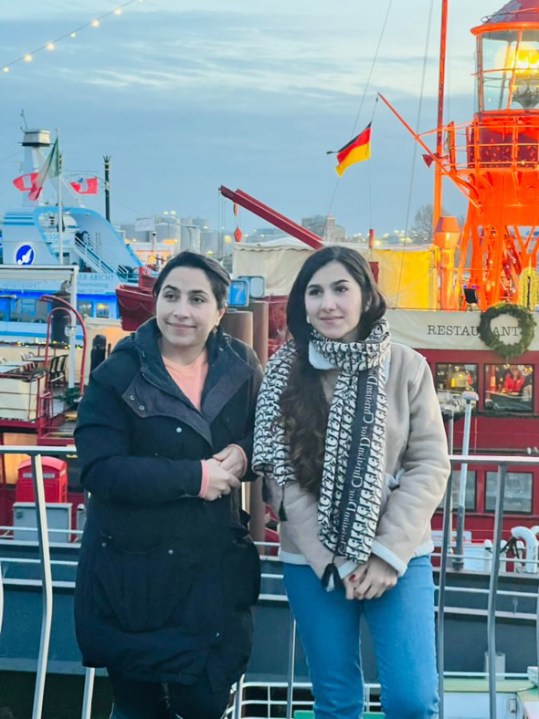
The Escape from Taliban-Controlled Afghanistan
In the summer of 2021, two Afghan sisters found themselves on the Taliban’s “kill list” after the group took control of their country. Faced with a daunting challenge, they embarked on a perilous journey to escape Afghanistan. Their story, shrouded in secrecy, was made possible through the help of an American Afghan war veteran.
Today, Sonia and Breshna Azatyar are safely settled in different parts of Europe, using their real names. Alongside retired Sergeant Major Gonzalo Lassally, who founded the non-profit Tarjoman.org, they are sharing the details of how they managed to leave Afghanistan nearly four years ago during the U.S. military withdrawal.
Life on the Taliban’s “Kill List”
The fall of Kabul on August 15, 2021, marked a turning point for many Afghans. Sonia feared for her family's safety due to concerns that the Taliban would target those who had worked with the U.S. military. She recalled, “All the women and girls and men who have worked for the (U.S. military), or with them… they may not live anymore. So that was a clear reason to be scared.”
Breshna, then 24, was in the middle of an exam at the Afghanistan Institute of Higher Education when the chaos began. She heard loud noises and people shouting that the Taliban had arrived. “I called Sonia because she was the only person who came to my mind. ‘What should I do? Where should I go?’” she said.
The Urgent Escape
Breshna stayed hidden in her university classroom until Sonia, a journalist and interpreter, found her. They asked a neighbor for a hijab to cover herself and escape, as the Taliban would have killed her on sight. “I wasn’t able to sleep for a few days, and then I wasn’t even able to leave the house. I had that trauma in my head, like, ‘What if they see me outside my home, they will kill me?'” Breshna shared.
As U.S. troops withdrew, the Taliban began targeting families to find unwed daughters to take as brides for fighters. Lassally explained, “A lot of people we were helping let us know or inform us that they’re being told that women that were at the age of being married, which to those men is particularly young, were going to be married off to the Taliban fighters, as a method of thanks to what the Taliban fighters did by freeing the country.”
Rescuing Allies
Lassally, who served two deployments in Afghanistan, started the operation Tarjoman from his home to help evacuate Afghan allies, such as interpreters he worked with during his deployment. The group’s mission was to move friends, interpreters, and others with connections to U.S. soldiers still in the country.
“We were able to get resources like buses to transport people from Kabul to Islamabad or Mazar-i-Sharif, or places like that, to get people out of the unsafe areas where they were going and knocking door to door, ransacking the apartments or houses, looking for documents to find proof that people were working for Americans,” Lassally said.
A Perilous Journey
Lassally and his team carefully executed an escape plan for Breshna, her mother, and brother. However, the dangers were high. “We had to carefully instruct people to hide documents a certain way or take pictures of them and get rid of them. Hide the cell phones. Have burkas on hand, have a good story going across the border,” he said.
Leaving Afghanistan was a scary experience for Breshna and her family. They left without a passport or visa and were told not to use her cell phone. “You have to hide you, and you have to hide your face. You have to wear something to cover all your face,” she said.
Life After the Escape
Breshna and her family crossed into Pakistan on September 27, 2021, and later moved to Paris. While both sisters escaped the Taliban, their older brother remained in Kabul with his wife and five children, including a newborn daughter.
The 39-year-old former police officer was attacked by Taliban fighters on the street. He was seen wearing a T-shirt with a picture of Ahmed Shah Massoud, the assassinated guerrilla commander of the resistance against the Taliban. He died in the hospital on June 17.
Adjusting to a New Life
Sonia now resides in Nijmegen in the Netherlands and struggles with making connections in her new country while dealing with emotional wounds from her past. “Here you have everything, and you can connect with people, but you’re all the time, afraid that, do they really understand me?” she said.
Despite the trauma, Breshna expressed gratitude for her new life away from Taliban-controlled Afghanistan. “It’s way 1,000 times better than what we had, what I had in Afghanistan, like imagine having a life I can’t call it like life in Afghanistan. We were just surviving.”

Post a Comment for "Surviving the Taliban's Kill List: Sisters' Escape Story"
Post a Comment