Supreme Court Allows Trump to Remove 3 Democrats from Consumer Product Safety Commission
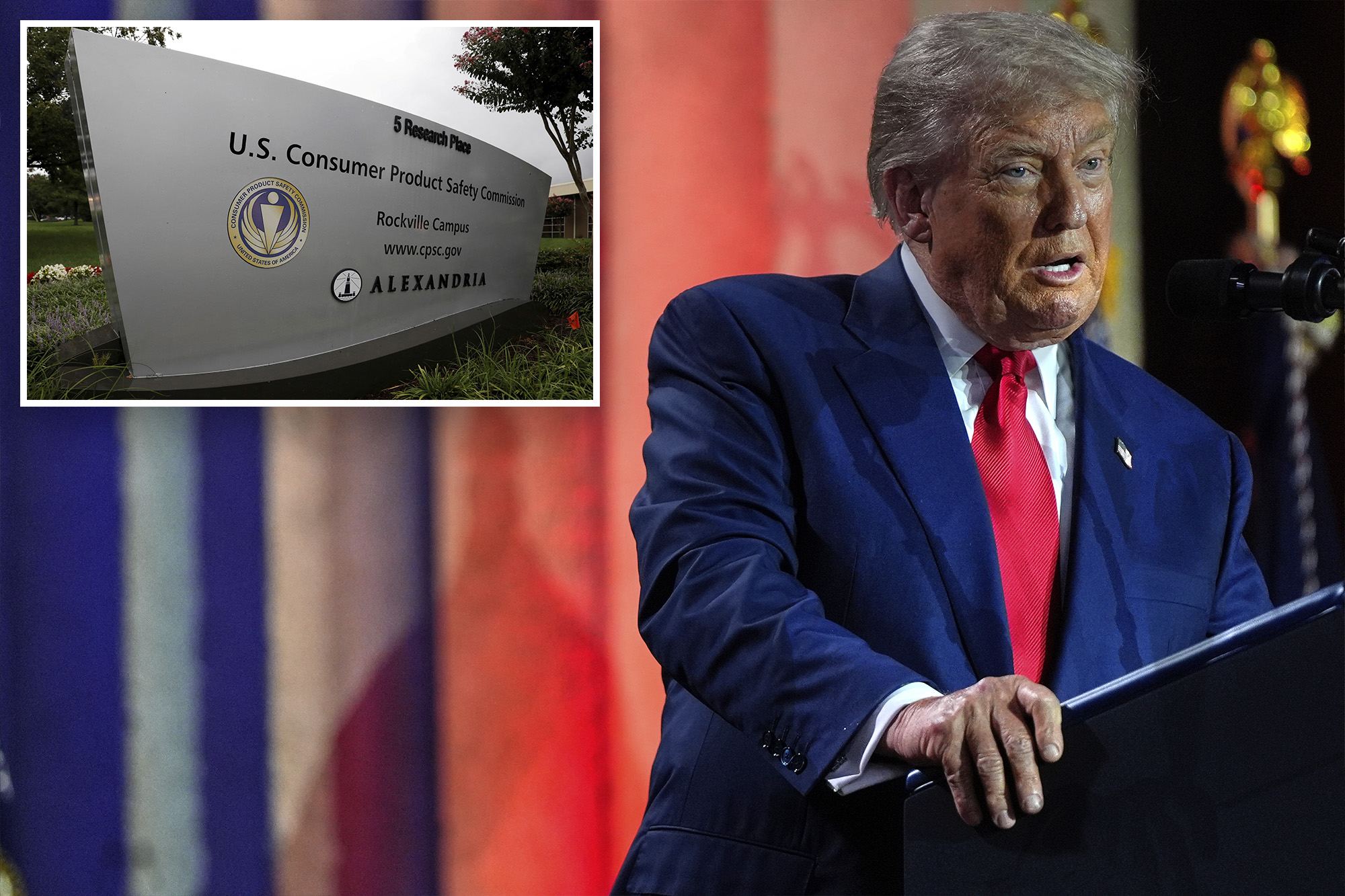
Supreme Court Allows Trump Administration to Remove Democratic Members of Consumer Product Safety Commission
The U.S. Supreme Court has taken a significant step in the ongoing debate over executive power by allowing the Trump administration to remove three Democratic members of the Consumer Product Safety Commission (CPSC). These commissioners were initially fired by President Donald Trump and later reinstated by a federal judge, but the court’s recent decision appears to support the administration’s position.
The justices acted on an emergency appeal from the Justice Department, which argued that the agency is under the president's control and that he has the authority to remove commissioners without cause. The court provided a brief, unsigned explanation stating that the case is similar to previous ones where it allowed Trump to fire board members of other independent agencies, even though Congress had protected them from arbitrary dismissals.
Three liberal justices dissented, expressing concerns about the implications of the ruling. Justice Elena Kagan wrote for herself, as well as Justices Sonia Sotomayor and Ketanji Brown Jackson, warning that such actions could lead to the gradual transfer of power from one branch of government to another.
Role of the Consumer Product Safety Commission
The CPSC plays a critical role in protecting consumers from dangerous products. It issues recalls, sues companies that violate safety standards, and works to ensure that products on the market are safe for public use. In May, Trump fired the three Democratic members of the five-member commission, who had been nominated by President Joe Biden. They were serving seven-year terms.
In June, U.S. District Judge Matthew Maddox in Baltimore ruled that the dismissals were unlawful. He attempted to distinguish the CPSC’s role from those of other agencies where the Supreme Court had previously allowed firings to proceed. However, the high court’s conservative majority had previously declined to reinstate members of the National Labor Relations Board and the Merit Systems Protection Board, stating that the Constitution gives the president the authority to fire board members “without cause.”
Legal Implications and Historical Context
The administration has argued that all these agencies fall under the president’s control as the head of the executive branch. Judge Maddox, a Biden nominee, noted that the CPSC’s functions may not be purely executive, making it difficult to categorize its role in the same way as other agencies.
This legal battle over the president’s power to fire could potentially lead the court to reconsider a 90-year-old Supreme Court decision known as Humphrey’s Executor. In this 1935 case, the court unanimously held that presidents cannot fire independent board members without cause. This decision established an era of powerful independent federal agencies responsible for regulating various aspects of American life, including labor relations, employment discrimination, and the airwaves.
However, conservative legal theorists have long criticized Humphrey’s Executor, arguing that the modern administrative state misinterprets the Constitution. They believe such agencies should be more directly accountable to the president.
Justice Kagan suggested that the court has already “all but overturned” Humphrey’s Executor through its recent decisions. Other removal cases are also making their way to the high court, including the firing of a member of the Federal Trade Commission, the very agency involved in Humphrey’s Executor.
Recent Developments and Ongoing Conflicts
Last week, a federal judge ordered Rebecca Slaughter, a commissioner of the FTC, to be reinstated. She returned to work but was soon sidelined again after an appeals court temporarily blocked the judge’s order. This highlights the ongoing tensions between the judiciary and the executive branch regarding the limits of presidential authority.
The CPSC was created in 1972, and its five members must maintain a partisan split, with no more than three representing the president’s party. They serve staggered terms to ensure that each president has “the opportunity to influence, but not control,” the commission. Attorneys for the fired commissioners have argued that the recent terminations could threaten the commission’s independence and its ability to function effectively.
As the legal battles continue, the Supreme Court’s decisions will likely shape the future of independent federal agencies and the balance of power among the branches of government.

Post a Comment for "Supreme Court Allows Trump to Remove 3 Democrats from Consumer Product Safety Commission"
Post a Comment