Starmer Vows Palestinian Recognition If Israel Halts Gaza Conflict
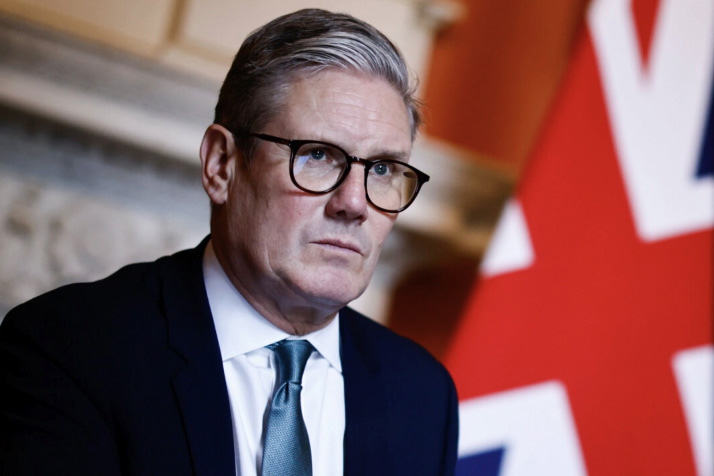
UK’s Prime Minister Announces Potential Recognition of Palestinian State
British Prime Minister Keir Starmer has made a significant statement regarding the recognition of a Palestinian state. In a press release on Tuesday, he declared that the United Kingdom will recognize a Palestinian state by September unless Israel takes specific actions to address the humanitarian crisis in Gaza and agree to a ceasefire.
Starmer emphasized that the UK has long supported the idea of a Palestinian state and described it as an "inalienable right" for the Palestinian people. He also highlighted that the establishment of a Palestinian state is crucial for Israel's long-term security. According to Starmer, the UK will proceed with recognizing Palestinian statehood at the United Nations General Assembly unless the Israeli government takes substantive steps to end the current situation in Gaza, reaches a ceasefire, commits to no annexation in the West Bank, and supports a long-term peace process leading to a two-state solution.
The conflict began following the October 7, 2023, attack by the Palestinian terrorist group Hamas on southern Israel, which resulted in around 1,200 deaths and 251 abductions. British Foreign Secretary David Lammy echoed Starmer’s statement during a speech at the United Nations later that day, urging the international community to uphold past resolutions supporting the two-state solution.
Starmer pointed to several key UN resolutions, including 181, 242, 446, 1515, and 2334, emphasizing their importance in addressing the Israeli-Palestinian conflict. He stressed that these resolutions should not just be numbers on a page but should reflect the conviction of a deeply frustrated global community.
This announcement comes shortly after French President Emmanuel Macron announced his government would recognize Palestinian statehood when the U.N. General Assembly meets in September. Currently, 146 U.N. member states recognize Palestinian statehood, according to the U.N. Office of the High Commissioner for Human Rights.
In response, the Israeli Foreign Ministry criticized the UK's stance, stating that such a move rewards Hamas and hinders efforts to achieve a ceasefire in Gaza. They argued that the shift in the British government’s position, influenced by recent events and internal political pressures, undermines the goal of securing a ceasefire and the release of hostages.
The conflict between Israel and Hamas saw a temporary ceasefire during the final days of President Joe Biden's administration. However, this truce collapsed in March due to disagreements over the next steps. While Israeli negotiators sought to extend the initial phase of the ceasefire, Hamas pushed for moving to the second phase, which required the complete withdrawal of Israeli forces from Gaza in exchange for the return of all living hostages.
U.S. special envoy Steve Witkoff had planned to attend new peace talks with Hamas earlier this month but withdrew, citing a lack of desire from Hamas to reach a ceasefire. Former President Donald Trump also commented on the potential recognition of a Palestinian state, arguing that it would reward Hamas after its attacks.
There have been growing calls from the international community for Israel to improve protections for noncombatants in Gaza and bring the conflict to an end. Following the October 7 attack, Israeli forces surrounded and bombarded the Gaza Strip, sending ground forces to eliminate Hamas and secure the release of hostages. The Gaza Ministry of Health, operating under Hamas' control, has reported over 60,000 deaths since the attack, with more than half being women, children, and the elderly.
Recent statements from the UK and 30 other countries have criticized Israel's model for humanitarian aid distribution in Gaza and called for an end to the conflict. They also condemned Israeli plans to expand settlements in the West Bank. International aid organizations, including Doctors Without Borders and Oxfam, have raised concerns about the risk of starvation in Gaza and the danger faced by aid seekers approaching distribution sites.
Israel has taken steps to improve aid flow into Gaza, including resuming air drops and opening overland corridors. President Trump has also urged Israel to prioritize feeding the people of Gaza. Israeli Prime Minister Benjamin Netanyahu has denied reports of a starvation campaign, calling them exaggerated and biased against Israel.
The Coordinator of Government Activities in the Territories has accused international groups of overlooking the large influx of aid during the hostage-release deal and omitting data on improvements in aid delivery. Israel has also accused Hamas of diverting aid meant for civilians to its operations, a claim Hamas denies.
The ongoing conflict continues to draw attention from the global community, with calls for a resolution that addresses both the humanitarian crisis and the broader geopolitical issues at stake.

Post a Comment for "Starmer Vows Palestinian Recognition If Israel Halts Gaza Conflict"
Post a Comment