Safety or intimidation? Masked ICE agents ignite debate
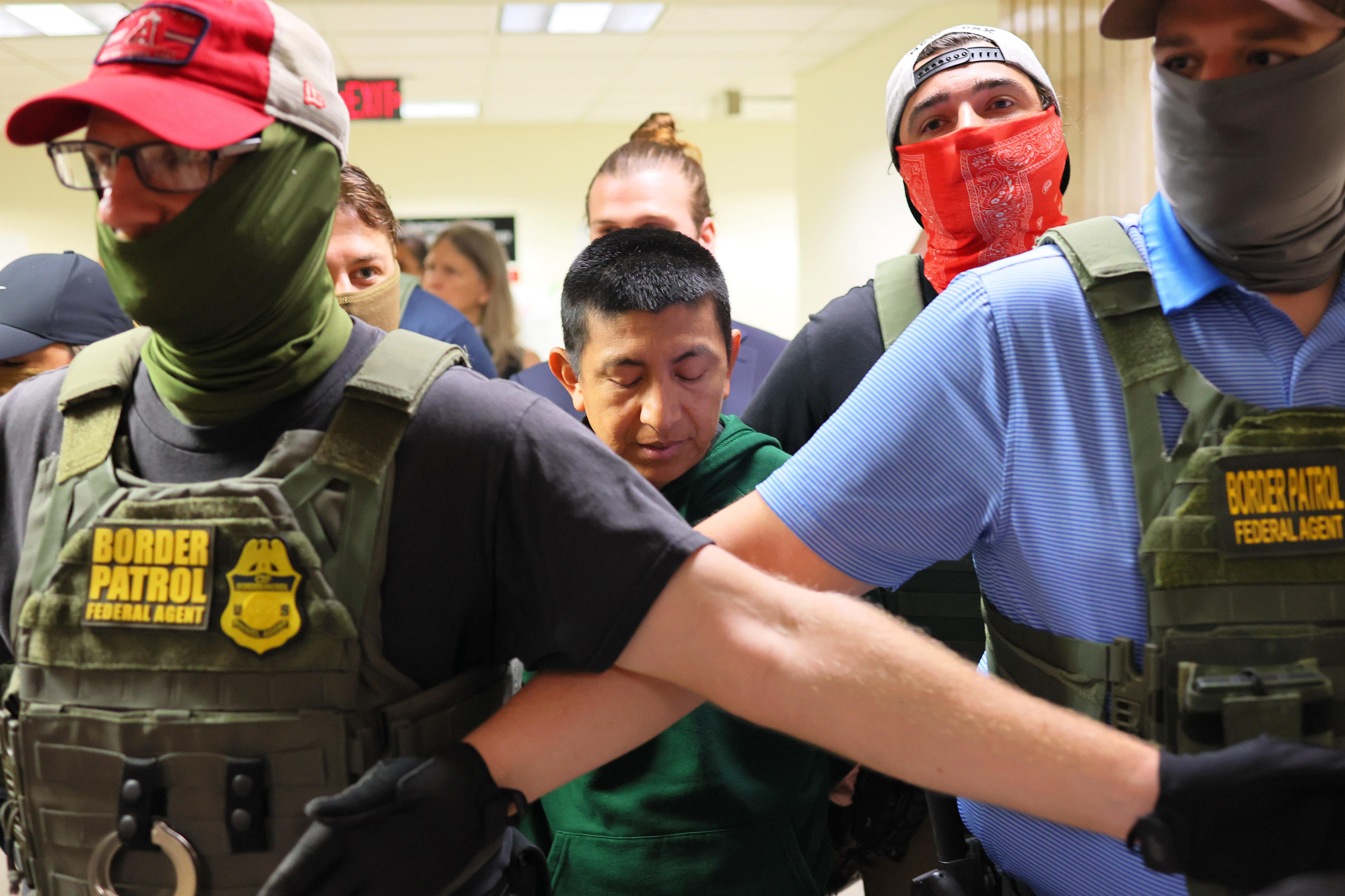
The Rise of Masked ICE Agents and the Growing Debate
Immigration agents are increasingly using masks to conceal their identities, a practice that has sparked significant controversy. As the White House intensifies its efforts in immigration enforcement, including increased detentions and deportations, the use of masks by Immigration and Customs Enforcement (ICE) agents has come under scrutiny.
A coalition of Democratic attorneys general has called on Congress to pass legislation requiring ICE agents to operate without masks, arguing that the policy of allowing agents to remain anonymous has led to an increase in impersonators posing as law enforcement. Members of Congress from the Democratic party have also urged the administration to ensure that ICE agents are more visible and identifiable.
Federal authorities claim that masking is necessary to protect agents and their families from retaliation. This comes as part of President Donald Trump's directive to carry out the largest mass deportation in U.S. history. Homeland Security Secretary Kristi Noem has stated that gang members and groups affiliated with Antifa have been sharing agents' personal information, including home addresses. She emphasized the need for agents to wear masks to stay safe, especially after multiple attacks on federal immigration sites and individual officers.
Noem said in a statement on July 11: "We will prosecute those who dox ICE agents to the fullest extent of the law. These criminals are taking the side of vicious cartels and human traffickers. We won't allow it in America."
Critics Argue Masks Are Intimidation Tactics
Critics argue that the use of masks by ICE agents is largely an intimidation tactic rather than a genuine safety measure. They believe that this practice weakens the relationship between the public and law enforcement. The American Civil Liberties Union (ACLU) has also raised concerns that unidentifiable officers may engage in racial profiling, which can exacerbate existing issues.
Arizona Attorney General Kris Mayes, a Democrat, stated, "Secret police tactics like this erode trust in law enforcement and allows criminals to dangerously impersonate officers — which is already happening."
Diane Goldstein, a retired California police supervisor and executive director of the Law Enforcement Action Partnership, argues that masked agents are increasing tensions because there is little accountability when law enforcement operates anonymously. Goldstein, who served as a police lieutenant in the Los Angeles area, noted that other law enforcement officials, such as judges, district attorneys, and public defenders, rarely wear masks.
"You know who doesn’t wear masks? Judges. District attorneys. Public defenders. State and local law enforcement, except for very narrow carveouts," Goldstein said. "The safety issue is just an excuse. The administration doesn't seem to understand that it's their heavy-handed tactics that are increasing the level of danger to their officers. They are pissing off ordinary Americans."
The History of Mask-Wearing in Public
The issue of wearing masks in public to maintain anonymity has a long history in the United States. Some states have laws banning protesters from wearing masks, often tracing their origins to events like KKK marches. More recently, these laws have been used to limit mask-wearing by pro-Palestinian protesters, particularly on college campuses, according to the ACLU.
Former President Donald Trump has criticized protesters who wear masks, posting on Truth Social on June 8, "… from now on, masks will not be allowed to be worn at protests. What do these people have to hide, and why???"
Goldstein believes Trump’s comment highlights the core issue: police officers should rarely hide their identity. Modern policing, rooted in Sir Robert Peel’s Nine Principles of Policing, emphasizes community cooperation, trust, and the idea that officers are part of the community, not separate from it.
"Everything they are saying goes against everything law enforcement has been taught about how we should serve others," Goldstein said of the masked agents. "Right now, Homeland Security is operating like thugs and criminals. And when we can't tell the difference between a bad guy and a good guy…"

Post a Comment for "Safety or intimidation? Masked ICE agents ignite debate"
Post a Comment