Public Awareness of Smoking and Alcohol Risks During Pregnancy
Understanding the Importance of Maternal Health Knowledge
Most Americans understand that maintaining good health before and during pregnancy is crucial for ensuring a healthy baby. Many are aware that smoking or drinking alcohol can have harmful effects, increasing the risk of preterm birth, low birth weight, or birth defects. However, there are many other aspects of maternal health that remain unclear to a significant portion of the population.
According to a survey conducted by the Annenberg Public Policy Center (APPC) in April 2025, many U.S. adults lack knowledge about which vaccinations are safe and recommended during pregnancy and what constitutes a healthy weight gain. The survey included over 1,600 participants and revealed that people often have gaps in their understanding of critical health information.
Key Findings from the Survey
The survey highlighted several areas where public knowledge is lacking:
- Vaccinations During Pregnancy: There is confusion about which vaccines are safe and recommended for pregnant individuals. For example, only 11% of respondents knew that the measles vaccine (MMR) is not recommended during pregnancy.
- Weight Gain During Pregnancy: Less than half of those surveyed (46%) were aware that normal-weight individuals should gain between 25 and 35 pounds during pregnancy.
- Iron Supplements: Only 42% of respondents correctly understood that iron supplements are recommended only for those with anemia.
- High Blood Pressure: Nearly a quarter of respondents were unsure if untreated high blood pressure increases the risk of stroke in pregnant individuals.
What Most People Get Right
Despite these gaps, many individuals are knowledgeable about important aspects of pregnancy health:
- Health Impact: 91% of respondents recognized that how well someone takes care of their health during pregnancy affects their baby’s health.
- Pre-Pregnancy Health: 86% of respondents knew that pre-pregnancy health also plays a role in the baby’s well-being.
- Diabetes Testing: 80% of respondents knew that pregnant individuals should be tested for diabetes.
- Folic Acid: 71% of respondents were aware that folic acid should be taken daily by those who are or may become pregnant.
Areas Where More Education Is Needed
There are several key areas where additional education is necessary:
- Iron Supplements: Many people believe that all pregnant individuals should take iron supplements daily, but this is not the case. Iron supplements are only recommended for those with anemia.
- Weight Gain: A large number of respondents are unsure about the appropriate weight gain range during pregnancy.
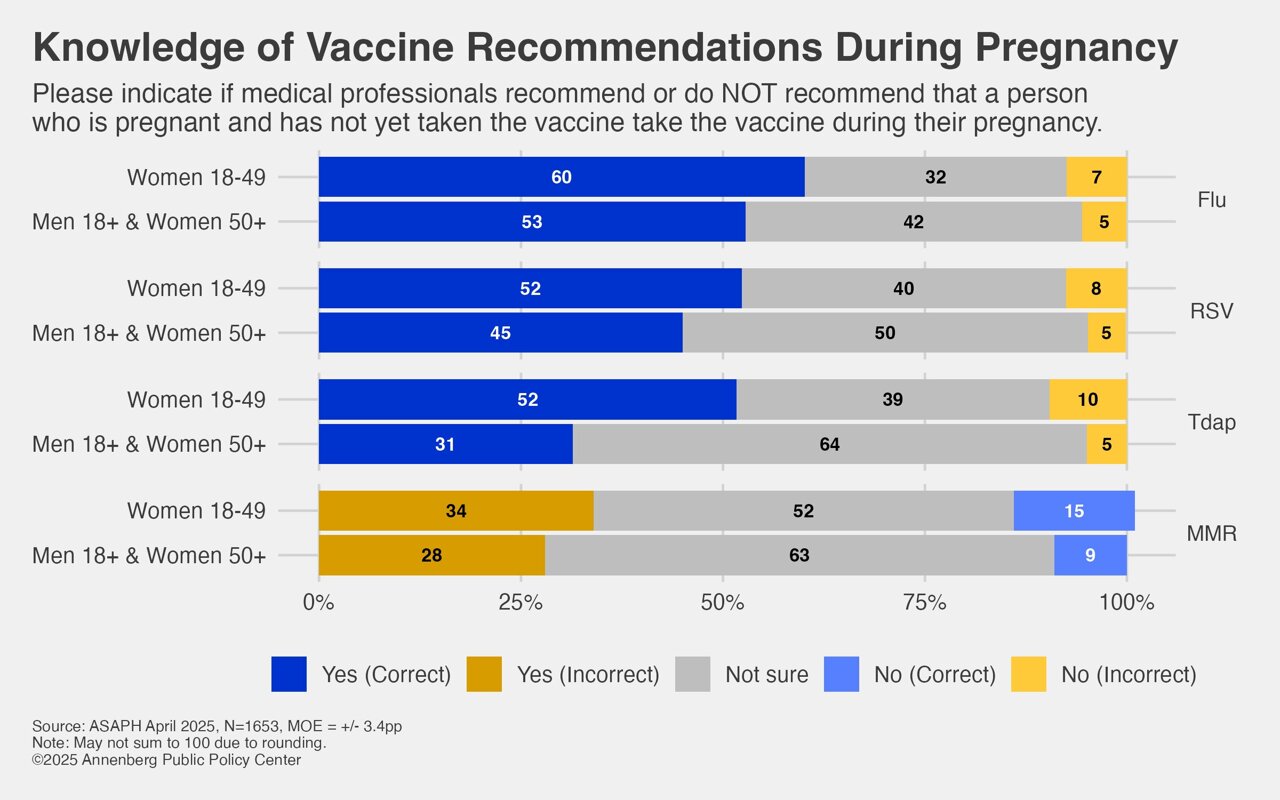
- Vaccinations: There is significant uncertainty about which vaccines are recommended for pregnant individuals. For instance, while the Tdap, flu, and RSV vaccines are recommended, many people are unaware of this.
Smoking, Drinking, and Pregnancy
Most people understand the negative impacts of smoking and drinking during pregnancy:
- Birth Defects: 82% of respondents knew that smoking increases the risk of birth defects.
- Early Delivery: 77% recognized that smoking increases the likelihood of early delivery.
- SIDS: 56% were aware that smoking in the home increases the risk of Sudden Infant Death Syndrome (SIDS).
- Underweight Babies: 81% knew that smoking increases the chances of having an underweight baby.
However, there is less awareness about the importance of abstaining from alcohol when trying to conceive. While 64% of respondents believed that women should stop drinking both before and during pregnancy, 23% thought they should only stop once they know they are pregnant. Women of childbearing age were more likely to hold this incorrect belief compared to other groups.
Vaccines and Pregnancy
Medical professionals recommend certain vaccines for pregnant individuals, including Tdap, flu, and RSV. However, the survey found a decline in public knowledge about these recommendations:
- Tdap Vaccine: Only 37% of U.S. adults knew that medical professionals recommend the Tdap vaccine for most pregnant people.
- Flu Vaccine: 55% of respondents knew that the flu vaccine is recommended, but 39% were unsure.
- RSV Vaccine: 47% of respondents knew that the RSV vaccine is recommended, while 47% were uncertain.
- Measles Vaccine (MMR): Only 11% correctly identified that the MMR vaccine is not recommended during pregnancy.
This lack of knowledge highlights the need for better public education on the importance of vaccinations during pregnancy and the specific recommendations provided by healthcare professionals.

Post a Comment for "Public Awareness of Smoking and Alcohol Risks During Pregnancy"
Post a Comment