Octopuses Are Fooled by the Classic Fake Arm Trick – Just Like Humans
Understanding the Body Ownership Illusion in Octopuses
Scientists have discovered that octopuses can be tricked into believing a fake arm is their own. This fascinating finding comes from experiments conducted in Japan, where researchers used an artificial appendage to test how these intelligent creatures perceive their bodies.
During the experiments, scientists pinched an artificial limb while the octopus was observing it. The response was remarkable: the octopuses recoiled in defense, swimming away, changing color, or retracting their arms as if they had been hurt. However, this reaction does not indicate that octopuses are simple or easily deceived. On the contrary, it suggests that they possess a high level of intelligence and a strong sense of ownership over their limbs.
This study marks the first time that the body transfer illusion has been observed in cephalopods. The body transfer illusion is a technique used to study an animal's sense of body ownership. It was originally discovered in humans in 1998 and later applied to monkeys and mice. Now, it appears that even invertebrates like octopuses can be fooled by this trick.
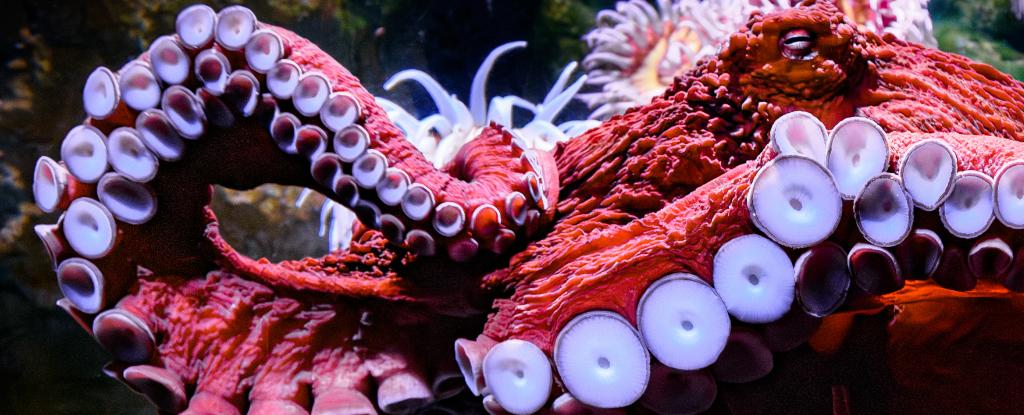
The findings are particularly significant because octopus arms have a unique nervous system. Unlike most animals, each arm can make decisions independently of the brain. They are also highly flexible and dexterous, with approximately 500 million neurons running through each limb. Additionally, the suckers on their arms can "taste" their environment, further highlighting their complex sensory capabilities.
To explore how octopuses perceive their bodies, researchers Sumire Kawashima and Yuzuru Ikeda from the University of the Ryukyus conducted a series of experiments. They placed plain-body night octopuses (Callistoctopus aspilosomatis) in a tank and hid one of their arms behind a screen. A fake arm made of soft gel was then placed in front of the screen.
Both the fake and hidden limbs were stroked simultaneously. Afterward, the researchers pinched the fake arm. Within seconds, the octopus reacted as if it had been attacked, even though it wasn’t physically harmed. This reaction is similar to what happens in humans when we are shown a fake hand behind a screen and see it being touched. Our brains can be tricked into feeling the touch on the fake hand, even though it’s not real.
The reason for this illusion lies in our brain's ability to integrate visual, tactile, and proprioceptive information. Octopuses appear to have a similar capacity, allowing them to perceive a fake limb as part of their body. This suggests that the basic perceptual rules governing body ownership in octopuses are similar to those in mammals.
Interestingly, the octopus brain seems to prioritize visual information over other senses like touch or taste. This makes it possible for them to adopt a limb they see, even if it isn't their own. According to Kawashima and Ikeda, these findings could provide valuable insights into the evolution of the sense of body ownership.
The research, published in Current Biology, highlights the complexity of octopus cognition and their ability to process sensory information in ways that mirror human perception. As scientists continue to explore the intricacies of these remarkable creatures, they may uncover new perspectives on how different species experience and understand their own bodies.

Post a Comment for "Octopuses Are Fooled by the Classic Fake Arm Trick – Just Like Humans"
Post a Comment