North Korea's Military Shifts in Ukraine – Why Is Seoul Quiet?
South Korea’s Muted Response to North Korea’s Military Expansion
When North Korea launched multiple ballistic missiles from its eastern coast in May, South Korea’s response was immediate. Within hours, Seoul joined Washington and Tokyo in condemning the launch as a “serious threat” to regional peace and security. However, this swift condemnation contrasts sharply with South Korea’s silence when a North Korean KN-23 missile struck a residential building in Kyiv, killing 12 civilians just weeks earlier.
This pattern of inaction is not isolated. South Korea remained quiet when Russia reportedly deployed a surface-to-air missile system to protect Pyongyang or when Ukrainian intelligence revealed that Russian instructors were training North Korean drone pilots on home soil—despite Kim Jong-un expressing “unconditional support” for Moscow’s war. Analysts are questioning whether Seoul fully recognizes the implications of what many consider North Korea’s most significant military transformation in decades, one shaped by real-world combat in Ukraine.
“We definitely should be alarmed,” says Chun In-bum, a former South Korean special forces commander. “But it’s just the nature of people to avoid catastrophe or be indifferent to the terrors of reality.”
Learning Modern Warfare
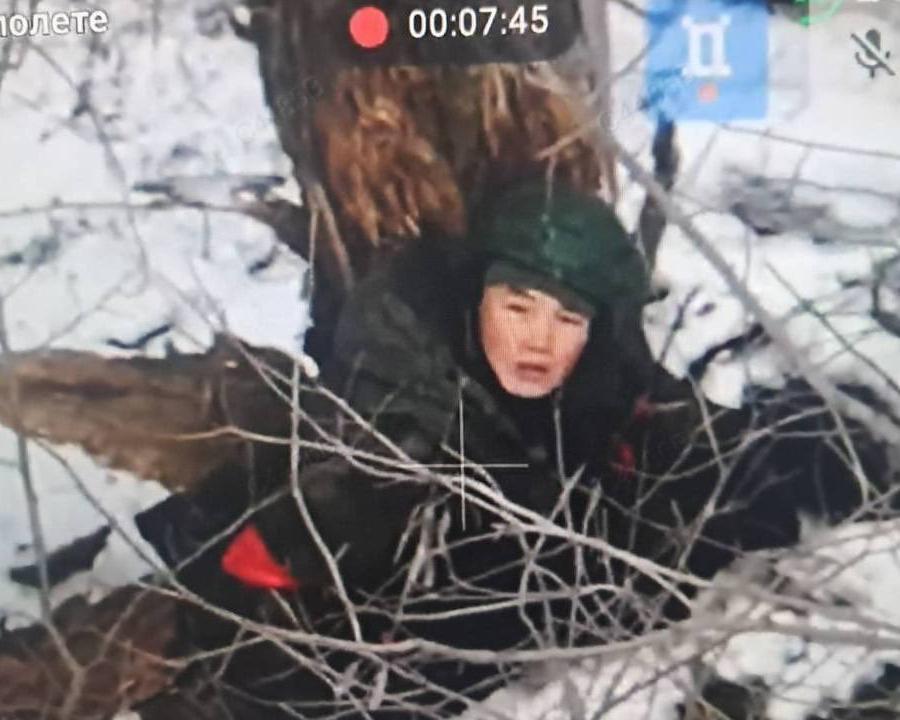
According to Ukraine’s military intelligence agency, North Korea supplies 40% of all munitions used by Russia in its war against Kyiv. The regime has significantly ramped up arms production at home, with Moscow paying Pyongyang directly. In autumn last year, Pyongyang sent an estimated 12,000 troops to fight in Russia’s Kursk region, a deployment that has since expanded. Additional 6,000 soldiers are now joined by 1,000 military engineers, hundreds of railway engineers, bridge-building specialists, logistics personnel, electricians, military police, and even interpreters, focused largely on rebuilding the battle-scarred Kursk region, according to Ukrainian officials.
This military partnership has been invaluable for Kim Jong-un’s regime, according to Maj Gen Vadym Skibitskyi, deputy head of Ukraine’s military intelligence agency, the HUR. “North Korea’s armed forces got new ammunition [from Russia]. Its soldiers gained experience of modern conflict. No other army in the region – Japan, South Korea and other countries – [has] participated in a modern war between two huge regular armies.”
The ideological commitment of their forces became clear when Ukraine captured two wounded North Korean prisoners in January. “We were shocked by them. They were bio-robots. They tried to kill themselves by biting their own veins,” Skibitskyi says. When one was asked if he wanted to return home, he replied: “Yes, because I will be treated like a hero. I fought in a modern war.”
North Korean troops are learning about combined arms warfare and the operation of strike and reconnaissance drones, electronic warfare systems, and other technologies previously unfamiliar to them. Moscow has transferred advanced weaponry and helped upgrade the accuracy of North Korea’s KN-23 ballistic missiles, which have since targeted Ukrainian urban centres, including Kharkiv.
In June, Ukrainian President Volodymyr Zelenskyy issued a pointed warning identifying South Korea directly: “This must be addressed now, not when thousands of upgraded Shahed drones and ballistic missiles begin to threaten Seoul and Tokyo.”
Strategic, Economic, and Political Factors
However, a mix of strategic, economic, and political factors are discouraging more visible action from South Korea, says Dr Yang Uk, a defense expert at the Asan Institute for Policy Studies in Seoul. Acknowledging North Korea’s military experience as a direct threat to Seoul would create pressure for a more robust domestic response, including potential weapons transfers to Ukraine that remain deeply unpopular in South Korea.
“Defense officials are particularly wary after December’s events,” Yang said, referring to the failed declaration of martial law by South Korean’s then president, Yoon Suk Yeol. “They’re really afraid of political attack and prefer to stay unseen by the public and press.”
Yang warns that Russia is working to integrate North Korea into its long-term defense supply chain—a partnership that could reshape Asia’s military balance long after the war ends.
Some analysts see Seoul’s silence as an extension of its longstanding “strategic ambiguity”: a reluctance to engage in foreign conflicts or unnecessarily alienate key powers, particularly those that might retain influence over Pyongyang.
Economic factors weigh heavily too. Prewar, Russia was one of South Korea’s top trading partners. Amid Donald Trump’s tariff threats, the new Lee Jae Myung government’s focus on economic recovery and “pragmatic diplomacy” leaves little appetite for confrontation.
Domestic politics also play a role. Lee’s Democratic party supports engagement with the North, reflecting how South Korea’s left-right divide centres more on North Korea policy than on western progressive values. Voices on the left argue South Korea owes Ukraine nothing.
Old Norms and Modern Threats
Some of Seoul’s inertia may be bureaucratic. Chun points to procurement and planning processes that can take years, even as threats evolve within months. “We are dealing with a level 10 super Godzilla,” he said. “But the bureaucracy only sees a tiger.”
North Koreans are already employing what they have learned in battle, he warns. “This should be a real wake-up call.” Skibitskyi echoes that concern, suggesting South Korea’s military doctrine is outdated and modeled on a pre-drone era.
When asked by the Guardian whether it viewed North Korea’s deployments and combat experience in Ukraine as a security concern, South Korea’s defense ministry avoided addressing the implications directly. “The participation of North Korean military personnel in the war in Ukraine constitutes a flagrant violation of the UN charter and relevant UN security council resolutions,” a spokesperson said. “The Republic of Korea strongly condemns such inhumane and unlawful acts in concert with the international community.”
Whether Seoul’s cautious approach reflects calculated long-term strategy or institutional paralysis remains unclear. But for Chun, the warning signs are impossible to ignore. “This is like a speeding train coming towards you,” he said. “You better move aside or start making preparations—while you still have time.”

Post a Comment for "North Korea's Military Shifts in Ukraine – Why Is Seoul Quiet?"
Post a Comment