NASA Probes to Analyze Hazardous Space Weather
Understanding Space Weather and Its Impact on Earth
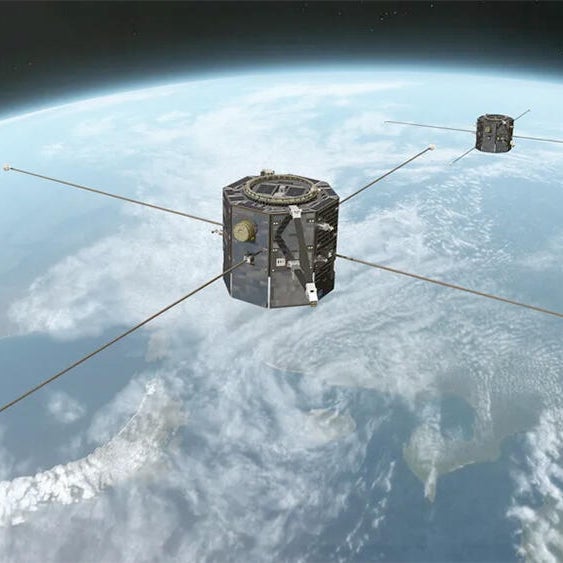
SpaceX recently launched twin satellites for NASA that will study how the electrically-charged solar wind interacts with Earth's magnetic field, creating constantly changing and occasionally dangerous "space weather" that affects satellites, electrical grids, and other critical systems. This mission is a significant step forward in understanding the complex relationship between our planet and the sun.
The identical TRACERS satellites will operate in the magnetosphere, which is the region around Earth dominated by the planet's magnetic field. This area acts as a protective shield against stellar radiation and other space-related phenomena. Joseph Westlake, director of NASA's solar physics division, emphasized the importance of this research: "What we will learn from TRACERS is critical for the understanding and eventually the predicting of how energy from our sun impacts the Earth and our space and ground-based assets."
This knowledge is essential for safeguarding our way of life on Earth. The mission includes not only the TRACERS satellites but also five other small satellites that carry out various scientific and technological experiments.
Additional Satellites and Their Missions
One of the additional satellites features a new "polylingual" terminal designed to communicate with multiple other satellites and space probes using different protocols. Another satellite will collect data about Earth's radiation budget, which refers to the balance between solar energy absorbed by Earth and the energy radiated back into space.
Another satellite focuses on high-energy "killer electrons" that are knocked out of the Van Allen radiation belts, posing threats to satellites and other systems. Two other small satellites were also aboard, including an experimental cubesat testing high-speed 5G communications technology in space and another built by an Australian company carrying five small satellites to test space-based air-traffic management technology.
Launch Details and Mission Success
The mission began at 2:13 p.m. EDT when a SpaceX Falcon 9 rocket launched from Vandenberg Space Force Base on the California coast. The launch was delayed by one day due to a regional power outage that disrupted air traffic communications over the Pacific Ocean near Vandenberg. After a smooth countdown, the first stage of the rocket returned to a landing near the launch pad, while the upper stage engine shut down to place the vehicle in its planned preliminary orbit.
About an hour and a half after launch, the two TRACERS satellites were deployed. Two of the other small satellites were released earlier in a slightly different orbit, with the remainder following shortly after.
TRACERS: A Closer Look
TRACERS stands for Tandem Reconnection and Cusp Electrodynamics Reconnaissance Satellites. These twin spacecraft, built by Boeing, will fly in tandem in the same orbit, 10 seconds to two minutes apart, helping researchers measure rapid changes in how the solar wind couples with Earth's magnetic field.
David Miles, principal investigator at the University of Iowa, explained the process: "The Sun is a burning, fiery ball of plasma, and as it burns, it blows off an exhaust that we call the solar wind, which is a plasma streaming toward Earth." Sometimes, Earth's magnetic field stands off the solar wind, similar to a rock in a stream. Other times, the systems couple, transferring mass, energy, and momentum into the Earth system.
This coupling drives spectacular auroral displays but also causes negative effects such as unplanned electrical currents in power grids and disruptions of GPS signals. Understanding these interactions is crucial for mitigating their impact.
Other Satellite Missions and Innovations
The goals of the other satellites launched include basic science and technology development. The Polylingual Experimental Terminal (PExT) will test equipment capable of sending and receiving data across multiple communications protocols, aiming to streamline satellite communications and lower costs.
The Athena-EPIC satellite continues measurements of Earth's radiation budget, using spare parts from earlier missions to test innovative LEGO-like satellite components that reduce costs and size. The RELATIVISTIC Atmospheric Loss (REAL) satellite, a small cubesat, studies how electrons in the Van Allen belts get knocked out of place, posing hazards to satellites and contributing to ozone destruction.
Despite its small size, the REAL cubesat carries a powerful particle sensor that makes rapid measurements of electrons entering the atmosphere, critical for understanding what scatters them. Its compact design could enable future missions requiring satellite constellations.

Post a Comment for "NASA Probes to Analyze Hazardous Space Weather"
Post a Comment