King George's War and the Thirty-Year Peace: A Colonial Drama
A Historical Overview of Fort St. Frederic and the Colonial Conflicts
Motorists who cross the Lake Champlain Bridge between New York and Vermont often pass by the remnants of a once-formidable fortress that played a significant role in the colonial American frontier. The ruins of Fort St. Frederic, located near Crown Point, N.Y., are now only marked by the faint outlines of its foundations. Completed in 1737, this imposing structure featured a four-story citadel armed with cannons and stood as a towering presence over the surrounding wilderness.
Built by French troops from Canada during a brief period of peace with the English colonists to the south, Fort St. Frederic became a strategic base for several attacks on New York and New England when hostilities resumed in 1744. One notable example was the November 1745 raid led by French forces and their indigenous allies, which targeted the settlement of Saratoga, N.Y., resulting in numerous deaths and abductions.
The conflict in which Fort St. Frederic gained its infamous reputation was known as King George’s War, an extension of the broader War of the Austrian Succession (1740-48). Named after British monarch George II, this war followed a pattern established by earlier North American conflicts, such as King William’s War and Queen Anne’s War, which were also rooted in European contests.
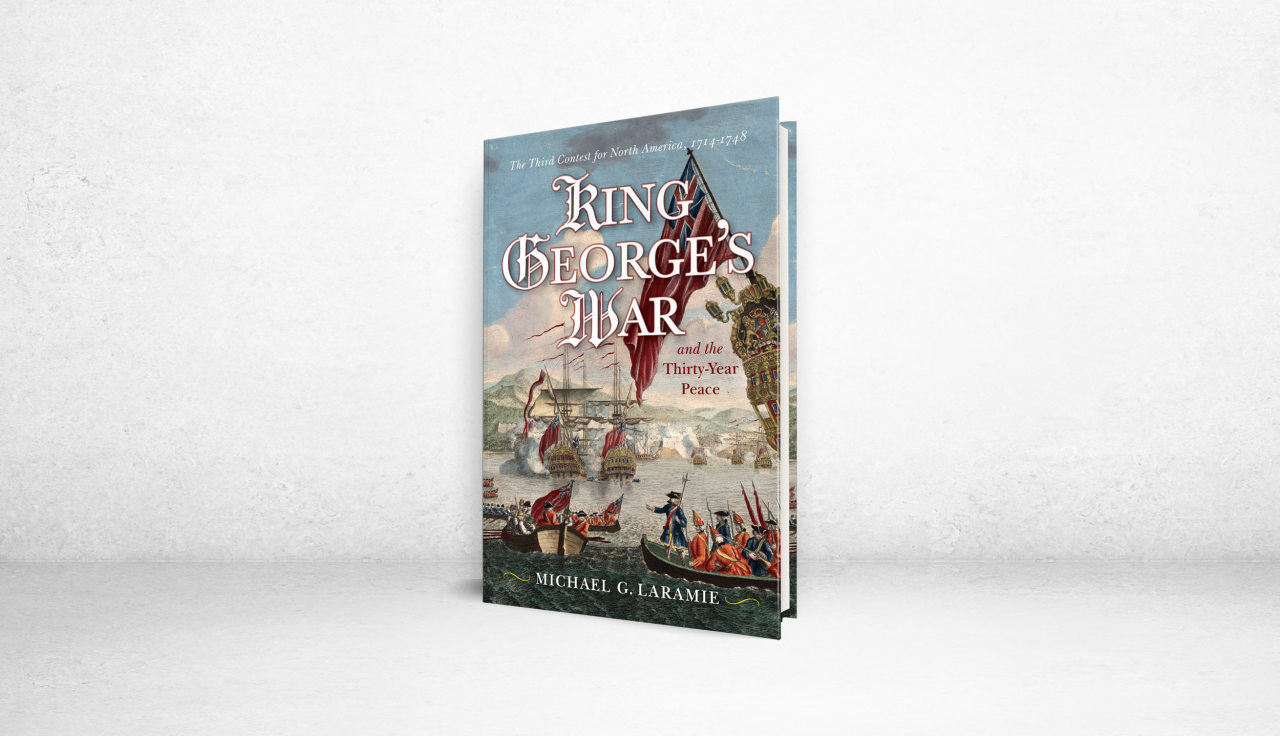
Michael G. Laramie's book, "King George’s War and the Thirty-Year Peace," concludes a trilogy that offers detailed narratives of these lesser-known conflicts. These stories provide insight into wars that are often overshadowed by the more famous French and Indian War (1754-63), which began in America and eventually spread to Europe.
Despite the title, Laramie highlights that the term "peace" is misleading when referring to the three decades preceding King George’s War. While there were no formal hostilities between Britain and France, violence was frequent. For instance, pirates like Stede Bonnet and Edward Teach operated off the Carolinas, and skirmishes occurred between English settlers in Maine and the Wabanaki Confederacy. Tensions with Spain also escalated after Georgia’s founding in 1732, seen as a threat to Spanish Florida. The War of Jenkins’ Ear saw nine colonies contribute to an "American Regiment" that suffered heavy losses at the siege of Cartagena in present-day Colombia.
James Oglethorpe, Georgia’s founder, led an unsuccessful expedition to capture St. Augustine in 1740 but later repelled a Spanish attack on his colony in 1742. Laramie portrays Oglethorpe as a dynamic figure who relied on the support of Creek and Chickasaw allies.
Although Britain and France had been fighting in Europe, the official declaration of war did not come until 1744. King George’s War began with French attacks on Nova Scotia, where they had previously established a fortified port at Louisbourg. This location served as a base for French privateers targeting British fisheries and trade.
William Shirley, the Massachusetts governor, proposed an aggressive plan to attack Louisbourg, which was considered risky but necessary. In May 1745, a force of 4,000 New Englanders, led by William Pepperrell and supported by a British naval squadron, successfully captured Louisbourg. This victory brought regional pride and celebration, with church bells ringing in New England.
However, as the War of the Austrian Succession continued, setbacks emerged. In 1746, the French captured Madras in India, and Britain struggled to counter French gains in the Low Countries due to the Jacobite rebellion in Scotland. By 1747, the Dutch Republic's collapse threatened to shift the balance of power in favor of the French. Louisbourg became Britain’s bargaining chip, leading to its surrender in exchange for French withdrawal from the Netherlands.
The Treaty of Aix-la-Chapelle ended the global war, returning territories to their former owners. Shirley’s belief that British-French rivalry in North America could only be resolved by eliminating French control of Canada proved accurate. Although the French and Indian War started poorly for Britain, the tide turned in 1758 with the capture and destruction of Louisbourg. The following year, the French abandoned and destroyed Fort St. Frederic, leading to the fall of New France in 1760. Just 15 years later, Britain’s American colonies revolted against the Mother Country that had defeated their long-standing enemy.

Post a Comment for "King George's War and the Thirty-Year Peace: A Colonial Drama"
Post a Comment