JWST Unveils Hidden Black Holes Feasting on Stars in Secret Galaxies
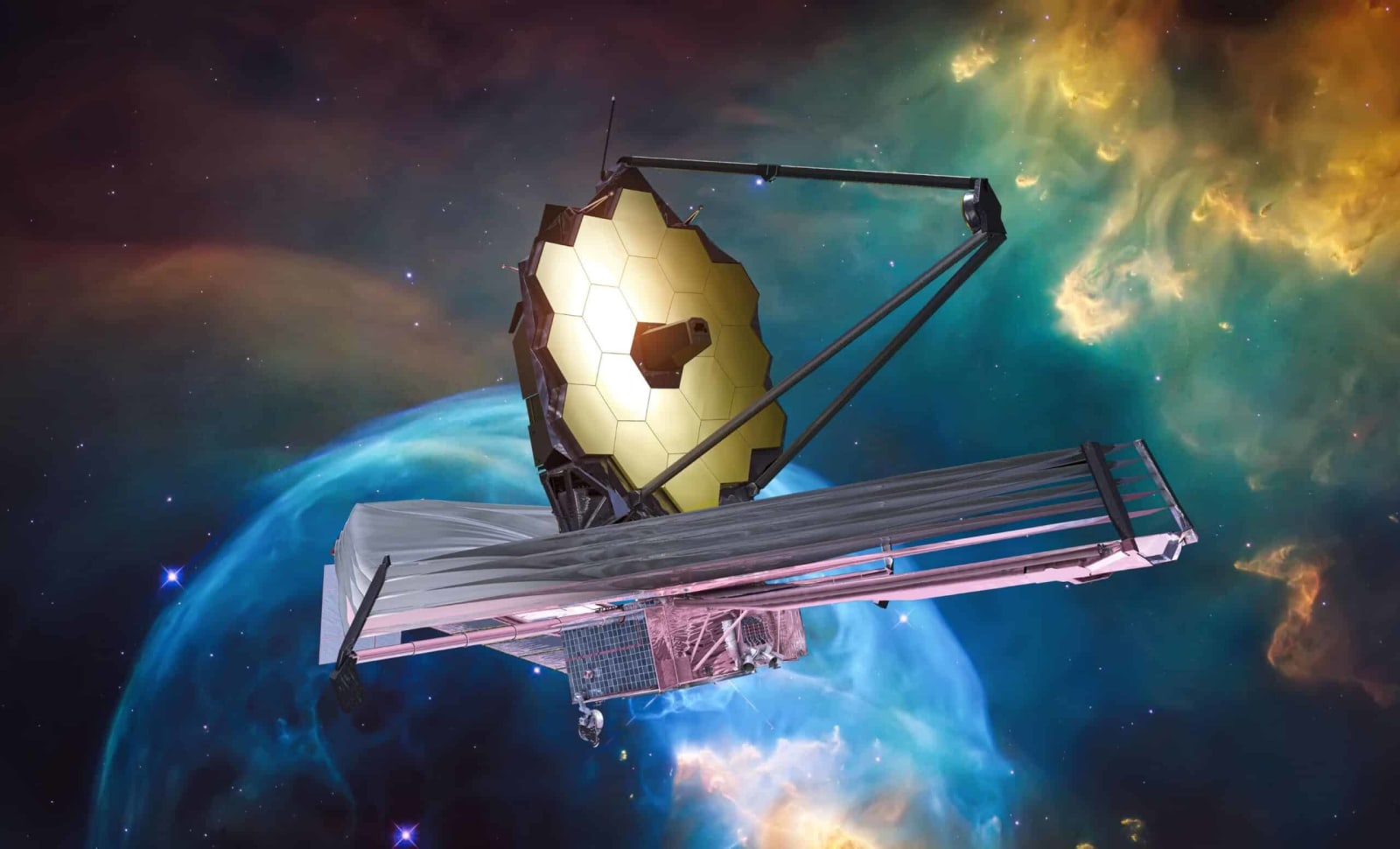
The James Webb Space Telescope and the Discovery of Tidal Disruption Events
The James Webb Space Telescope (JWST) has made a significant contribution to astronomy by capturing its first observations of tidal disruption events (TDEs). These are powerful cosmic phenomena where supermassive black holes tear apart stars that come too close. This discovery marks a new era in understanding how these celestial giants interact with their surroundings.
Understanding TDEs and Their Challenges
Since the 1990s, astronomers have studied TDEs, typically in galaxies with minimal gas and dust. These events occur when a star's orbit brings it dangerously near a supermassive black hole. The immense gravitational forces stretch and shred the star, a process known as spaghettification. This violent event generates intense radiation, allowing scientists to observe it across various wavelengths.
However, detecting TDEs in galaxies obscured by thick layers of gas and dust has been challenging. Optical and X-ray light struggles to penetrate these dense clouds, making these cosmic events difficult to study. The JWST, with its advanced infrared sensitivity, has changed this dynamic, enabling astronomers to observe TDEs that were previously hidden.
Groundbreaking Observations
Megan Masterson, a researcher at the Massachusetts Institute of Technology and the lead of the study, highlighted the significance of these findings: “These are the first JWST observations of TDEs, and they look nothing like what we’ve ever seen before.”
To achieve these groundbreaking observations, the team focused on four dusty galaxies where TDEs were suspected. Using the JWST, they identified a unique infrared signature linked to the black hole accretion process. This "fingerprint" is created when the immense radiation from a black hole’s accretion disk strips electrons from nearby atoms, a process called ionization. Specifically, the ionization of neon produces infrared radiation at a specific wavelength, a clear indicator of black hole activity.
The team searched 12 suspected sites of dusty TDEs and found the neon fingerprint in four of them. Notably, one of the closest TDEs observed to Earth, located 130 million light-years away, was among these discoveries. This finding confirmed that supermassive black holes were indeed consuming stars in galaxies previously obscured by dust.
Dormant Black Holes and Their Behavior
One of the most intriguing aspects of these observations is the nature of the supermassive black holes involved. The team sought to determine whether these black holes were always active or had been dormant, only awakening when a star came too close.
The data revealed differences between active black holes and those observed in the study. In active galaxies, dust clouds often form clumpy, doughnut-shaped rings around the black holes, continuously supplying them with matter. However, the JWST observed distinct patterns in the four dusty galaxies, suggesting that the supermassive black holes were not in a constant feeding state. Instead, they appeared dormant, waiting for a star to venture too close.
Expanding the Frontiers of Black Hole Research
These findings have opened new avenues in the study of black hole accretion. While TDEs have been observed before, they were often hidden in galaxies with heavy gas and dust, making this research groundbreaking.
Moving forward, the astronomers aim to detect more of these obscured TDEs to better understand how much material supermassive black holes devour and expel. As Masterson explained, “The actual process of a black hole gobbling down all that stellar material takes a long time. It’s not an instantaneous process. And hopefully, we can start to probe how long that process takes and what that environment looks like.”
This ongoing research promises to deepen our understanding of the universe and the powerful forces that shape it. The JWST continues to push the boundaries of what we know about the cosmos, offering new insights into the mysteries of black holes and their interactions with surrounding stars.

Post a Comment for "JWST Unveils Hidden Black Holes Feasting on Stars in Secret Galaxies"
Post a Comment