Germany's Parliament Banned the Pride Flag—It Backfired Big
A Strong Show of Support for LGBTQ+ Rights in Berlin
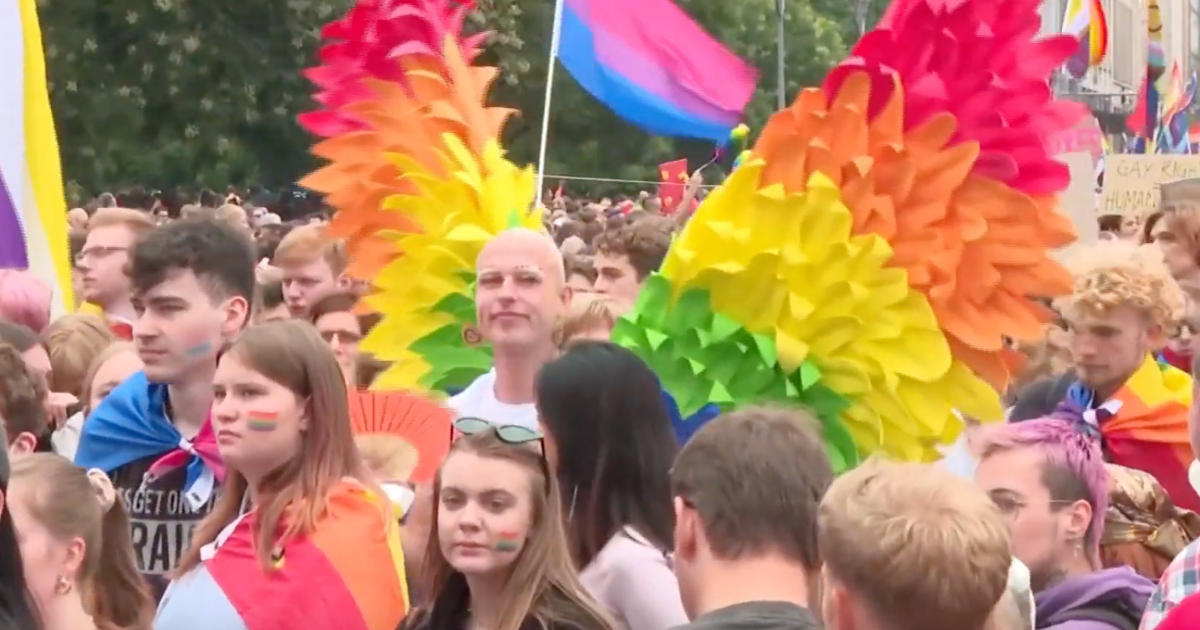
Berlin’s Christopher Street Day Pride celebration on Saturday drew an impressive number of participants, showcasing a powerful response to the growing influence of far-right anti-LGBTQ+ activists. This event served as both a celebration of LGBTQ+ rights and a clear message to those who seek to undermine these values. The massive turnout was also a direct challenge to German lawmakers who are attempting to appeal to far-right voters by reducing their support for the LGBTQ+ community.
The atmosphere at the march was one of unity and resilience, with many attendees expressing their commitment to fighting for equality. Thomas Hoffmann, a member of Berlin’s Christopher Street Day Executive Board, noted that the crowd this year was larger than in previous years. “We want to stand up for our rights together here,” he said, emphasizing the importance of solidarity in the face of adversity.
Despite the positive energy, the event was not without its challenges. Right-wing counter-demonstrations took place, drawing between 30 to 50 protesters. However, police were quick to respond, arresting six individuals, including the protest’s organizer, for alleged violations related to weapons, explosives, and the display of anti-constitutional symbols such as the Nazi swastika.
This year has seen a significant increase in anti-LGBTQ+ activities, with far-right groups using the term "Stolzmonat" (translated as "Pride Month") to promote their own agenda. These groups have been organizing events that aim to counter the traditional celebrations of LGBTQ+ rights, promoting what they describe as "traditional values, family ties, and stability."
The Alternative for Germany (AfD) party has been particularly active in this regard. In Saxony-Anhalt, the AfD released a statement promoting their anti-LGBTQ+ demonstrations, claiming that "Stolzmonat" is an alternative that seeks to counter "forced change." The AfD has gained momentum in recent years, winning state elections and becoming the largest opposition party in the federal parliament.
The impact of these far-right movements has been felt across Germany, with numerous Pride events being canceled due to threats and attacks. In May, the Bundestag President, Julia Klöckner, announced that the rainbow flag would be banned from flying at Germany’s Parliament building during Pride month, citing it as a "political demonstration." This decision sparked controversy, with German Chancellor Friedrich Merz later stating that the Bundestag was not "a circus tent" where any flag could fly.
The tension was evident in other parts of Berlin as well. Last month, a Pride celebration in the Marzahn district was marked by a tense atmosphere, with a heavy police presence to protect attendees from anti-Pride protests. Attendee Georg Schmidt described feeling safe only because of the police's efforts to keep them apart from potential threats.
In addition to the main Christopher Street Day event, other Pride-related gatherings took place throughout the city. One notable event was the Internationalist Queer Pride for Liberation rally in the Kreuzberg district, where an estimated 10,000 people joined a pro-Palestinian demonstration. However, the gathering was eventually disbanded due to ongoing unrest, including attacks on law enforcement and the use of antisemitic slogans.
As the LGBTQ+ community continues to face challenges, the strength and unity displayed at events like Berlin’s Christopher Street Day serve as a reminder of the power of collective action. Despite the threats and opposition, the fight for equality and inclusion remains strong, with many continuing to stand together in the face of adversity.

Post a Comment for "Germany's Parliament Banned the Pride Flag—It Backfired Big"
Post a Comment