Failed Attempt to Remove Taiwan Lawmakers Boosts China's Influence
Political Deadlock Deepens as Recall Effort Fails in Taiwan
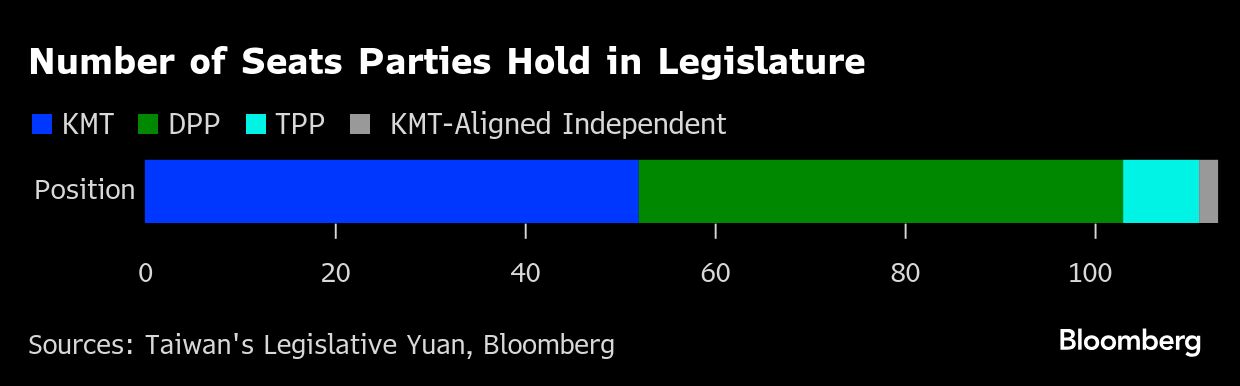
A recent attempt to recall several lawmakers in Taiwan has ended in failure, marking a significant setback for President Lai Ching-te and his Democratic Progressive Party (DPP). The effort, which aimed to unseat members of the opposition Kuomintang (KMT), did not succeed, with all 24 targeted KMT legislators retaining their seats. This outcome has left Lai’s government without the majority needed to advance its policy agenda, particularly in areas such as defense spending and national security.
Analysts have noted that this result could be used by Beijing to further undermine Lai's leadership. William Yang, a senior analyst for Northeast Asia at the Crisis Group, suggested that China might leverage the results to argue that Lai lacks broad support among Taiwanese citizens. This narrative could be used to discredit Lai’s policies and reinforce Beijing’s claims over Taiwan.
The recall campaign was initiated by civil groups and had initially been met with skepticism from the DPP. However, the party eventually supported the effort, hoping to regain control of the legislature. Despite this, the campaign failed to produce any changes, leaving the KMT with a continued advantage in the legislative body.
Impact on Taiwan’s Political Landscape
The outcome of the recall vote preserves the KMT’s 62-51 seat majority in the legislature, giving the opposition the power to block key initiatives proposed by Lai’s administration. This includes efforts to increase military spending to over 3% of GDP, a goal that has been central to Lai’s defense strategy. Analysts suggest that this situation may force Lai to make concessions to gain the support of the opposition.
The KMT has also been vocal in its criticism of the DPP’s approach to governance. Recent actions include rejecting all seven nominees for Taiwan’s highest court, leading to a shortage of justices required for the Constitutional Court to function. This has raised concerns about the stability of Taiwan’s judicial system and the effectiveness of the current administration.
Reactions from Key Figures
President Lai acknowledged the failure of the recall effort but downplayed its significance, emphasizing the importance of democracy and unity. He urged the public to respect the election results and work together for the benefit of the country. Similarly, DPP Secretary-General Lin Yu-chang commented on the event, accusing Beijing of interfering in Taiwan’s internal affairs.
However, many analysts believe that the campaign’s focus on anti-communist sentiment did not resonate with voters. Su Tzu-chiao, a professor at Soochow University, pointed out that most voters are more concerned with economic issues and daily livelihood rather than political rhetoric. Others have attributed the failure to voter fatigue, given the DPP’s long tenure in power.
Broader Implications
The failed recall effort may also embolden Beijing, which has sought to isolate Lai while maintaining dialogue with the KMT. Chang Chun-hao, a professor at Tunghai University, suggested that the results could encourage Beijing to continue its economic pressure on Lai’s government. This could create an opening for the KMT to push for greater cross-strait exchanges.
Despite the setbacks, the DPP remains committed to its goals. The party will likely need to find new strategies to navigate the political landscape and address the concerns of both the public and the opposition. As the political deadlock continues, the future of Taiwan’s governance and its relationship with China remain uncertain.

Post a Comment for "Failed Attempt to Remove Taiwan Lawmakers Boosts China's Influence"
Post a Comment