Diners Fade as Costs Rise and Culture Shifts: What Lies Ahead for the Jersey Icon?
The Struggle and Resilience of New Jersey Diners
Nick Kallas, owner of the Broad Street Diner in Keyport with his wife Maria, has a deep appreciation for the diner culture that defines New Jersey. Their diner was recently recognized as one of the best in the country, and they recently acquired and renovated the Roadside Diner in Wall, a 1940s establishment that once served as the backdrop for a Jon Bon Jovi album cover. Kallas’ father owned a diner in Edison for decades, which instilled in him a lifelong admiration for the communal nature of diners—places where people gather, enjoy simple meals, and connect with their local culture.
Despite this passion, Kallas acknowledges the challenges of running a diner in 2025. Rising costs and shifting consumer habits have made it increasingly difficult to sustain the business. “We’re surviving, but it’s just a paycheck,” he said. This sentiment is echoed by many diner owners across the state, who are grappling with high utility bills, food prices, and thinning wait lines. In recent years, as many as 150 diners have closed in New Jersey, raising concerns about the future of this iconic institution.
Jon Ricklin, a resident of Hillsdale, has been on a mission to visit every diner in New Jersey over the past decade. He estimates that at least 40 of the 280 he has visited have either closed or changed ownership. While some see this as a sign of decline, others believe it's part of an ongoing cycle that the diner industry has weathered before.
Michael C. Gabriele, author of two books on New Jersey diners, sees the current situation as a temporary downturn rather than an end. “The diner business is always evolving,” he said. “There have been other downturns, and diners have survived them.” Gabriele pointed to the early 20th century, when Jerry O’Mahony built the first stationary “lunch wagon” in Bayonne in 1913, sparking the diner industry. His company constructed over 2,000 diners, leading to the rise of nearly two dozen diner-building manufacturers in New Jersey through the mid-1900s.
However, the industry faced challenges in the 1950s when it became saturated, leading to the collapse of many manufacturers. Fast food then emerged in the 1960s and 1970s, further altering the landscape. Despite these setbacks, diners adapted and continued to thrive, though not without struggle.
The pandemic brought new difficulties, particularly for businesses reliant on in-person dining. Themis Nissirios, owner of the State Line Diner in Mahwah, described the impact as “definitely difficult.” Without federal loans and emergency support, he said, the business might not have survived. The pandemic also disrupted staffing, making it harder for diners to find workers.
Inflation, bird flu, and tariffs have also contributed to rising costs, forcing many operators to increase menu prices. For example, eggs, a staple in breakfast and lunch menus, have become a significant expense. “Eggs were killing us when they went up for that amount of time,” Kallas said. “That’s our breakfast and lunch, and everything’s eggs.”
Consumer habits have shifted as well. Ricklin noted that prices have increased significantly over the past few years, especially in diners, where affordability is a key draw. “If you’re going to get anything more than a burger or a sandwich… good luck trying to find an entrée at a Bergen County diner for under $20,” he said.
Another factor contributing to the decline is the aging demographic of diner owners. Many are facing the challenge of passing the torch to younger generations who may not be interested in the demanding work of running a diner. Additionally, the value of properties on which diners are located has skyrocketed, making it tempting for owners to sell rather than continue operating.
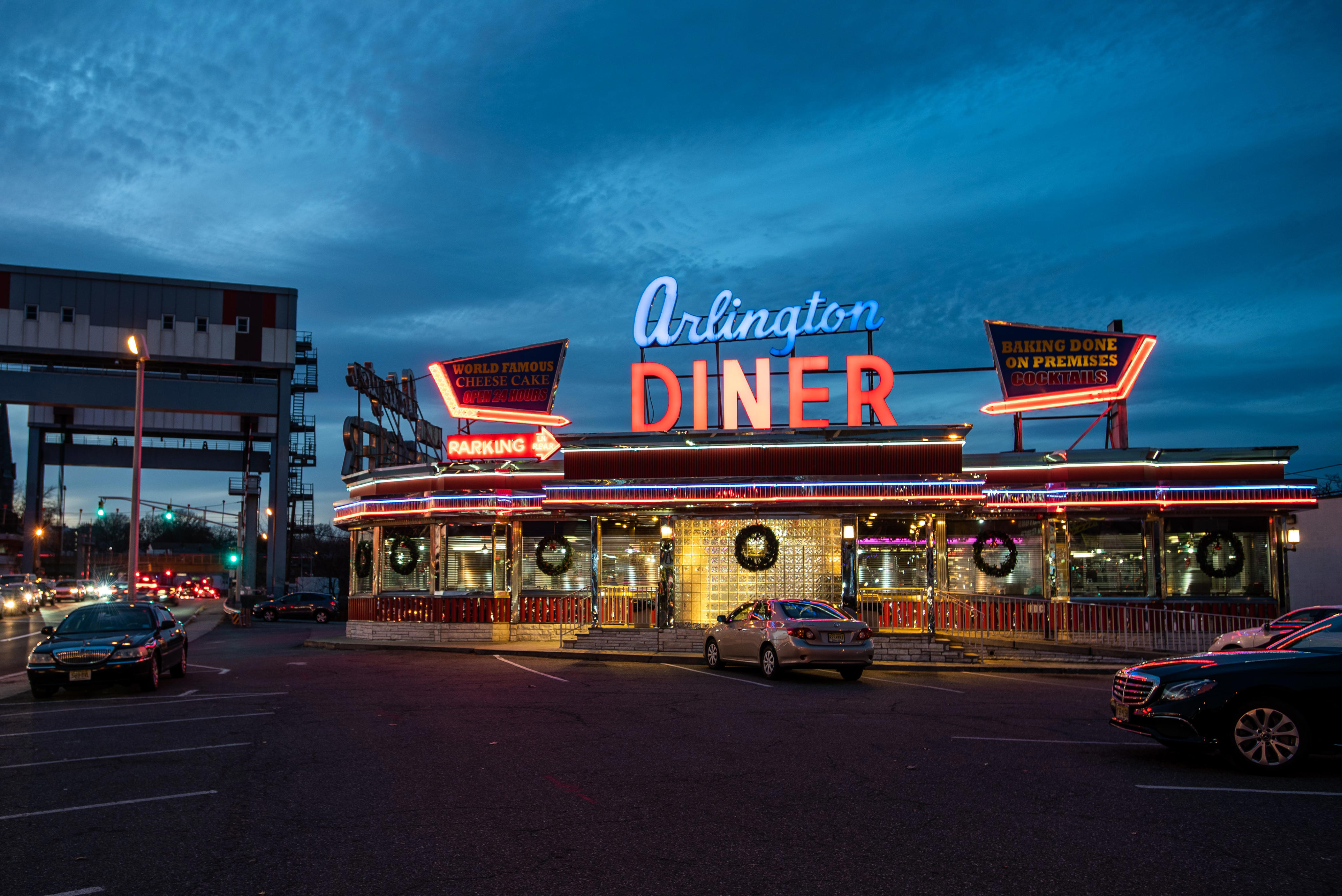
Some diners have responded to these challenges by adjusting their hours and menus. Elaine Xanthos, who runs the Arlington Diner with her husband, decided to stop offering 24-hour service due to declining late-night traffic. Kallas also reduced his hours and raised prices after the pandemic, while embracing delivery services like Uber Eats and DoorDash.
Despite these changes, some diners remain successful. Tops Diner in East Newark, for example, continues to attract customers, partly due to its appeal as a destination for out-of-state visitors. It has also modernized its menu with items like ube shakes and truffle fries, showing that innovation can coexist with tradition.
Looking ahead, the future of New Jersey diners remains uncertain. While many are cautiously optimistic, others fear that the classic diner may eventually disappear. However, for those who still run them, the spirit of the diner—the casual, welcoming atmosphere, the affordable meals, and the sense of community—remains a vital part of New Jersey’s identity. As Kallas put it, “Diners have been in New Jersey forever; it’s the diner capital of the world.”

Post a Comment for "Diners Fade as Costs Rise and Culture Shifts: What Lies Ahead for the Jersey Icon?"
Post a Comment