Deportations Target Non-Citizens Who Harm Federal K9s and Police Horses: CA Congressman's Push
A New Push to Protect Federal Law Enforcement Animals
A recent incident involving an Egyptian man who kicked a U.S. Customs and Border Protection (CBP) dog at Washington Dulles International Airport has sparked widespread concern and calls for stronger legal protections for working animals used by federal law enforcement agencies.
The event, which occurred in June, led to the introduction of a new legislative proposal aimed at making the assault on such animals a deportable offense. Congressman Ken Calvert (R-41), representing Riverside County, has introduced the "Bill to Outlaw Wounding of Official Working Animals Act," commonly referred to as the BOWOW Act (H.R. 4638). If passed, this legislation would amend the Immigration and Nationality Act to ensure that non-U.S. citizens convicted of harming animals used in law enforcement are considered inadmissible to the United States and subject to deportation.
The Role of Law Enforcement Animals
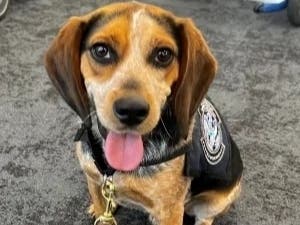
Animals like Freddie, a 5-year-old beagle serving with the CBP's Beagles Brigade, play a crucial role in safeguarding the nation. These animals are trained to detect agricultural products and other prohibited items that could pose a threat to public health and the environment. Freddie was part of the inspection process when he encountered a suitcase belonging to Hamed Ramadan Bayoumy Aly Marie, a 70-year-old Egyptian traveler.
During the inspection, Freddie alerted to the luggage, prompting the handler to question Marie. According to reports, Marie allegedly "violently kicked Freddie with sufficient force to lift the 25-pound beagle off the ground." This act of aggression resulted in injuries to the dog, including contusions to his right forward rib area. Despite the attack, Freddie survived and continued his duties.
Consequences for the Offender
Following the incident, CBP officers quickly intervened, arresting Marie and handing him over to Homeland Security Investigations agents. A veterinarian later confirmed the extent of Freddie’s injuries. As a result of his actions, Marie faced legal consequences.
On June 25, Marie appeared in the U.S. District Court for the Eastern District of Virginia, where he pleaded guilty to harming animals used in law enforcement. He was credited with time served, ordered to pay the veterinarian's fees, and required to report to CBP for removal from the United States. Marie departed the country on a flight to Egypt the following day.
Impact on Agricultural Security
In addition to the assault on Freddie, the inspection of Marie’s luggage uncovered a significant amount of undeclared agricultural products. These included 55 pounds of beef meat, 44 pounds of rice, 15 pounds of eggplant, cucumbers, and bell peppers, along with two pounds of corn seeds and a pound of herbs. All of these items were deemed prohibited and seized by CBP.
Christine Waugh, CBP’s Area Port Director for the Area Port of Washington, D.C., emphasized the importance of protecting working animals. "Being caught deliberately smuggling well over one 100 pounds of undeclared and prohibited agriculture products does not give one permission to violently assault a defenseless Customs and Border Protection beagle," she stated. "We rely heavily on our K9 partners and Freddie was just doing his job."
Legislative Response
Congressman Calvert's BOWOW Act reflects a growing recognition of the critical role that working animals play in law enforcement. By making the assault on these animals a deportable offense, the legislation aims to send a clear message that such acts will not be tolerated.
Calvert highlighted the need to protect these animals, stating, "The dogs and horses are on the front lines of our federal law enforcement efforts alongside our officers and deserve our protection." He added, "The BOWOW Act sends a clear message that we will stand up for our four-legged friends and have zero tolerance for any immigrants who assault them."
This proposed legislation underscores the importance of safeguarding the lives and work of animals that contribute significantly to national security and public safety. It also serves as a reminder of the broader responsibilities that come with international travel and the need to respect the roles of those who serve in law enforcement.

Post a Comment for "Deportations Target Non-Citizens Who Harm Federal K9s and Police Horses: CA Congressman's Push"
Post a Comment