Dem Governor Warns of Constitutional Violation in Illegal Redistricting to Halt Party Decline
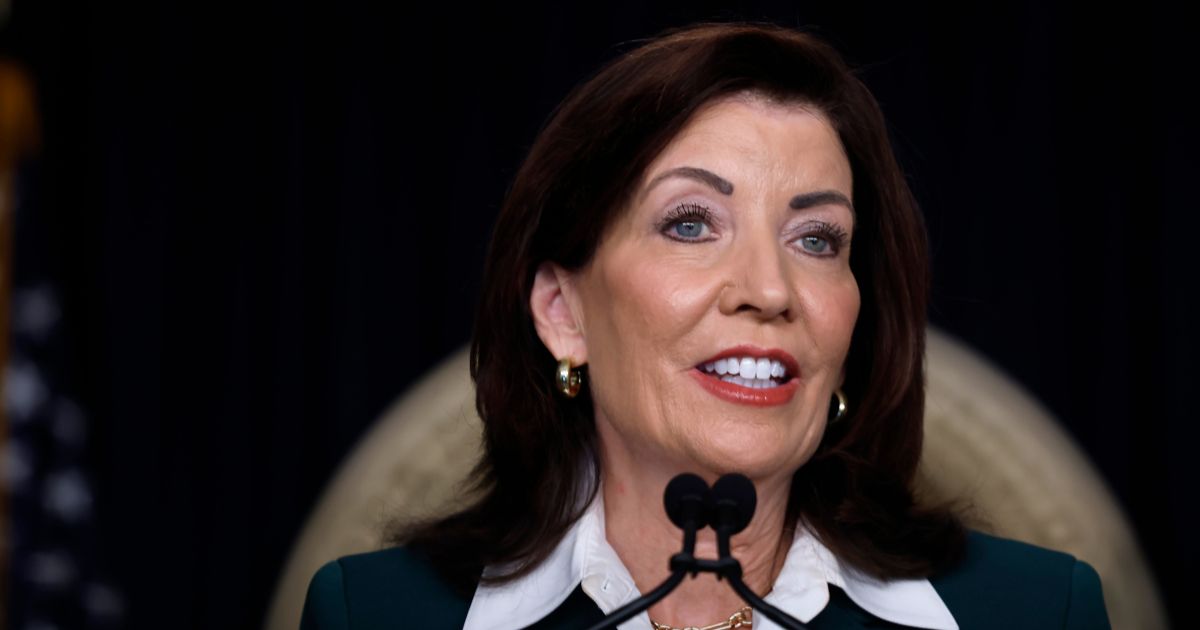
New York Governor Considers Early Redistricting Amid Political Tensions
New York Governor Kathy Hochul has raised the possibility of redrawing the state’s congressional map ahead of schedule, a move that could be seen as an attempt to counter potential Republican gains in Texas. However, this action would be illegal under New York's current laws, which prohibit mid-decade redistricting. The decision comes amid growing concerns over how redistricting could shift political power in the upcoming elections.
Redistricting is a process that occurs every 10 years, based on population changes revealed by the census. It allows states to adjust their congressional district boundaries to ensure fair representation. Both major political parties often engage in gerrymandering, manipulating district lines to gain electoral advantages. This practice has become a key battleground in many states, with each side seeking to maximize its influence.
Texas recently announced plans to consider redrawing its congressional map earlier than usual, potentially gaining up to five additional House seats. This move has sparked significant backlash from Democrats, who fear it could shift the balance of power in Congress. In response, Governor Hochul has suggested exploring early redistricting for New York, despite the legal risks involved.
New York’s State Constitution explicitly prohibits mid-decade redistricting, and several officials have pointed out that Hochul’s proposal violates this rule. Ed Cox, chair of the New York Republican State Committee, criticized the governor’s suggestion, stating that it ignores the law and attempts to manipulate the election process. He warned that if Democrats continue such actions, they may face legal consequences.
Republican Congressman Mike Lawler, who represents a competitive district in New York, also condemned Hochul’s plan, calling it undemocratic. He emphasized that the state constitution clearly forbids redrawing district lines outside of the required timeline. Lawler urged Hochul to follow the law and protect democratic principles.
Hochul responded by stating that she is following the rules but noted that she would closely monitor other states that might break them. She mentioned her intention to work with House Minority Leader Hakeem Jeffries to evaluate the situation. However, the involvement of New York’s Independent Redistricting Commission could lead to court intervention, especially if the maps are challenged.
The potential for judicial interference raises concerns about the role of activist judges in shaping political outcomes. Some argue that courts could override voter decisions to favor one party over another, further complicating the redistricting process.
This latest development highlights the intense competition between political parties, where even small strategic moves can have significant implications. While Republicans have taken steps to strengthen their position, Democrats are responding with their own tactics, leading to a highly charged political environment.
The situation has also drawn attention to broader issues in redistricting, including allegations of racial gerrymandering. The U.S. Department of Justice recently sent a letter to Texas Governor Greg Abbott, claiming that several Texas congressional districts constitute unconstitutional racial gerrymanders. While the DOJ has the right to express these concerns, Texas lawmakers maintain that they are within their rights to make changes that benefit their party.
In addition to the legal and political challenges, recent events have underscored the emotional stakes involved in redistricting. Texas congressional candidate Isaiah Martin was arrested after having an emotional meltdown during a redistricting committee hearing. His outburst led to charges of resisting arrest and disruption, highlighting the high tensions surrounding the issue.
California Governor Gavin Newsom has also entered the conversation, signaling his interest in exploring options for redrawing district lines. This suggests that the debate over redistricting is not limited to a single state but is part of a broader national discussion.
As the political landscape continues to evolve, the battle over redistricting remains a critical factor in determining the future of Congress. With both parties employing various strategies to gain an advantage, the outcome of these efforts will shape the course of American politics for years to come.

Post a Comment for "Dem Governor Warns of Constitutional Violation in Illegal Redistricting to Halt Party Decline"
Post a Comment