Auriga Space Launches $6M Rocket Program via Electromagnetic Track
Revolutionizing Space Launch with Electromagnetic Technology
As U.S.-based companies continue to increase the number of payloads they send into orbit, they face significant challenges due to the inefficiency of traditional rockets. Most of a rocket’s weight is made up of propellant rather than the actual payload, and a substantial portion of this propellant is consumed just in overcoming Earth’s gravity and atmosphere. This inefficiency has led to a growing need for more advanced launch technologies.
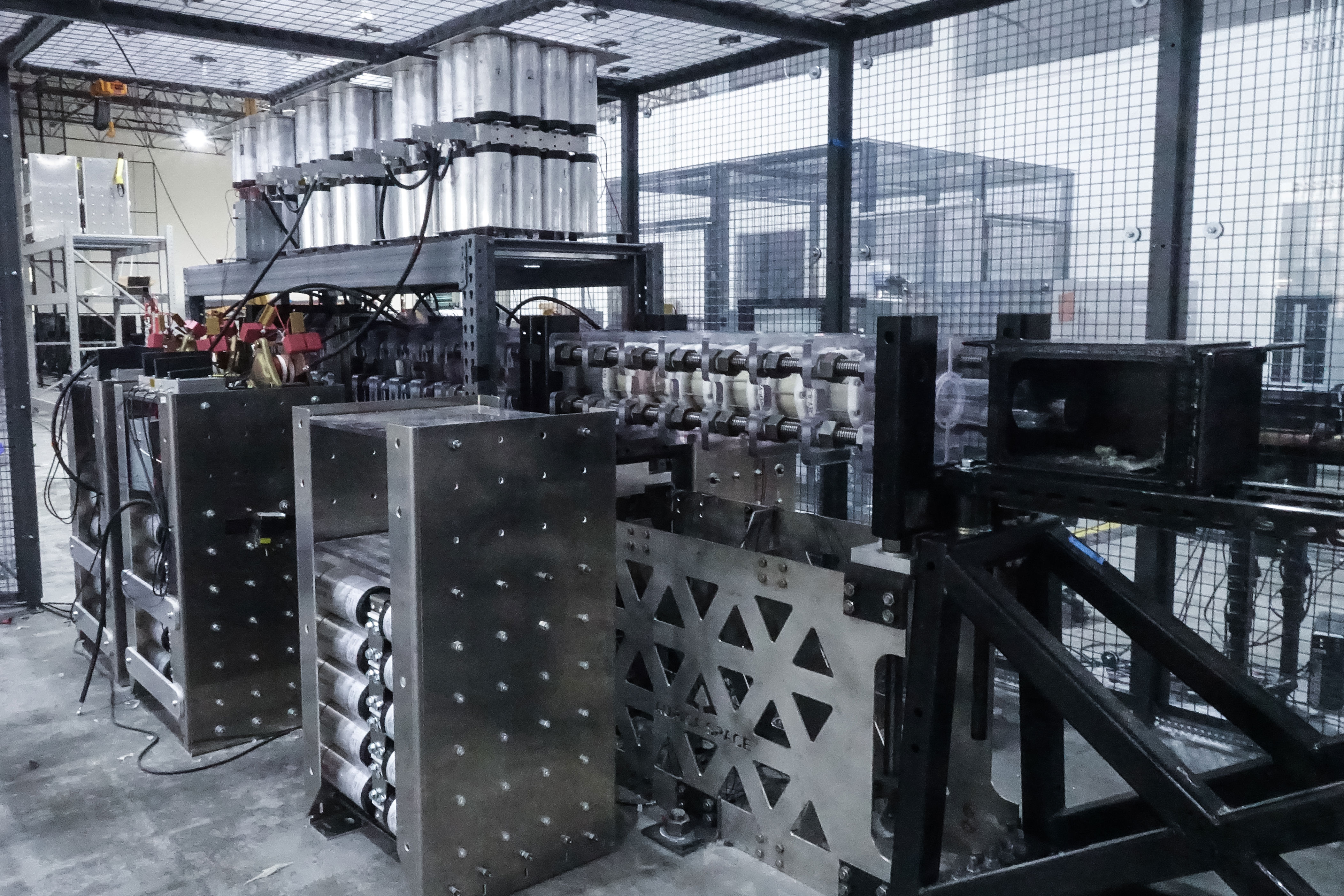
Auriga Space, a California-based startup, is working to transform the space launch industry by introducing an innovative approach that leverages electricity and powerful magnets. Instead of relying on a traditional first-stage booster, the company is developing a launch track that uses electromagnetic acceleration to propel a small rocket to speeds exceeding six times the speed of sound. The final segment of the track features a steep ramp, allowing the rocket to exit at hypersonic speeds and only ignite its engine for the final push into orbit.
This technology offers several advantages, including significant propellant savings and a fully reusable ground-based system. According to Auriga’s founder and CEO, Winnie Lai, less than 2% of a rocket’s mass actually reaches space. By increasing efficiency, the company aims to reduce costs and enable more frequent launches.
While electromagnetic launchers are not a new concept—similar to rail guns or maglev trains—Lai highlights recent advancements in power electronics that have made the idea technologically and commercially viable. These improvements allow for higher voltages and power outputs, making the concept more feasible than ever before.
Auriga has already secured $4.6 million in seed funding, with additional support from $1.4 million in contracts from AFWERX and SpaceWERX. The capital round was led by European firm OTB Ventures, with participation from Trucks Venture Capital and Seraphim Space. To date, the company has raised a total of $12.2 million through venture capital and Department of Defense grants.
The final design of the system, including the length of the tunnel and the size of the rocket, is still being refined. Even with a long track, the high-G loads experienced during acceleration could limit the types of satellites that can be launched. However, initial studies suggest that satellite components may be able to withstand higher Gs than previously assumed. Auriga is also exploring custom solutions to help objects endure these forces based on customer needs.
Lai notes that many munitions and missiles experience extreme Gs during launch, which gives the company confidence that some payloads can survive their launch environment. However, the exact types of payloads that can be used remain to be defined. If the goal is to reduce Gs, the launcher would simply need to be longer.
Auriga plans to enter the market with hypersonic ground testing. A recent grant from AFWERX will be used to commercialize an indoor, lab-scale track called Prometheus, set to launch early next year. Additionally, an outdoor accelerator called Thor will be developed for full-scale hypersonic test articles. The orbital launcher is referred to as Zeus.
Customers have indicated that the lack of affordable, on-demand test infrastructure is a major obstacle in advancing hypersonic development. Prometheus and Thor aim to address this gap by providing a market capability that is currently missing. These systems will allow customers to conduct multiple tests on the same test article under different flight conditions at a lower cost and higher frequency than existing options. They will also support various types of tests, such as weather testing, aerodynamic testing, and impact testing, using the same underlying architecture.
In addition to addressing hypersonic development, Auriga is also targeting the demand from the U.S. Space Force for "responsive" launch capabilities—launching payloads to orbit with minimal advance notice. While there have been notable demonstrations of responsive launch in the past year, such as Firefly Space launching a rocket with a 24-hour notice, Auriga aims to reduce this time to just minutes.
“We call an Uber, and we expect the Uber to show up in a matter of minutes,” Lai said. “I think that should be the case for space as well.”

Post a Comment for "Auriga Space Launches $6M Rocket Program via Electromagnetic Track"
Post a Comment