Step-by-Step Guide to Setting Up Google Analytics Goals
AStep-by-Step Guide to Setting Up Google Analytics Goalscan unlock valuable insights into user behavior and campaign performance, helping businesses optimize their strategies for maximum impact.
Unlock Your Website's Potential: AStep-by-Step Guide to Setting Up Google Analytics Goals
Hey there, data enthusiasts and website adventurers! Ever feel like your website is a vast, unexplored ocean, and you're just drifting along without a map? You're throwing content out there, hoping something sticks, but you have no idea what'sreallyworking? Or maybe youthinkyou know, but it's based on hunches and gut feelings, which, let's be honest, are about as reliable as a weather forecast in spring.
We've all been there. You pour your heart and soul (and budget) into your website, expecting it to be a lead-generating, sales-converting machine. But then... crickets. Or worse, a slow trickle of visitors who bounce faster than a rubber ball on hot pavement.
The problem? You're missing a crucial piece of the puzzle: knowing whatsuccessactually looks like. You need to define your goals, track your progress, and understand how your website is performing against those goals. And that's where Google Analytics Goals come in – your trusty compass and sextant for navigating the online world.
Think of it like this: imagine you're trying to bake a cake. You wouldn't just throw ingredients into a bowl and hope for the best, would you? No! You'd follow a recipe (yourstrategy), measure the ingredients (yourmetrics), and check the oven temperature (yourperformance). Google Analytics Goals are your recipe, your measuring cups, and your oven thermometer all rolled into one.
Without them, you're essentially flying blind. You might get lucky and stumble upon some success, but you'll never truly understandwhyorhowto replicate it. You'll be stuck in a cycle of guessing, hoping, and wasting precious time and resources.
But fear not, friends! This Step-by-Step Guide to Setting Up Google Analytics Goalsis here to rescue you from the data doldrums and transform you into a website optimization wizard. We'll break down the process into easy-to-follow steps, explain the different types of goals, and give you practical examples to get you started. We'll even throw in a few jokes along the way (because data doesn't have to be boring!).
Ready to unlock the secrets of your website and finally understand what'sreallygoing on? Intrigued to discover how setting up a few simple goals can transform your website from a black hole into a profit-generating powerhouse? Keep reading! We promise, this is easier than assembling IKEA furniture (and less likely to result in tears). So, buckle up, grab your favorite beverage, and let's dive into the wonderful world of Google Analytics Goals!
Understanding Google Analytics Goals:The Foundation of Success
Alright, let's get down to brass tacks. Before we jump into thehow, let's make sure we're all on the same page about thewhatand thewhy. So, whatexactlyare Google Analytics Goals, and why should you care?
Think of Google Analytics Goals asconversion tracking powerhouses. They're essentially pre-defined actions you want users to take on your website. These actions could be anything from filling out a contact form to making a purchase, signing up for a newsletter, or even just spending a certain amount of time on your site. Essentially, a goal is what you consider aconversionon your website. It tells Google Analytics, "Hey, this is important! Track this action and let me know how often it happens."
Why are Goals so important? Because they provide crucial insights into your website's performance and help you understand whether you're achieving your business objectives. Without Goals, you're essentially flying blind, relying on vanity metrics like page views and bounce rate, which don't necessarily tell you anything about youractualbusiness results.
For example, let's say you run an e-commerce store selling handmade dog sweaters. You might have thousands of visitors flocking to your site, but if nobody's actually buying anything, that traffic isn't doing you much good. By setting up a Goal for completed purchases, you can track your conversion rate (the percentage of visitors who actually make a purchase) and identify areas where you can improve the customer experience and boost sales.
Think of it like this: imagine you're trying to win a race. You wouldn't just start running aimlessly, would you? You'd need to know where the finish line is (yourgoal) and track your progress along the way (yourmetrics). Google Analytics Goals provide that finish line and help you measure your performance every step of the way. This is essential for effectivedigital marketing.
In short, Google Analytics Goals are the key to unlocking your website's true potential. They help you understand user behavior, measure your success, and optimize your website for maximum impact. Now that we've established the importance of Goals, let's move on to the different types of Goals available in Google Analytics.
Types of Google Analytics Goals: Choosing the Right Fit
Now that we knowwhat Goals are andwhythey're important, let's explore the different types of Goals available in Google Analytics. Choosing the right type of Goal is crucial for accurately tracking your desired actions and getting meaningful insights. There are four main types of Goals to choose from: Destination Goals:These are triggered when a user reaches a specific page on your website. This is arguably the most common type of goal. Think of a "thank you" page after a form submission or a confirmation page after a purchase.
Example: Setting a Goal for users reaching the "/thank-you" page after submitting a contact form. This allows you to track how many people are successfully contacting you.
How to use it: Ideal for tracking form submissions, newsletter sign-ups, successful order completions, and any other action that leads to a specific "thank you" or confirmation page. Duration Goals:These are triggered when a user spends a certain amount of time on your website. It can give insight into the user engagement, indicating a reader is interested in content.
Example: Setting a Goal for users who spend more than 5 minutes on your website. This helps you identify users who are highly engaged with your content.
How to use it: Useful for measuring content engagement, identifying valuable leads, and tracking the effectiveness of your website's design and user experience. Pages/Screens per Session Goals:These are triggered when a user views a specific number of pages or screens during a single session on your website. This will help to measure the user's depth of engagement.
Example: Setting a Goal for users who view more than 3 pages per session. This indicates users are exploring your website thoroughly.
How to use it: Great for assessing website navigation, identifying valuable content, and gauging the effectiveness of your internal linking strategy. Event Goals:These are triggered when a user performs a specific action on your website that is tracked as an event.This can include clicking a button, watching a video, downloading a file, or any other custom interaction.
Example: Setting a Goal for users who click a "Download PDF" button. This allows you to track how many people are downloading your lead magnet or resource.
How to use it: Perfect for tracking custom interactions, measuring the effectiveness of your call-to-actions, and gaining granular insights into user behavior.
Smart Goals: (If you have connected Google Ads, these can be helpful) Google's own machine learning decides what visits are most likely to convert.
Example: Google determines through machine learning a highly engaging visit to your website and classifies it as a "Smart Goal."
How to use it: Great if you're unsure what Goal to set, or want to use Google's AI to determine engagement.
Choosing the right type of Goal depends on your specific business objectives and the actions you want to track. Consider what you want users todoon your website and select the Goal type that best aligns with that action. Remember, you can set up multiple Goals to track different aspects of your website's performance. Now that we've covered the different types of Goals, let's move on to theactualstep-by-step guide to setting them up.
Step-by-Step Guide: Setting Up Google Analytics Goals
Alright, friends, let's get our hands dirty and dive into theactualStep-by-Step Guide to Setting Up Google Analytics Goals. Don't worry, it's not as intimidating as it sounds. We'll break it down into simple, easy-to-follow steps.
Step 1:Accessing the Goals Section
Log in to your Google Analytics account.
Navigate to the correctpropertyandview. (If you have multiple websites or views, make sure you're in the right place!)
Click on "Admin" in the bottom left corner of the screen.
In the "View" column, click on Goals.Step 2:Creating a New Goal
You'll see a list of existing Goals (if you have any) and a big red button that says "+ New Goal." Click it!
You'll be presented with two options: "Template" and Custom.Templates provide pre-configured Goal setups for common objectives. We'll start with a "Custom" Goal to understand the process fully. Select Custom.
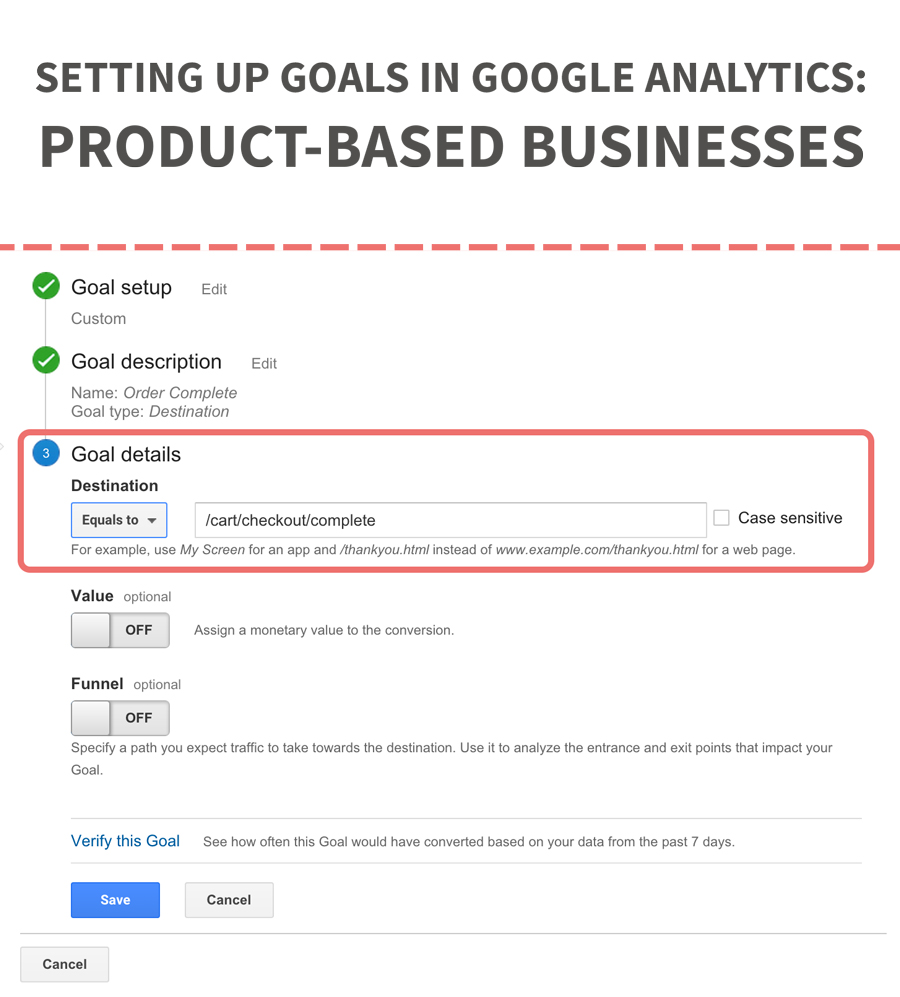
Step 3: Goal Setup Goal Description: Give your Goal a descriptive name that clearly indicates what it's tracking. For example, "Contact Form Submission" or "Newsletter Sign-up." This will help you easily identify the Goal later on. Select an ID slotthat has not been used yet, as well. Goal Type:Choose the appropriate Goal type based on the action you want to track (Destination, Duration, Pages/Screens per session, or Event). We'll start with a Destination Goalfor this example.
Step 4: Goal Details (Destination Goal Example) Destination: Enter the URL of the page users reach after completing the desired action. This is usually a "thank you" or confirmation page.
Example: "/thank-you" or "/confirmation" Match Type:Choose how you want Google Analytics to match the URL.
"Equals to"is the most precise option and requires the exact URL.
"Begins with"is useful if the URL has dynamic parameters at the end.
"Regular expression"is the most advanced option and allows for complex pattern matching. Case Sensitive: Decide if you want the URL matching to be case-sensitive. Funnel (Optional): Set up a funnel to track the steps users take leading to the Goal completion. This helps you identify potential drop-off points in the conversion process.
Example: If you have a multi-step checkout process, you can create a funnel to see where users are abandoning their carts. Goal Value (Optional):Assign a monetary value to the Goal completion. This allows you to track the overall value of your conversions and calculate your return on investment (ROI).
Example: If each lead generated through the contact form is worth $50 to your business, you can assign a Goal Value of $50.Step 5: Verify and Save
Click the "Verify this Goal" link to see if the Goal would have recorded any conversions in the past 7 days based on your current setup. This is a great way to ensure your Goal is configured correctly.
If everything looks good, click Save.Repeat for Other Goal Types
Follow a similar process for setting up Duration, Pages/Screens per session, and Event Goals. The specific settings will vary depending on the Goal type. For Event Goals, you'll need to have Event Tracking set up on your website first.
That's it! You've successfully set up your first Google Analytics Goal. Congratulations! Remember to test your Goals thoroughly to ensure they're tracking correctly. Now, let's talk about somebest practicesfor setting up Goals.
Best Practices for Setting Up Google Analytics Goals
Setting up Google Analytics Goals is just the first step. To get the most out of them, you need to follow somebest practices. Here are a few tips to keep in mind: Start with Clear Objectives:Before you start creating Goals, take some time to define your business objectives and identify the key actions you want users to take on your website. What are youreallytrying to achieve?
Example: Increase sales, generate leads, build brand awareness, etc. Choose the Right Goal Type: Select the Goal type that best aligns with the action you want to track. Don't try to force a square peg into a round hole. Use Descriptive Names: Give your Goals descriptive names that clearly indicate what they're tracking. This will make it much easier to analyze your data later on. Set Up Funnels (Where Applicable): Funnels can provide valuable insights into the user journey and help you identify potential drop-off points. Assign Goal Values (If Possible): Assigning a monetary value to Goal completions allows you to track the overall value of your conversions and calculate your ROI. Even rough estimates can be helpful. Test Your Goals Thoroughly: Make sure your Goals are tracking correctly before you start relying on the data. Submit a test form, spend some time on your site, and verify that the Goals are firing as expected. Don't Overdo It: Setting up too many Goals can make your data analysis overwhelming. Focus on the most important actions that contribute to your business objectives. Regularly Review Your Goals: Review your Goals periodically to ensure they're still relevant and accurate. As your business evolves, your Goals may need to be adjusted. Document Your Goals: Keep a record of all your Goals, their descriptions, and their configurations. This will help you maintain consistency and avoid confusion in the future. Use Annotations:Use Google Analytics annotations to document any changes you make to your Goals or website. This will help you understand the context of your data and identify any potential anomalies.
By following thesebest practices, you can ensure that your Google Analytics Goals are accurate, relevant, and provide valuable insights into your website's performance. Now that you're armed with this knowledge, go forth and conquer the world of data!
Analyzing Goal Data: Turning Insights into Action
You've set up your Google Analytics Goals, and the data is flowing in. Great! But now what? How do you actuallyusethis data to improve your website and achieve your business objectives? Let's explore how to analyze Goal data and turn insights into action.
Accessing Goal Reports: To access your Goal reports, navigate to "Conversions" > "Goals" in the left-hand navigation menu of Google Analytics. Here, you'll find a variety of reports that provide insights into your Goal performance. Overview Report: This report provides a high-level summary of your Goal performance, including the number of Goal completions, conversion rate, and Goal value. Goal URLs Report: This report shows which pages on your website are contributing the most to Goal completions. Reverse Goal Path Report: This report shows the sequence of pages users visited before completing a Goal. This can help you understand the user journey and identify potential areas for improvement. Funnel Visualization Report: This report visualizes the steps users take in your funnel and highlights any drop-off points. This is a powerful tool for identifying areas where you can improve the conversion process. Segmenting Your Data: To gain deeper insights, segment your data by different dimensions, such as device type, traffic source, and demographics. This allows you to see how different groups of users are interacting with your website and achieving your Goals.
Turning Insights into Action
Identify High-Performing Pages: Analyze the Goal URLs report to identify the pages that are driving the most Goal completions. Focus on optimizing these pages to maximize their effectiveness. Improve User Experience: Use the Reverse Goal Path and Funnel Visualization reports to identify potential pain points in the user journey and improve the overall user experience. Optimize Traffic Sources: Analyze the performance of different traffic sources to identify the most effective channels for driving Goal completions. Focus on investing in these channels and optimizing your campaigns. Personalize User Experiences: Use segmentation to identify the needs and preferences of different user groups and personalize their experiences accordingly. Test and Iterate:Continuously test different changes to your website and analyze the impact on Goal performance. Use A/B testing to compare different versions of your pages and identify the most effective designs.
By analyzing your Goal data and turning insights into action, you can continuously improve your website's performance and achieve your business objectives. Remember, data analysis is an ongoing process. Continuously monitor your Goal performance and make adjustments as needed. Now that you're a Goal-setting and data-analyzing pro, let's wrap things up with a final word of encouragement.
Conclusion: Unleash the Power of Goals
Congratulations, friends! You've made it to the end of this Step-by-Step Guide to Setting Up Google Analytics Goals. By now, you should have a solid understanding of what Goals are, why they're important, how to set them up, and how to analyze the data they provide. You're well on your way to becoming a website optimization master!
Let's quickly recap what we've covered: Google Analytics Goals are essential for tracking key actions on your website and measuring your success. There are four main types of Goals: Destination, Duration, Pages/Screens per session, and Event. Setting up Goals is a straightforward processthat involves accessing the Goals section in Google Analytics, creating a new Goal, defining the Goal details, and verifying the setup. Following best practices is crucialfor ensuring your Goals are accurate, relevant, and provide valuable insights. Analyzing Goal data and turning insights into actionis key to continuously improving your website's performance and achieving your business objectives.
Now, it's time to put this knowledge into practice! Don't just let this guide sit on your digital shelf. Take action!
Your Call to Action:Go to your Google Analytics accountright nowand set up at least one Goal.*Choose a Goal that's aligned with your most important business objective, such as generating leads or increasing sales. Then, commit to regularly monitoring your Goal performance and making data-driven decisions to improve your website.
Unlocking your website's potential is within your reach. By embracing the power of Google Analytics Goals, you can transform your website from a guessing game into a data-driven success story. You can take the guesswork out of improvingsearch engine optimization (SEO) and seerealimprovements to your site.
Remember, the journey of a thousand miles begins with a single step. So, take that step today and start unleashing the power of Goals!
Are you ready to transform your website into a conversion machine? Go set up those Goals! You've got this!

Post a Comment for "Step-by-Step Guide to Setting Up Google Analytics Goals"
Post a Comment