Nihilistic Philosophy Explained Simply
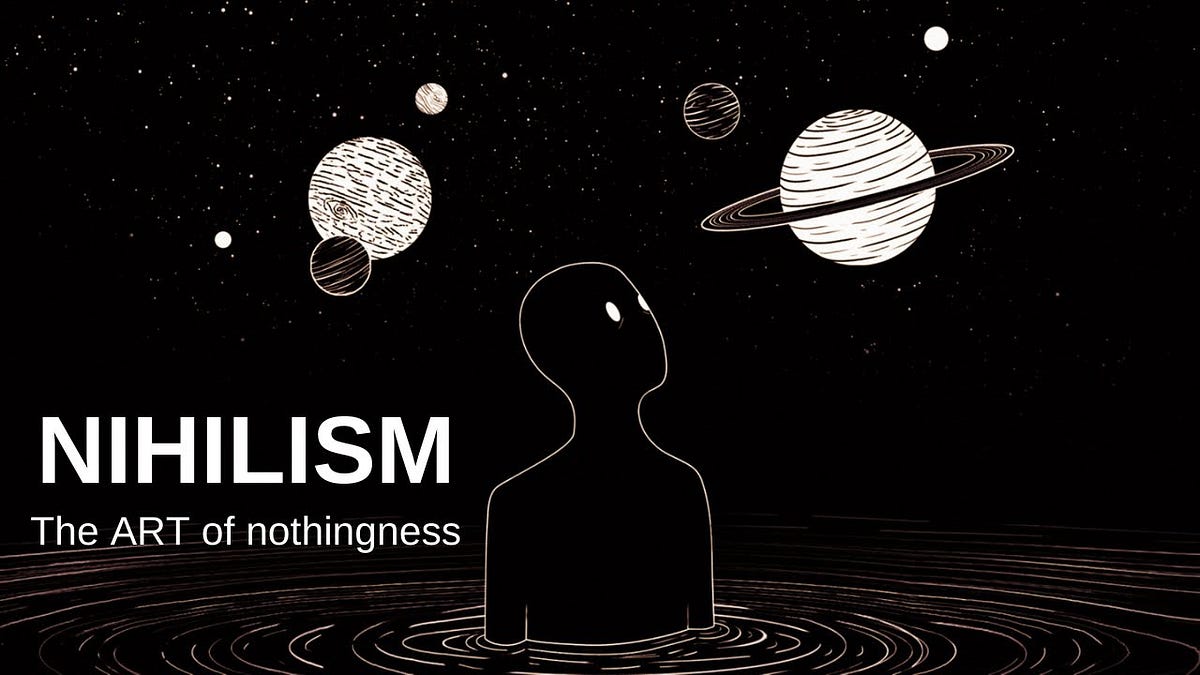
Nihilistic Philosophy: Finding Meaning in a Meaningless World.
Hey there, friend! Ever feel like you're just spinning your wheels, chasing after things that ultimately don't matter? Like, you finally get that promotion, that dream car, or that perfect Instagram-worthy vacation, and then…what? The emptiness creeps back in, right? That's a feeling many of us know well. It's like ordering a pizza and finding out they forgot the cheese. Disappointing, to say the least! This feeling can lead us to question everything, like "What's the point ofanyof this?" That's where nihilism comes in, though maybe not in the way you think.
Nihilistic philosophy, at its core, suggests that life is without inherent meaning, purpose, or intrinsic value. Whoa, heavy stuff, right? It’s easy to get bogged down by the idea that if nothingreallymatters, then why bother doing anything at all? But, before you start planning your epic couch-potato-binge, let's unpack this a bit. The word "nihilism" often conjures up images of angst-ridden teenagers clad in black, declaring that nothing matters. And while that might bepartof the picture, the philosophical concept of nihilism is far more nuanced.
Think of it like this: have you ever assembled a piece of furniture only to discover there were extra screws left over? The instructions were clear, you followed them diligently, yet those screws remain, seemingly without purpose. That feeling of "What do I do with these?!" is kind of like the feeling nihilism explores in the grand scheme of existence. It’s the realization that there might not be a pre-ordained instruction manual for life, no divine architect with a master plan.
Many mistakenly equate nihilism with pure negativity, associating it with despair and apathy. The truth is nihilism isn't necessarily about being sad, angry, or giving up. It is about facing the possibility that the universe doesn’t care aboutyouspecifically. It doesn’t have a grand plan for your life, no hidden destiny waiting to be unlocked. It can feel unsettling. Like realizing your favorite coffee shop is closing down. It's definitely a bummer, but it doesn't mean you stop drinking coffee, right? You just find a new spot!
Now, some folks see this lack of inherent meaning as a cause for utter despair, leading to a passive existence or even destructive behaviors. But, paradoxically, others find a unique sense of freedom in nihilism. If there is no inherent meaning, thenweget to create it! The blank canvas of existence becomes an opportunity to define our own values, set our own goals, and live a life authentic to ourselves. It's like getting a brand new notebook – the possibilities are endless.
Think of a world where you are told exactly what to do, how to feel, and what to believe from birth. Sounds a bit suffocating, doesn't it? Nihilism, in a strange way, can be liberating because it rejects this rigid framework. It encourages critical thinking, self-reliance, and the pursuit of personally meaningful experiences. Like a pirate discovering a hidden treasure map, nihilism offers the potential to chart your own course in life.
However, it’s crucial to navigate the waters of nihilism carefully. Without a solid foundation of personal values, it can be easy to drift into apathy or even harmful behaviors. It's like sailing a ship without a rudder – you might be free to go anywhere, but you're also likely to get lost.
So, how do we avoid the pitfalls of nihilism and harness its potential for personal growth? How do we create meaningful lives in a world that may not inherently offer it? How can we findourcheese for the pizza of life?
In this article, we’ll explore the core concepts of nihilistic philosophy, debunk common misconceptions, and offer practical strategies for navigating a world without inherent meaning. We’ll examine the different types of nihilism and understand how they can impact one's perspective on life. We'll delve into how individuals can cultivate their own values, set meaningful goals, and create lives filled with purpose and fulfillment, even in the face of existential uncertainty. Buckle up, friends, it's going to be an interesting ride!
Understanding the Core Principles of Nihilism
Nihilism, derived from the Latin word "nihil" meaning "nothing," essentially posits that there are no objective values or inherent meaning in the universe. This idea can feel pretty daunting, but let's break it down into more digestible components. It's like understanding the different ingredients in a complex recipe – once you know what each element does, the whole thing becomes less intimidating.
The Rejection of Objective Values
At the heart of nihilism lies the rejection of objective values. This means that concepts like good and evil, right and wrong, beauty and ugliness are not inherent qualities of the universe. Instead, these values are human constructs, subjective interpretations imposed upon a world that is, in itself, neutral. Think of it like flavors – what one person finds delicious, another might find repulsive. There is no objectively "best" flavor, just individual preferences.
This rejection extends to morality, ethics, and even aesthetics. A nihilist might argue that there is no ultimate moral code that applies to all people at all times. What is considered "good" in one culture or time period might be considered "evil" in another. This can lead to a relativistic view of morality, where moral judgments are seen as relative to individual or cultural perspectives.
The Denial of Intrinsic Meaning
Another core principle of nihilism is the denial of intrinsic meaning. This means that life, existence, and the universe itself do not possess any pre-ordained purpose or ultimate significance. We're not part of some grand cosmic plan, and there's no inherent reason for our existence. Imagine a vast, empty ocean. The ocean itself has no inherent purpose, it simplyis. The meaning we ascribe to it – transportation, recreation, a source of food – are all human-created interpretations.
This denial of intrinsic meaning can be particularly unsettling, especially in a culture that often emphasizes the importance of purpose and achievement. We're constantly bombarded with messages about finding our passion, leaving our mark on the world, and making a difference. Nihilism challenges these assumptions, suggesting that there may be no inherentreasonto do any of those things.
The Implications of Nihilism
The implications of these core principles are far-reaching. If there are no objective values and no intrinsic meaning, then what's the point of anything? This question can lead to a range of responses, from despair and apathy to a radical embrace of individual freedom and responsibility.
For some, the realization that life is inherently meaningless can be paralyzing. It can lead to a sense of hopelessness and a feeling that nothing matters. But it doesn't have to be that way!
For others, the absence of inherent meaning can be empowering. If there's no pre-ordained path, then we're free to create our own. We can define our own values, set our own goals, and live a life that is meaningful to us, even if it's not meaningful in some cosmic sense. It's like being given a blank canvas and a set of paints – the possibilities are limitless. Thebeautyof nihilism is, that you get to create your own meaning.
Types of Nihilism: Exploring the Spectrum
Nihilism isn't a monolithic concept; it encompasses a spectrum of viewpoints. Understanding these different types can provide a more nuanced appreciation of the philosophy. Think of it like ice cream – there's more than just vanilla!
Existential Nihilism
Existential nihilism is perhaps the most common and widely discussed form. It focuses on the meaninglessness of existence itself. It suggests that individual lives are inherently without purpose or meaning, and that there is no objective reason for our existence.
The core idea is that, while we can create our own subjective meaning, these meanings are ultimately arbitrary and without any lasting significance. It's like building a sandcastle – we can put a lot of effort into it, but eventually the tide will come in and wash it away.
Moral Nihilism
Moral nihilism challenges the existence of objective moral values. It argues that concepts like good and evil, right and wrong, are not inherent properties of the universe but are instead human constructs. Moral nihilists might suggest that morality is simply a matter of personal preference or cultural convention.
This doesn't necessarily mean that moral nihilists advocate for immoral behavior. They might still adhere to certain moral principles, but they would view these principles as subjective choices rather than objective truths. It's like choosing a favorite color – there's no objectively "right" color, just individual preferences.
Epistemological Nihilism
Epistemological nihilism questions the possibility of knowledge itself. It suggests that we cannot truly know anything with certainty. Our perceptions are limited, our reasoning is flawed, and our understanding of the world is always incomplete.
This doesn't mean that epistemological nihilists believe we should abandon the pursuit of knowledge. Rather, they advocate for a critical and skeptical approach to all claims of knowledge, recognizing the inherent limitations of human understanding. It's like trying to see the entire forest from a single tree – our perspective is always limited.
Political Nihilism
Political nihilism rejects the legitimacy of political systems and institutions. It often arises from a deep dissatisfaction with the existing social order and a belief that it is fundamentally corrupt or oppressive.
Political nihilists might advocate for radical social change or even the complete dismantling of existing political structures. However, they often lack a clear vision for what should replace them.
Understanding these different types of nihilism can help us to avoid oversimplifying the philosophy and to appreciate the diversity of viewpoints it encompasses. It is important to remember that nihilism is not inherently negative or destructive. It can be a starting point for critical thinking, self-reflection, and the search for meaning in a world that may not inherently provide it.
Embracing Freedom and Creating Your Own Meaning
So, you’ve come to terms with the idea that life might not have any inherent meaning. What now? Do we just throw our hands up in the air and resign ourselves to a life of existential dread? Absolutely not! The lack of pre-packaged meaning actually presents a fantastic opportunity: the freedom to create our own.
Defining Your Personal Values
The first step in creating a meaningful life is to define your personal values. What do you believe is important? What kind of person do you want to be? What principles will guide your actions?
Your values might include things like honesty, compassion, creativity, justice, or courage. They are the compass that will guide you through the sometimes turbulent waters of life.
Here are some steps to help you define your values: Reflect on your experiences: What activities make you feel most alive and engaged? What situations make you feel uncomfortable or conflicted? Identify your role models: Who do you admire and why? What qualities do they possess that you value? Consider your priorities: What is most important to you in life? What are you willing to sacrifice for? Write down your values: Once you've identified your values, write them down. This will help you to clarify them and to make them more concrete.
Setting Meaningful Goals
Once you've defined your values, you can start setting meaningful goals that align with those values. These goals should be challenging but achievable, and they should contribute to your overall sense of purpose.
Think of it like building a house. Your values are the foundation, and your goals are the walls, roof, and everything else that makes the house a home.
Here are some tips for setting meaningful goals: Make them specific: Instead of saying "I want to be healthier," say "I want to exercise for 30 minutes three times a week." Make them measurable: How will you know when you've achieved your goal? Set specific metrics to track your progress. Make them attainable: Choose goals that are challenging but realistic. Don't set yourself up for failure. Make them relevant: Make sure your goals align with your values and contribute to your overall sense of purpose. Make them time-bound:Set a deadline for achieving your goals. This will help you to stay motivated and on track.
Cultivating Meaningful Relationships
Human connection is essential for a fulfilling life. Nurturing strong, meaningful relationships with family, friends, and community members can provide a sense of belonging, support, and purpose.
These relationships provide a sense of connection and purpose that can help to combat feelings of isolation and meaninglessness. It is through these connections that we learn, grow, and find meaning in our lives.
Embracing the Absurd
Finally, it's important to embrace the absurd. Life is inherently messy, unpredictable, and often illogical. Instead of trying to impose order on chaos, learn to laugh at the absurdity of it all. Embrace the uncertainty, and find joy in the unexpected.
This involves recognizing that there are things in life that we cannot control or understand. Instead of fighting against this reality, we can learn to accept it and even find humor in it.
Overcoming Challenges and Finding Hope
Navigating the philosophical terrain of nihilism can be a challenging journey. It’s not all sunshine and roses; there are definitely some potential pitfalls along the way. But with awareness and intention, it is possible to navigate these challenges and emerge with a renewed sense of purpose and hope.
Combating Apathy and Despair
One of the biggest challenges associated with nihilism is the risk of falling into apathy and despair. If nothingreallymatters, why bother doing anything at all? This line of thinking can lead to a sense of hopelessness and a lack of motivation.
The key to combating apathy is to actively cultivate a sense of purpose. This doesn't mean finding some grand, cosmic meaning to your existence. It simply means identifying what matters to you and pursuing it with passion and intention.
Here are some strategies for combating apathy and despair: Focus on small, achievable goals: Break down large, overwhelming tasks into smaller, more manageable steps. Practice gratitude: Take time each day to appreciate the good things in your life, no matter how small. Engage in activities that bring you joy: Make time for hobbies, interests, and activities that you enjoy. Seek out social connection: Spend time with loved ones and engage in meaningful interactions with others. Consider professional help:If you're struggling with persistent feelings of apathy or despair, don't hesitate to seek professional help from a therapist or counselor.
Avoiding Moral Relativism
While nihilism challenges the existence of objective moral values, it's important to avoid falling into moral relativism. Moral relativism is the belief that there are no universal moral principles and that morality is simply a matter of personal preference or cultural convention.
While it's true that moral values can vary across cultures and individuals, it's important to maintain a commitment to certain fundamental principles, such as respect for human dignity, compassion, and fairness.
Finding Meaning in the Mundane
Life is often filled with mundane tasks and routines. It can be easy to feel like these activities are meaningless or insignificant. However, it is possible to find meaning even in the most ordinary aspects of life.
By approaching these tasks with intention and mindfulness, we can transform them into opportunities for growth, connection, and self-discovery.
Think of it like washing dishes. Instead of viewing it as a chore, you can focus on the sensory experience – the feel of the water, the smell of the soap, the satisfaction of seeing a clean plate. You can also use this time to reflect on your day, listen to music, or practice mindfulness.
Maintaining a Sense of Hope
Finally, it's crucial to maintain a sense of hope, even in the face of existential uncertainty. Hope is not about denying the reality of suffering or the lack of inherent meaning in the universe. It's about believing in the possibility of a better future and committing to working towards it.
By embracing our freedom, defining our values, and creating our own meaning, we can find purpose and hope even in the most challenging circumstances. And remember, even in a world that seems meaningless, your actions, your connections, and your experiences matter. They matter toyou, and that's what ultimately counts.
Friends, we've journeyed together through the somewhat daunting landscape of nihilistic philosophy, unpacking its core principles, exploring its various forms, and, most importantly, discovering how to navigate it in a way that empowers us to create meaningful lives. We've seen that nihilism, far from being a purely negative or depressing philosophy, can actually be a catalyst for personal growth, freedom, and authenticity.
The key takeaway is that while life may not come with a pre-set instruction manual or a guaranteed purpose,wehave the power to define our own values, set our own goals, and create our own meaning. It's like being handed a blank canvas and a set of paints – the possibilities are endless! We explored how to cultivate personal values, set meaningful goals, nurture relationships, and even find joy in the everyday moments of life.
Now, it's time to put these ideas into action. Take some time this week to reflect on your own values. What truly matters to you? What kind of life do you want to create? Write down your values, set some goals that align with those values, and start taking small steps towards creating a more meaningful life.
Remember, the journey of a thousand miles begins with a single step. Don't be afraid to start small, to experiment, and to learn from your mistakes. The most important thing is to be intentional about creating a life that is authentic to you.
So, go forth, friends, and embrace your freedom to create a meaningful life in a world that may not inherently offer it. What's one small step you can take today to start living a more purposeful life?

Post a Comment for "Nihilistic Philosophy Explained Simply"
Post a Comment