Nihilistic Philosophy Explained Simply
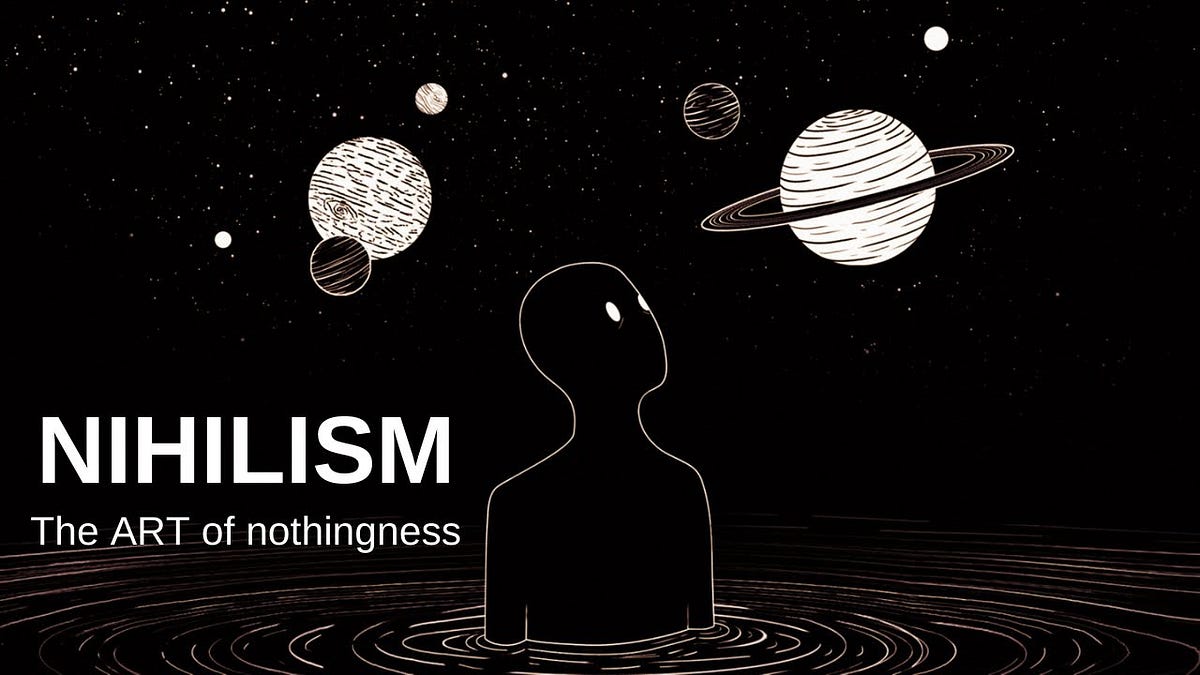
The Ultimate Guide to Understanding Nihilistic Philosophy.
Hey there, friend! Ever feel like you're just spinning your wheels? Like nothing reallymattersin the grand scheme of things? Maybe you've stayed up late at night pondering the meaning of life, only to come up empty-handed. Well, you might be brushing shoulders with a concept called nihilism. It sounds intense, even a little scary, right? Like something reserved for brooding philosophers in smoky cafes. But trust me, it's more common than you think. We're talking about the idea that life is, fundamentally, without objective meaning, purpose, or intrinsic value.
Think of it this way: You work hard, you chase your dreams, you build relationships. But what if, at the end of the day, none of it actuallymeansanything? What if it's all just…random? Pretty unsettling, isn't it? That's the core of nihilism. It's not necessarily about being depressed or cynical (although it can sometimes be confused with those). It's more about questioning the foundations upon which we build our lives.
Maybe you've experienced a taste of it after a particularly rough day at work, a relationship breakup, or just a general feeling of being lost. That sense of "what's the point?" That's nihilism knocking at your door. And it can be a real bummer. After all, who wants to believe that everything is meaningless? It kinda takes the wind out of your sails, doesn't it?
But here's the thing: Understanding nihilism doesn't have to be a downer. In fact, it can be strangely liberating. Because once you realize that there's no inherent meaning, you're free to create your own. You get to decide whatdoesmatter to you. You get to define your own purpose.
So, buckle up, friend. We're about to dive deep into the world of nihilistic philosophy. We'll explore its different forms, its famous thinkers, and its practical implications for your life. We'll look at how it can be a source of despair, but also a catalyst for personal growth and a re-evaluation ofvalues. And hopefully, by the end of this article, you'll have a better understanding of what nihilism is all about, and how you can use it (or avoid it!) to live a more authentic and meaningful life. Ready to unravel this fascinating, and often misunderstood, philosophy? Let's go!
What Exactly Is Nihilism?
Okay, let's break it down. Nihilistic philosophy, at its heart, is the rejection of commonly held beliefs about meaning, value, and knowledge. It's the idea that there's no objective truth, no inherent morality, and no ultimate purpose to existence. Basically, it throws a wrench into the works of traditional ways of thinking.
Think about all the things that society tells us are important: success, happiness, love, religion, justice. Nihilism questions whether these things actuallyareimportant. It asks, "Why should I value these things? What makes them inherently good?" And often, it comes up with some pretty unsettling answers.
It's not about being angsty for the sake of being angsty. It's a philosophical position that challenges the very foundations of our beliefs. Imagine pulling the rug out from under everything you thought you knew. That's kind of what nihilism does.
Now, there are different flavors of nihilism. It's not just one big, gloomy blob. There's moral nihilism, which denies the existence of objective morality. There's epistemological nihilism, which questions the possibility of certain knowledge. And there's existential nihilism, which focuses on the meaninglessness of life. We'll delve into these different types a little later, but for now, just know that it's a complex and nuanced philosophy.
The term itself comes from the Latin word _nihil_, which means nothing.So, you can think of nihilism as the philosophy of nothingness.It's about questioning the existence of inherent value and meaning in the world.
But don't let the name scare you. While it can sound pretty bleak, understanding nihilism can actually be a powerful tool for self-discovery. It can force you to confront your own beliefs and values, and to decide whatreallymatters to you.
The Different Flavors of Nihilism
So, as we mentioned, nihilism isn't just one monolithic idea. There are several different types, each focusing on a different aspect of existence. Let's take a closer look at some of the most common ones.
Moral Nihilism
This is probably the most well-known type of nihilism. Moral nihilism is the belief that there are no objective moral values. It's the idea that right and wrong are simply social constructs, personal opinions, or emotional responses.
Think about it: What makes something "good" or "bad"? Is it a universal truth, or is it just something that society has agreed upon? A moral nihilist would argue that it's the latter. They would say that concepts like justice, fairness, and compassion are just human inventions, not inherent properties of the universe.
This doesn't necessarily mean that moral nihilists are evil or immoral. It just means that they don't believe in objective moral standards. They might still act in ways that are considered "good" by society, but they would do so based on their own personal values, not because they believe that there's some inherent moral obligation.
Epistemological Nihilism
This type of nihilism deals with knowledge. Epistemological nihilism questions the possibility of obtaining certain knowledge. It argues that we can't really know anything for sure.
Think about all the things you believe to be true. How do you know they're true? Do you have absolute proof? Or are you just relying on your senses, your experiences, or the testimony of others? An epistemological nihilist would argue that all of these sources of knowledge are unreliable. They would say that our senses can be deceived, our experiences can be misinterpreted, and other people can be wrong or lying.
Therefore, they would conclude that we can't really know anything for certain. This doesn't mean that they think we should just give up on trying to learn. But it does mean that they approach knowledge with a healthy dose of skepticism.
Existential Nihilism
This is the type of nihilism that most people think of when they hear the word. Existential nihilism is the belief that life has no inherent meaning or purpose. It's the idea that we're all just born into a random universe, and that there's no grand plan or ultimate goal.
Think about it: Why are you here? What's the point of your existence? An existential nihilist would argue that there is no point. They would say that we're all just biological machines, driven by our instincts and desires, and that there's no deeper meaning to it all.
This can be a pretty depressing thought, but it can also be liberating. If life has no inherent meaning, then you're free to create your own meaning. You get to decide what's important to you, and you get to live your life according to your own values.
Political Nihilism
This form is the rejection of all political and social structures. It's the belief that governments, laws, and social norms are all oppressive and unnecessary.
A political nihilist might argue that these structures are designed to control and manipulate individuals, and that they ultimately prevent people from living freely and authentically. They might advocate for the destruction of these structures, in the hope that something better will emerge in their place.
It's important to note that political nihilism doesn't necessarily imply violence or anarchy. Some political nihilists may advocate for peaceful resistance or civil disobedience. Others may believe that violence is necessary to dismantle oppressive systems.
Famous Faces of Nihilism
Nihilism has popped up in the works of many influential thinkers throughout history. Some of these figures didn't explicitly identify as nihilists, but their ideas certainly resonate with nihilistic themes. Here are a few notable examples:
Friedrich Nietzsche
Probably the most famous philosopher associated with nihilism, Nietzsche explored the concept extensively in his writings. He famously declared "God is dead," which wasn't necessarily a literal statement, but rather a reflection of the decline of traditional moral and religious values in modern society.
Nietzsche believed that this "death of God" would lead to nihilism, but he didn't see nihilism as an end in itself. Instead, he saw it as an opportunity to create new values and to embrace life in all its chaotic and unpredictable glory. He encouraged people to become _Übermenschen_ (Overmen or Supermen), individuals who could transcend traditional morality and create their own meaning.
Ivan Turgenev
This Russian novelist is credited with popularizing the term "nihilism" in his novel _Fathers and Sons_. The protagonist, Bazarov, is a young man who rejects all forms of authority and tradition. He believes in nothing but science and reason, and he dismisses all metaphysical and romantic ideals.
Turgenev's portrayal of Bazarov sparked a lot of controversy in Russia, and the term "nihilism" became associated with radicalism and rebellion. However, Turgenev himself didn't necessarily endorse nihilism. He presented it as a complex and multifaceted phenomenon, with both positive and negative aspects.
Albert Camus
Although Camus rejected the label of nihilist, his work grapples with many of the same themes. In his essay "The Myth of Sisyphus," he explores the absurdity of human existence. He argues that life is inherently meaningless, and that we're all condemned to repeat the same tasks over and over again, like Sisyphus pushing a boulder up a hill only to have it roll back down.
However, Camus doesn't see this absurdity as a cause for despair. Instead, he argues that we should embrace it and rebel against it. We should find joy in the present moment, even in the face of meaninglessness.
Fyodor Dostoevsky
Like Turgenev, Dostoevsky explored the themes of nihilism in his novels, particularly in _Notes from Underground_ and _The Brothers Karamazov_. His characters often grapple with questions of faith, morality, and the meaning of life.
Dostoevsky was critical of nihilism, which he saw as a dangerous and destructive force. He believed that it could lead to moral relativism, social breakdown, and even violence. However, he also recognized the appeal of nihilism, particularly for those who had lost faith in traditional values.
The Good, the Bad, and the Ugly of Nihilism
Okay, so we've explored what nihilism is and some of its key thinkers. But what are the actualeffectsof embracing this philosophy? Is it all doom and gloom, or are there some potential benefits? Let's break it down:
The Bad: Potential Downsides
Despair and Meaninglessness: This is the most obvious downside. If you truly believe that nothing matters, it can lead to a deep sense of despair and hopelessness. It can be hard to find motivation to do anything if you don't believe it will make a difference. Moral Relativism: Moral nihilism can lead to the belief that there are no objective moral standards. This can make it difficult to judge the actions of others, or even to make your own moral decisions. Social Breakdown: If enough people embrace nihilism, it could potentially lead to the breakdown of social order. If no one believes in shared values or goals, it can be hard to cooperate and build a functioning society. Existential Angst: Constantly grappling with the meaninglessness of life can be emotionally exhausting. It can lead to anxiety, depression, and a general sense of unease.
The Ugly: Extreme Consequences
Apathy and Indifference: In extreme cases, nihilism can lead to apathy and indifference towards the suffering of others. If nothing matters, why should you care about anyone else's problems? Destructive Behavior: Some individuals may interpret nihilism as a license to do whatever they want, regardless of the consequences. This can lead to destructive behavior, both towards themselves and towards others. Justification for Violence:In its most extreme form, nihilism can be used to justify violence and terrorism. If life is meaningless, then killing someone is no different than killing an insect.
The Good: Potential Upsides
Freedom from Societal Expectations: Nihilism can free you from the pressure to conform to societal expectations. If you don't believe in inherent values, you're free to define your own values and live your life on your own terms. Increased Authenticity: By questioning all your beliefs, nihilism can help you to become more authentic. You can identify the values that are truly important to you, and discard the ones that you've simply inherited from others. Greater Appreciation for the Present Moment: If life has no inherent meaning, then the present moment becomes all the more precious. You can learn to appreciate the simple things in life, and to find joy in the here and now. Motivation to Create Your Own Meaning: Ironically, nihilism can be a powerful motivator. If you believe that life is meaningless, you're compelled to create your own meaning. You can choose to dedicate your life to something that you find meaningful, whether it's your work, your relationships, or your hobbies.
So, as you can see, nihilism is a double-edged sword. It can be a source of despair and destruction, but it can also be a catalyst for freedom and self-discovery. The key is to approach it with caution and to use it as a tool for personal growth, rather than as an excuse for negativity.
Finding Your Own Meaning in a "Meaningless" World
Okay, so let's say you've been grappling with nihilistic thoughts. You've come to the conclusion that life, in some fundamental sense, is indeed without inherent meaning. Now what? Do you just curl up in a ball and give up? Absolutely not! This is where things get interesting. This is where you get to take control.
The realization that there's no pre-packaged meaning waiting for you actually opens up a world of possibilities. It's like being given a blank canvas. You get to decide what to paint on it. You get to create your own masterpiece.
Here are a few strategies for finding your own meaning in a "meaningless" world: Define Your Values: What's truly important to you? What do you believe in? What kind of person do you want to be? Take some time to reflect on your values, and then start living your life in accordance with them. Set Meaningful Goals: What do you want to achieve in life? What kind of impact do you want to make on the world? Set some goals that are aligned with your values, and then start working towards them. Cultivate Relationships: Human connection is one of the most powerful sources of meaning and purpose. Invest in your relationships with family, friends, and loved ones. Find a Passion: What do you enjoy doing? What makes you feel alive? Find a passion that excites you, and then pursue it with all your heart. Help Others: Helping others is a great way to find meaning and purpose in your life. Volunteer your time, donate to a cause you believe in, or simply offer a helping hand to someone in need. Embrace the Absurdity: Instead of fighting against the absurdity of life, embrace it. Find humor in the chaos, and learn to laugh at yourself. Focus on the Present Moment: Don't get too caught up in the past or the future. Focus on the present moment and appreciate the simple things in life. Create Something: Express yourself through art, music, writing, or any other creative outlet. Creating something can be a powerful way to find meaning and purpose.
Remember, finding meaning is not a one-time event. It's an ongoing process. It's something that you have to actively work at. But the rewards are well worth the effort. By taking control of your own life and creating your own meaning, you can find happiness and fulfillment, even in a "meaningless" world.
So, go out there, friend! Explore your passions, connect with others, and create something beautiful. The world is waiting for you to make your mark.
Nihilism and the Modern World
Nihilistic philosophy isn't just some abstract concept confined to dusty philosophy books. It's actually surprisingly relevant to the modern world. In fact, some argue that we're living in a particularly nihilistic era.
Think about it: Traditional sources of meaning and authority are crumbling. Religion is declining, political institutions are distrusted, and social norms are constantly being challenged. We're bombarded with information and entertainment, but it often feels shallow and meaningless.
This can lead to a sense of alienation and disillusionment. People feel lost and confused, unsure of what to believe in or what to strive for. They may turn to nihilism as a way to cope with this sense of meaninglessness.
Furthermore, the rise of technology has also contributed to the spread of nihilism. The internet and social media have made it easier than ever to connect with others, but they have also created a sense of disconnection and superficiality. People spend hours scrolling through feeds, comparing themselves to others and feeling inadequate.
The constant stream of negative news and information can also be overwhelming. It can be easy to feel like the world is falling apart, and that there's nothing you can do to stop it.
However, it's important to remember that nihilism isn't necessarily a negative force. It can also be a catalyst for positive change. By questioning traditional values and beliefs, we can create a more just and equitable society. By embracing the absurdity of life, we can find joy and meaning in the present moment.
Ultimately, the choice is ours. We can succumb to the despair of nihilism, or we can use it as a tool for self-discovery and personal growth. We can choose to create our own meaning, to connect with others, and to make a positive impact on the world.
The modern world may be a challenging place, but it's also full of opportunities. It's up to us to seize those opportunities and to create a better future for ourselves and for generations to come.
Alright, friend, we've journeyed through the ins and outs of nihilistic philosophy together, unpacking its various forms, historical figures, and its complicated relationship with meaning in life. This exploration wasn't just an academic exercise; it was about confronting a fundamental question: What do we do when the world seems to offer no inherent purpose?
The key takeaway is that while nihilism can initially feel like a dead end, it can paradoxically be the starting point for creating a life filled with your own unique meaning. By recognizing the absence of pre-ordained value, you gain the freedom to define your own.
So, here's the call to action: Don't let the potential darkness of nihilism paralyze you. Instead, use it as a springboard to launch yourself into a more authentic and purposeful existence. Take some time this week to reflect on your values, identify what truly matters to you, and then take one small step towards living in alignment with those values. Maybe it's volunteering for a cause you care about, reaching out to a loved one, or simply spending more time doing something that brings you joy.
Remember, the meaning of life isn't something you find, it's something you create. So, go out there and build a life that resonates with your soul, a life that you can be proud of, even in the face of the absurd. What are you waiting for? What is one small step you can taketodayto start creating a more meaningful life? The world is waiting.

Post a Comment for "Nihilistic Philosophy Explained Simply"
Post a Comment