Nihilism’s Impact on Modern Philosophy and Culture
When Nothing Seems to Matter: Exploring Nihilism’s Impact on Modern Philosophy and Culture
Okay, friends, let's dive into something that sounds super heavy but is actually kind of fascinating – Nihilism's Impact on Modern Philosophy and Culture. It's not just some dark, edgy thing teenagers scribble in their notebooks (though, let's be honest, we've all been there). It's a complex philosophical concept that's been shaking up our world for centuries, influencing everything from art and literature to politics and… well, our general sense ofwhat's the point?
Ever feel like you're running on a treadmill, working hard but not really getting anywhere? Or scrolling through endless social media, feeling emptier than you did before? That, my friends, is nihilism creeping into your day-to-day. It’s the idea that life is inherently without objective meaning, purpose, or intrinsic value. Think of it as the ultimate cosmic shrug.Shrug.
Now, before you start picturing us all wandering around in black turtlenecks reciting poetry about despair, let's clarify:nihilism isn’t necessarily about beingmiserable. It’s more about questioning the foundations of our beliefs and values. It's about asking, "Okay, soifthere's no inherent meaning, what then?"
Imagine you're building a house on what youthinkis solid ground. Then someone comes along and tells you the ground is actually a giant, slowly melting ice floe. Panic? Sure. But also…opportunity. You now have the chance to build somethingnew, something adapted to the actual reality of the situation. Nihilism can be that ice floe reveal. It can be a wake-up call that forces us to re-evaluate everything.
The problem is, this realization can be alotto handle. It's like suddenly realizing that Santa Claus, the Tooth Fairy, and the Easter Bunny are all just elaborate parental conspiracies. Suddenly, the world feels a little less magical, a little less…grounded.
But here’s the thing: grappling with nihilism doesn't have to lead to existential dread. In fact, it can be incredibly liberating. When you realize that the meaning of life isn't something youfindbut something youcreate, you become the master of your own destiny (cue dramatic music!).
So, how exactly did this philosophy of "nothing matters" become so influential? How did it seep into our art, our politics, and our everyday lives? And, most importantly, how can we navigate this seemingly bleak landscape to find our own meaning and purpose?
Stick around, because we're about to unpack all that. We’ll explore the historical roots of nihilism, its various forms, its impact on modern thought and culture, and, most importantly, how to use it not as a source of despair, but as a catalyst for creating a more meaningful and authentic life. Get ready to question everything! Are you ready to dive into the abyss, or maybe just dip a toe in? Let’s find out.
Unpacking Nihilism’s Impact on Modern Philosophy and Culture: What Exactly Is It?
Okay, friends, before we can truly grasp Nihilism’s Impact on Modern Philosophy and Culture, we need to define our terms. What exactlyisnihilism? It's not just a feeling of teenage angst or a general sense of pessimism. It's a philosophical position that denies objective meaning, value, or truth in the universe.
Think of it like this: imagine you’re playing a game, but you suddenly realize there are no real rules, no ultimate winner, and no reason to even be playing in the first place. That feeling of disillusionment? That's a taste of nihilism.
There are several flavors of nihilism, each with its own nuances: Ethical Nihilism:This denies the existence of objective moral values. In other words, there’s no universal right or wrong. What’s considered "good" or "evil" is simply a matter of opinion or cultural convention. This can be a bit unsettling, right? But it also opens the door to questioning traditional morality and creating your own ethical code.
Epistemological Nihilism: This questions the possibility of knowledge itself. It suggests that we can't trulyknowanything with certainty. Everything we perceive is filtered through our subjective experiences, making objective truth unattainable. This is where things getreallymind-bending.
Existential Nihilism: This is perhaps the most common understanding of nihilism. It asserts that life has no inherent meaning or purpose. We're born into a meaningless universe, and there's no grand plan or cosmic destiny waiting for us. This can sound depressing, but it also highlights the freedom we have to define our own purpose.
Political Nihilism: This rejects all existing political and social structures, believing them to be inherently corrupt and meaningless. It often leads to calls for radical change or even violent revolution. This is where nihilism can get a little dicey, as it can be used to justify extreme actions.
Nihilism, therefore, isn't just a single, monolithic idea. It's a spectrum of beliefs that question the very foundations of our reality. It's about challenging assumptions, questioning norms, and ultimately, deciding for ourselves what matters.
The Roots of Nihilism’s Impact on Modern Philosophy and Culture: From Ancient Greece to Nietzsche
To understand Nihilism’s Impact on Modern Philosophy and Culture, we need to take a little trip down memory lane. The seeds of nihilism were sown long before Nietzsche declared "God is dead."
Believe it or not, hints of nihilistic thought can be traced back to ancient Greece. Thinkers like Gorgias, a Sophist, argued that nothing exists; even if something did exist, it could not be known; and even if it could be known, it could not be communicated. Pretty bleak, right? These early skeptics questioned the certainty of knowledge and the existence of objective truth, laying the groundwork for future nihilistic thinkers.
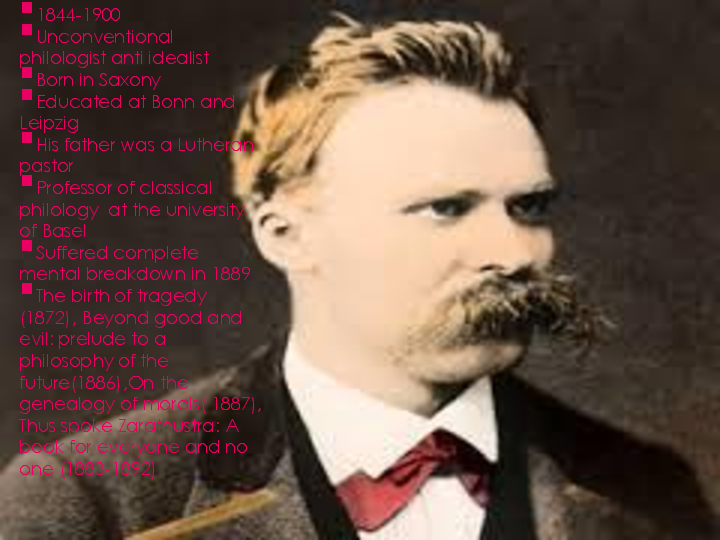
However, it was in the 19th century that nihilism truly came into its own, largely thanks to the writings of Friedrich Nietzsche. Nietzsche argued that the traditional values of Western civilization, particularly those based on Christian morality, were crumbling. He famously declared "God is dead," not as a statement of atheism, but as an observation that the belief in God had lost its power to provide meaning and purpose in the modern world.
Nietzsche saw this "death of God" as both a crisis and an opportunity. He believed that it opened the door for humanity to create its own values and meaning, to become "supermen" who transcend the limitations of traditional morality.
Another key figure in the development of nihilism was the Russian writer Ivan Turgenev. In his novel "Fathers and Sons," he introduced the term "nihilist" to describe a character who rejects all authority and tradition. Turgenev's portrayal of nihilism reflected the growing disillusionment with the established order among Russian intellectuals in the mid-19th century.
The rise of science also contributed to the growth of nihilism. As scientific discoveries challenged traditional religious explanations of the universe, many people began to question the existence of God and the meaning of life. The universe, once seen as a divinely ordered cosmos, began to appear as a cold, indifferent void.
So, from ancient skepticism to the revolutionary ideas of Nietzsche and the social commentary of Turgenev, the roots of nihilism run deep. These thinkers challenged the foundations of Western thought and paved the way for the profound impact of nihilism on modern philosophy and culture.
Nihilism’s Impact on Modern Philosophy and Culture: Existentialism and Beyond
Nihilism's influence on modern philosophy is undeniable, especially in the development of existentialism. Existentialism, with thinkers like Jean-Paul Sartre and Albert Camus, grapples directly with the implications of a meaningless universe.
Think of existentialism as nihilism’s slightly more optimistic cousin. While existentialists acknowledge the lack of inherent meaning, they emphasize the importance of individual freedom and responsibility. Sartre famously argued that "existence precedes essence," meaning that we are born into the world without a pre-defined purpose. It's up to us to create our own essence, to define who we are through our choices and actions.
Camus, in his essay "The Myth of Sisyphus," explored the absurdity of human existence. He used the image of Sisyphus, condemned to endlessly roll a boulder uphill only to have it roll back down, to illustrate the futility of our efforts. However, Camus argued that we must embrace this absurdity and find joy in the act of rebellion, in the conscious effort to overcome the meaninglessness of life.
Beyond existentialism, nihilism has also influenced other philosophical movements, such as postmodernism. Postmodernism challenges the idea of objective truth and universal narratives, arguing that all knowledge is socially constructed and relative. This skepticism towards grand narratives can be seen as a continuation of nihilistic themes.
Here’s a breakdown of how nihilism trickled into other schools of thought: Rejection of Metanarratives:Postmodernism picks up nihilism's rejection of overarching stories. It's like saying, "Okay, the big picture everyone talked about? Doesn't exist." This leads to a focus on individual, subjective experiences.
Deconstruction: Think of deconstruction as taking apart a building to see how it’s made. Philosophers like Jacques Derrida used it to show how language is unstable and meaning is always shifting, echoing nihilism’s skepticism.
Influence on Ethics: Nihilism challenges traditional morality, paving the way for ethical theories that emphasize individual responsibility and freedom. You're not bound by rules; you make your own.
Nihilism’s Impact on Modern Philosophy and Culture: Art, Literature, and Film
Nihilism’s Impact on Modern Philosophy and Culture extends far beyond the realm of academic philosophy. It has profoundly influenced art, literature, and film, shaping our understanding of ourselves and the world around us.
In literature, nihilistic themes can be found in the works of authors like Samuel Beckett, whose plays often depict characters trapped in meaningless routines, struggling to find purpose in a world devoid of hope. Think of "Waiting for Godot," where two characters endlessly wait for someone who never arrives, symbolizing the futility of human existence.
In art, nihilism has inspired movements like Dadaism, which rejected all traditional artistic values and embraced absurdity and irrationality. Dadaist artists sought to shock and provoke audiences, challenging their assumptions about beauty, meaning, and purpose.
Film, too, has been heavily influenced by nihilism. Movies like "Fight Club," "The Big Lebowski," and "No Country for Old Men" explore themes of meaninglessness, alienation, and the breakdown of social order. These films often feature characters who are disillusioned with society and struggle to find their place in a world that seems to have lost its way.
Let's break down some examples: Literature: Albert Camus’The Strangerfeatures a protagonist who is detached from conventional morality and emotion, reflecting a nihilistic worldview. Art: Dadaism rejected logic and reason, embracing chaos and nonsense as a response to the perceived meaninglessness of World War I. Film:Taxi Drivershows a protagonist who is alienated and disillusioned, ultimately resorting to violence in a desperate attempt to find meaning.
Nihilism in art isn't just about gloom and doom, though. It also serves as a mirror, reflecting back at us the anxieties and uncertainties of modern life. It forces us to confront the uncomfortable truths about our existence and to question the values we hold dear.
Nihilism’s Impact on Modern Philosophy and Culture: Politics and Social Movements
Nihilism’s Impact on Modern Philosophy and Culture isn't limited to the arts and academia; it has also had a significant impact on politics and social movements. The rejection of traditional values and the questioning of authority can lead to both positive and negative outcomes.
On one hand, nihilism can inspire radical social change. When people lose faith in the existing political and social order, they may be more willing to challenge the status quo and fight for a better world. Think of the anarchist movement, which rejects all forms of hierarchical power and advocates for a society based on voluntary cooperation. Anarchism, in some ways, is a political manifestation of nihilism's rejection of traditional authority.
On the other hand, nihilism can also be used to justify violence and oppression. If there are no objective moral values, then anything is permissible. This can lead to a dangerous disregard for human life and a justification for all sorts of atrocities. Some extremist groups have used nihilistic arguments to justify their actions, claiming that they are simply tearing down a meaningless and corrupt system.
Nihilism, therefore, is a double-edged sword in the political arena. It can be a catalyst for positive change, but it can also be used to justify terrible acts.
Here's a closer look at some specific examples: Anarchism: Rejects all forms of coercive authority, seeking a society based on voluntary cooperation. Terrorism: Some terrorist groups have used nihilistic arguments to justify their violence, claiming that they are destroying a meaningless world. Revolutionary Movements:Movements that seek to overthrow existing power structures often draw inspiration from nihilistic ideas about the corruption and meaninglessness of the status quo.
The key takeaway here is that nihilism, in and of itself, is not inherently good or bad. It's a philosophical position that can be interpreted and applied in different ways. The consequences of nihilism depend on the specific context and the motivations of the individuals or groups who embrace it.
Navigating Nihilism’s Impact on Modern Philosophy and Culture: Finding Meaning in a Meaningless World
Okay, friends, we've explored the depths of Nihilism’s Impact on Modern Philosophy and Culture. We've seen its influence on philosophy, art, literature, film, and politics. But now, the big question: how do we navigate this seemingly bleak landscape? How do we find meaning in a world that appears to be inherently meaningless?
The good news is, grappling with nihilism doesn't have to lead to despair. In fact, it can be an opportunity for growth and self-discovery. When you realize that the meaning of life isn't something youfindbut something youcreate, you become empowered to define your own purpose and values.
Here are some practical strategies for finding meaning in a meaningless world: Embrace your freedom:Nihilism can be liberating because it frees you from the constraints of traditional expectations and beliefs. You are no longer bound by pre-defined roles or societal norms. You have the freedom to choose your own path and create your own identity.
Create your own values: Since nihilism denies the existence of objective moral values, it's up to you to define what's important to you. What do you believe in? What do you stand for? What kind of person do you want to be?
Find purpose in your passions: What activities make you feel alive and engaged? What are you good at? What problems do you want to solve? Focus on pursuing your passions and using your talents to make a difference in the world.
Connect with others: Human connection is essential for well-being. Build meaningful relationships with people who support and inspire you. Share your experiences and learn from others.
Practice gratitude: Even in a meaningless world, there are still things to be grateful for. Take time each day to appreciate the good things in your life, no matter how small.
Find meaning in the present moment: Since the future is uncertain and the past is gone, focus on living in the present moment. Savor your experiences and appreciate the beauty of the world around you.
Nihilism challenges us to confront the uncomfortable truths about our existence, but it also empowers us to create our own meaning and purpose. By embracing our freedom, defining our own values, and connecting with others, we can navigate the challenges of nihilism and live a meaningful and fulfilling life.
Conclusion: Embracing the Void, Creating Your Own Meaning in the Wake of Nihilism’s Impact on Modern Philosophy and Culture
So, friends, we’ve taken a deep dive into Nihilism’s Impact on Modern Philosophy and Culture. We’ve explored its definition, its historical roots, its influence on art, literature, film, politics, and social movements. We’ve even discussed strategies for navigating this seemingly bleak landscape and finding meaning in a world that often feels meaningless.
The core takeaway? Nihilism, at its heart, is a challenge. It challenges us to question everything, to reject easy answers, and to confront the uncomfortable truths about our existence. It’s a philosophical wrecking ball that can dismantle our carefully constructed beliefs and leave us feeling lost and adrift.
But here’s the thing: a wrecking ball can also be used to clear the way for something new. Nihilism, when approached with courage and creativity, can be a catalyst for growth, self-discovery, and the creation of a more authentic and meaningful life.
The universe may not have a pre-ordained purpose for you. There may not be a grand plan or a cosmic destiny waiting to be discovered. But that doesn't mean your life has to be meaningless. It simply means thatyouget to decide what your purpose is.Youget to define your own values.Youget to create your own meaning.
So, what will you do with this newfound freedom? Will you succumb to despair and apathy? Or will you embrace the challenge and create a life that is both meaningful and fulfilling?
The choice, my friends, is yours.
Now, I encourage you to take some time to reflect on what you've learned today. Consider how nihilism might be influencing your own thoughts and feelings. And most importantly, ask yourself: what kind of meaning do Iwant to create in my life?
Go out there and build something amazing, something that reflects your unique values and passions. The world needs your creativity, your compassion, and your unwavering commitment to making a difference.
Remember, even in a meaningless universe,youmatter. Your choices matter. Your actions matter. And your story is still being written.
What will your next chapter be?

Post a Comment for "Nihilism’s Impact on Modern Philosophy and Culture"
Post a Comment