DXY: Understanding the Dollar Index
Navigating the Dollar's Dominance: DXY, Your Guide to Understanding the Dollar Index.
Alright, friends, ever feel like the world of finance speaks a different language? Like everyone's throwing around terms you vaguely understand, but notreallyunderstand? Well, let's tackle one of those mysterious beasts today: the DXY, or the Dollar Index. Think of it as the dollar's report card, a snapshot of its strength against a basket of other major currencies. Now, why shouldyoucare? Imagine your next vacation abroad. A strong dollar means your hard-earned cash stretches further, getting you more gelato in Italy or more souvenirs from Japan. A weak dollar? Suddenly that trip becomes a tad more budget-conscious. The DXY influences everything from import prices to the price of gold, and even the performance of your investment portfolio. It's kind of a big deal.
So, what exactlyisthis DXY thing, and how does it work? Why is it constantly fluctuating like a caffeinated hummingbird? And more importantly, how can understanding it help you make smarter financial decisions? We're going to break it all down in plain English, no fancy jargon required. Forget those dry, textbook explanations. We're talking real-world scenarios, relatable examples, and maybe even a few terrible puns along the way (sorry, not sorry). We'll explore its history, its components, and how to actually interpret those squiggly lines on a chart. Think of this as your DXY decoder ring. Ready to unravel the mysteries of the dollar's dominance? Stick with me, and you'll be chatting about the DXY at your next dinner party (or at least understanding what your financially savvy friend is talking about!). Let's dive in, shall we? Because once you get a handle on this, you'll see the financial world in a whole new light. Intrigued? Let's unlock the secrets of the DXY together!
DXY: Understanding the Dollar Index and Its Significance
Alright, so you're intrigued by this DXY: Understanding the Dollar Indexthing, right? Good! Because it's actually pretty crucial to understanding global finance. But before we get bogged down in technicalities, let's paint a picture. Imagine the dollar is a heavyweight boxer, and the DXY is its win-loss record. It tells you how well the dollar is performing against its main competitors – the Euro, Japanese Yen, British Pound, Canadian Dollar, Swedish Krona, and Swiss Franc.
Now, the DXY isn't a crystal ball, but it gives you valuable clues about the overall health of the US economy and its position on the global stage. A rising DXY often suggests investors are flocking to the dollar as a safe haven, perhaps due to global uncertainty. A falling DXY? Maybe it's a sign that investors are looking for greener pastures elsewhere, or that the US economy is facing some headwinds.
So, why does this matter toyou? Well, as mentioned earlier, it affects everything from your travel budget to the price of your favorite imported coffee. And if you're an investor, keeping an eye on the DXY can help you make more informed decisions about your portfolio. It's all interconnected! Understanding the DXY is like having a secret weapon in your financial arsenal.
What Exactly is the Dollar Index?
The Dollar Index, often shortened to DXY, DX, or USDX, is an index (or measure) of the value of the United States dollar relative to a basket of six foreign currencies. These currencies are:Euro (EUR): Holds the largest weight in the index, at approximately 57.6%. Japanese Yen (JPY): The second-largest weight, at roughly
13.6%. British Pound (GBP):Has a weight of about
11.9%. Canadian Dollar (CAD):Carries a weight of around
9.1%. Swedish Krona (SEK):Weighted at roughly
4.2%. Swiss Franc (CHF):The smallest weight, at approximately
3.6%.
The index started with a base value of 100 in March 1973, shortly after the Bretton Woods Agreement, which established a system of fixed exchange rates, collapsed. So, a DXY value of 110, for example, means the dollar has gained 10% in value against the basket of currencies since the base period. The DXY is calculated in real-time throughout the trading day, providing a continuous gauge of the dollar's strength. It's important to note that the composition and weighting of the currencies in the basket have remained unchanged since its inception, which some argue makes it less representative of global trade flows today. However, it remains a widely tracked and influential indicator.
The History and Evolution of the DXY
The DXY: Understanding the Dollar Index'shistory is intrinsically linked to the evolution of the global financial system. As we mentioned, it was born in 1973 after the Bretton Woods system crumbled. This system, established after World War II, pegged various currencies to the US dollar, which was in turn pegged to gold. When this system collapsed, major currencies were allowed to float freely against each other, creating the need for a way to track the dollar's overall strength.
The DXY was created as a solution, providing a standardized way to measure the dollar's value against a group of major trading partners. Initially, it included ten currencies, but this was later reduced to the current basket of six. The Euro's introduction in 1999 significantly impacted the DXY, as it replaced several European currencies, giving it the dominant weight it holds today.
Over the years, the DXY has become a vital tool for traders, investors, and policymakers. It reflects significant economic events, such as the Asian Financial Crisis, the dot-com bubble, and the Global Financial Crisis. By observing how the DXY reacts to these events, analysts can gain insights into market sentiment and the potential impact on the global economy. While its composition may be somewhat outdated, the DXY's historical significance and widespread use ensure its continued relevance in the modern financial landscape.
How is the DXY Calculated?
Understanding how the DXY is calculated can seem daunting, but it's actually quite straightforward once you break it down. The formula essentially measures the dollar's performance against each of the six currencies in the basket, weighted according to their assigned percentages. Here’s a simplified explanation:
The DXY is calculated using the following formula:
DXY = 50.14348112 EURUSD^(-0.576) USDJPY^(0.136) GBPUSD^(-0.119) USDCAD^(0.091) USDSEK^(0.042) USDCHF^(0.036)
Where:
EURUSD = Euro against the U.S. dollar exchange rate
USDJPY = U.S. dollar against the Japanese yen exchange rate
GBPUSD = British pound against the U.S. dollar exchange rate
USDCAD = U.S. dollar against the Canadian dollar exchange rate
USDSEK = U.S. dollar against the Swedish krona exchange rate
USDCHF = U.S. dollar against the Swiss franc exchange rate
The exponents represent the weight of each currency in the basket.
Essentially, the formula takes the exchange rate of each currency against the dollar, raises it to the power of its corresponding weight, and multiplies all the results together. The constant (50.14348112) is a scaling factor that ensures the index starts at a base value of
100.
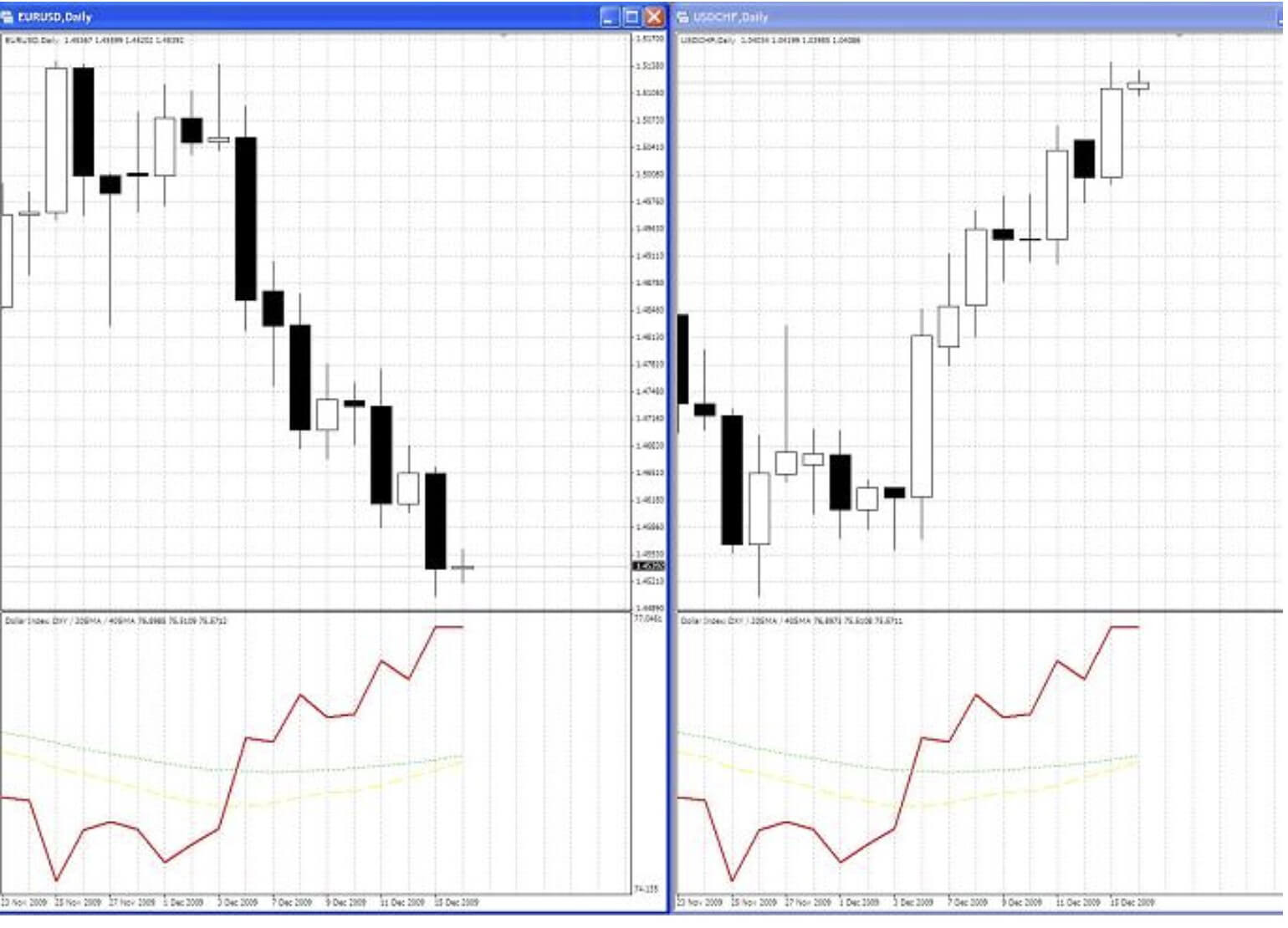
Now, you don't need to memorize this formula! The important thing to understand is that the Euro's dominance in the basket means that the DXY is heavily influenced by the EUR/USD exchange rate. A strong Euro tends to push the DXY down, while a weak Euro generally pushes it up. This is something to keep in mind when interpreting DXY movements.
Factors Influencing the DXY: Understanding the Dollar Index
Several factors, both domestic and international, can influence the DXY: Understanding the Dollar Index. It's like a delicate balancing act, with various forces pushing and pulling on the dollar's value. Understanding these factors is key to making informed predictions about future DXY movements.
Economic Indicators and US Monetary Policy
One of the primary drivers of the DXY is the health of the US economy. Strong economic data, such as robust GDP growth, low unemployment rates, and rising inflation, tend to boost the dollar's value. This is because a strong economy often leads the Federal Reserve (the Fed), the US central bank, to raise interest rates. Higher interest rates make the dollar more attractive to investors seeking higher returns, leading to increased demand and a rising DXY.
Conversely, weak economic data can weigh on the dollar. If GDP growth slows, unemployment rises, or inflation remains stubbornly low, the Fed may be inclined to lower interest rates or even implement quantitative easing (QE) policies. Lower interest rates make the dollar less attractive to investors, leading to decreased demand and a falling DXY.
The Fed's monetary policy decisions are therefore crucial to watch. Any signals about future interest rate hikes or cuts can have a significant impact on the DXY. The Fed's statements, minutes from their meetings, and speeches by Fed officials are all closely scrutinized by market participants for clues about the future direction of monetary policy.
Global Economic Conditions and Geopolitical Events
The DXY: Understanding the Dollar Indexisn't just influenced by domestic factors. Global economic conditions and geopolitical events also play a significant role. For example, if the global economy is facing uncertainty or a slowdown, investors often flock to the dollar as a safe haven. This increased demand for the dollar can push the DXY higher, even if the US economy isn't performing exceptionally well.
Geopolitical events, such as wars, political instability, or trade disputes, can also trigger safe-haven flows into the dollar. The dollar is often seen as a relatively stable and secure currency during times of crisis, making it a popular choice for investors seeking to protect their capital.
Furthermore, the economic performance of other major economies, particularly those whose currencies are included in the DXY basket, can influence the index. If the Eurozone economy is struggling, for example, it can weaken the Euro and push the DXY higher. Similarly, if the Japanese economy is performing strongly, it can strengthen the Yen and push the DXY lower.
Market Sentiment and Risk Appetite
Market sentiment and risk appetite, also known as "risk-on" and "risk-off" environments, can significantly impact the DXY: Understanding the Dollar Index. In a "risk-on" environment, investors are optimistic about the global economy and are willing to take on more risk in search of higher returns. This often leads them to invest in riskier assets, such as emerging market stocks and high-yielding currencies, and to sell off safe-haven assets like the dollar. As a result, the DXY tends to fall in "risk-on" environments.
Conversely, in a "risk-off" environment, investors become more cautious and risk-averse. They tend to sell off riskier assets and flock to safe-haven assets like the dollar. This increased demand for the dollar pushes the DXY higher.
Market sentiment can be driven by a variety of factors, including economic data releases, geopolitical events, and corporate earnings reports. It's important to note that market sentiment can be fickle and can change rapidly, leading to sudden and unexpected movements in the DXY.
Using the DXY: Understanding the Dollar Index for Trading and Investment
Now that we have a solid understanding of what the DXY is and what influences it, let's explore how you can use this knowledge for trading and investment. The DXY: Understanding the Dollar Indexcan be a valuable tool for making informed decisions in various markets.
DXY and Forex Trading
Forex traders often use the DXY to gauge the overall strength or weakness of the US dollar and to inform their trading strategies. For example, if the DXY is trending upwards, it suggests that the dollar is strengthening against other major currencies. This might lead a trader to consider buying USD pairs, such as USD/JPY or USD/CAD, anticipating further dollar appreciation.
Conversely, if the DXY is trending downwards, it suggests that the dollar is weakening. This might lead a trader to consider selling USD pairs, such as EUR/USD or GBP/USD, anticipating further dollar depreciation.
However, it's important to remember that the DXY is just one piece of the puzzle. Forex traders should also consider other factors, such as economic data releases, central bank policy announcements, and geopolitical events, before making any trading decisions.
DXY and Commodity Markets
The DXY: Understanding the Dollar Indexalso has a significant impact on commodity markets. Many commodities, such as gold, silver, and oil, are priced in US dollars. Therefore, a stronger dollar tends to make these commodities more expensive for buyers using other currencies, leading to decreased demand and lower prices. Conversely, a weaker dollar tends to make these commodities cheaper for buyers using other currencies, leading to increased demand and higher prices.
For example, if the DXY is rising, it might signal a potential decline in gold prices. This is because a stronger dollar makes gold more expensive for investors outside the US, potentially reducing demand. Conversely, if the DXY is falling, it might signal a potential rise in gold prices.
Commodity traders often use the DXY as a leading indicator to anticipate potential price movements in commodity markets. However, like forex trading, it's important to consider other factors, such as supply and demand dynamics, before making any trading decisions.
DXY and Equity Markets
The relationship between the DXY: Understanding the Dollar Indexand equity markets is more complex and can vary depending on the specific market and economic conditions. Generally, a weaker dollar can be beneficial for US companies that export goods and services, as it makes their products more competitive in international markets. This can lead to increased sales and profits, potentially boosting their stock prices.
Conversely, a stronger dollar can be detrimental to US exporters, as it makes their products more expensive for foreign buyers. This can lead to decreased sales and profits, potentially weighing on their stock prices.
However, the impact of the DXY on equity markets can also depend on other factors, such as interest rates, inflation, and overall economic growth. For example, a strong dollar accompanied by rising interest rates might not be beneficial for equity markets, as higher interest rates can increase borrowing costs for companies and reduce consumer spending.
Investors often use the DXY as one factor among many to assess the potential impact on different sectors and companies within the equity market.
Limitations of the DXY: Understanding the Dollar Index
While the DXY: Understanding the Dollar Indexis a valuable tool, it's important to be aware of its limitations. It's not a perfect measure of the dollar's overall strength, and relying on it solely can lead to inaccurate conclusions.
Outdated Weightings
One of the main criticisms of the DXY is its outdated weighting system. The currencies included in the basket and their respective weights were established in 1973 and have remained unchanged ever since. This means that the index may not accurately reflect the current state of global trade and economic relationships.
For example, the Euro has a disproportionately large weight in the DXY, while the currencies of some major trading partners, such as China, are not included at all. This can distort the index and make it less representative of the dollar's true value against a broader range of currencies.
Some argue that the DXY should be updated to reflect current trade flows and economic realities. However, any changes to the weighting system would likely be controversial and could disrupt the historical continuity of the index.
Limited Currency Coverage
As mentioned earlier, the DXY only includes six currencies in its basket. This means that it doesn't capture the dollar's performance against a wide range of other currencies that are important in global trade and finance.
For example, the Chinese Yuan (CNY) is not included in the DXY, despite China being the world's second-largest economy and a major trading partner of the United States. This omission can limit the usefulness of the DXY as a comprehensive measure of the dollar's overall strength.
Some analysts prefer to use broader measures of the dollar's value, such as trade-weighted indexes, which include a larger number of currencies and are weighted according to their trade significance.
Susceptibility to Euro Volatility
Due to the Euro's dominant weight in the DXY, the index is highly susceptible to volatility in the EUR/USD exchange rate. This means that movements in the Euro can often overshadow the performance of other currencies in the basket, potentially distorting the overall picture of the dollar's strength.
For example, if the Euro is experiencing significant volatility due to political or economic uncertainty in the Eurozone, the DXY may move sharply, even if the dollar is relatively stable against other currencies.
This sensitivity to Euro volatility can make it difficult to isolate the true drivers of the DXY's movements and can lead to inaccurate interpretations.
DXY: Understanding the Dollar Index - The Future Outlook
Predicting the future of the DXY: Understanding the Dollar Indexwith certainty is impossible, as it depends on a complex interplay of economic, political, and social factors. However, by analyzing current trends and considering potential future scenarios, can make some informed estimations.
Potential Scenarios and Projections
Several potential scenarios could influence the DXY in the coming years. One scenario involves continued economic growth in the United States, coupled with rising interest rates from the Federal Reserve. This would likely support a stronger dollar and push the DXY higher.
Another scenario involves a global economic slowdown, potentially triggered by trade tensions, geopolitical instability, or a resurgence of the COVID-19 pandemic. In this case, investors might flock to the dollar as a safe haven, also pushing the DXY higher.
However, other scenarios could lead to a weaker dollar and a lower DXY. For example, if the US economy underperforms relative to other major economies, or if the Federal Reserve signals a shift towards a more dovish monetary policy, investors might reduce their holdings of dollars, leading to a weaker DXY.
Furthermore, changes in global trade patterns, currency valuations, and geopolitical dynamics could also impact the DXY's future trajectory.
The Role of Central Banks
Central bank policies will continue to play a crucial role in influencing the DXY: Understanding the Dollar Index. The Federal Reserve's decisions regarding interest rates, quantitative easing, and other monetary policy tools will have a significant impact on the dollar's value.
Other major central banks, such as the European Central Bank (ECB), the Bank of Japan (BOJ), and the Bank of England (BOE), will also play a role. Their monetary policy decisions can affect the relative attractiveness of their respective currencies, influencing the DXY.
Central bank communication and guidance will also be important. Any signals about future policy intentions can move markets and impact the DXY.
Adapting to a Changing Global Landscape
The global economic landscape is constantly evolving, and the DXY may need to adapt to remain a relevant measure of the dollar's strength. As new economic powers emerge and global trade patterns shift, the DXY's composition and weighting system may need to be updated.
Furthermore, the rise of digital currencies and the increasing adoption of alternative payment systems could also impact the role of the dollar in global finance, potentially influencing the DXY.
Staying informed about these changes and adapting investment strategies accordingly will be crucial for navigating the future of the DXY.
So, friends, we’ve journeyed through the intricate world of the DXY, understanding its composition, the factors that sway it, and how it can inform investment decisions.
We’ve decoded the mystery behind this index, seeing it as more than just a number, but as a reflection of global economic forces at play. From travel budgets to commodity prices, the DXY’s influence is far-reaching and understanding it empowers informed decisions.
Now, the ball is in your court. Take this newfound knowledge and start observing the DXY's movements. Explore how it interacts with other financial indicators and see how it can enhance your understanding of the market. Consider integrating it into your analysis, whether you're trading currencies, commodities, or stocks.
The goal is not to become obsessed but to be informed. Use the DXY as a tool to navigate the complexities of the financial world, and remember to always consider it alongside other indicators.
Keep learning, keep exploring, and keep striving for financial literacy. The world of finance is ever-changing, but with the right knowledge, you can navigate it with confidence. Are you ready to take your financial understanding to the next level?

Post a Comment for "DXY: Understanding the Dollar Index"
Post a Comment