BJ Penn: The Rise and Fall of a UFC Champion
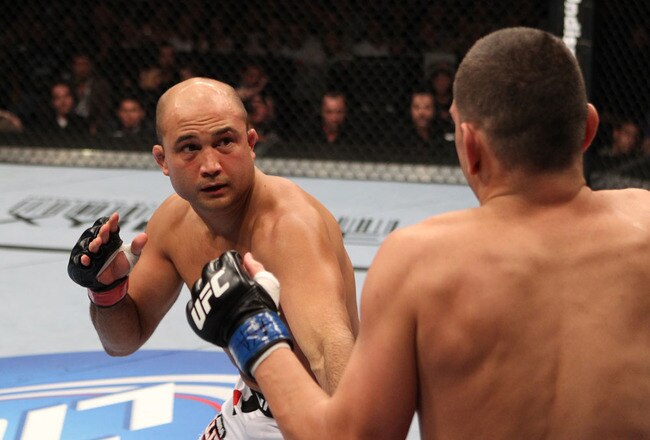
BJ Penn: From Prodigy to Pariah – A Cautionary Tale.
Alright, friends, buckle up because we're about to dive into the rollercoaster career of one of the most fascinating and, let's be honest, controversial figures in mixed martial arts history: BJ Penn. This isn't just another sports biography; it's a Shakespearean tragedy played out in the octagon, a tale of unbelievable talent, unmatched heart, and a decline that was as painful to watch as it was baffling. The story of BJ Penn is one of those sports stories that transcend the sport itself. It's about potential, legacy, and the dangers of not knowing when to hang up the gloves.
Remember those days when you werecompletelyobsessed with something? Like, you ate, slept, and breathed it? Maybe it was skateboarding, learning to code, or perfecting your sourdough starter (hey, no judgment!). Now imagine you wereactuallygood at it. Like,world-class good. That's where BJ Penn comes in. He wasn't just good at jiu-jitsu; he was a prodigy, a phenom who could tie seasoned black belts into knots before they even knew what hit them. He was the kind of guy thatinstantlychanged the game of Brazilian Jiu-Jitsu. The Prodigy.But here's the thing about prodigies:the pressure is immense. The expectations are crushing. And sometimes, that incredible initial burst of talent can't sustain a long and grueling career, especially in a sport as brutal as MMA. It's one thing to start strong, but it's another thing entirely to adapt, evolve, and stay on top when everyone is gunning for you.
Think about that one friend who peaked in high school. They were the star quarterback, the valedictorian, the prom king/queen. But then life happened. They didn't quite live up to the hype, and now they're stuck reminiscing about the "good old days." That’s a bit like the latter part of BJ Penn's career, only on amuchlarger,muchmore public scale. The world watched as the legend faded, as the losses piled up, and as the aura of invincibility completely disappeared.
BJ Penn's story is so captivating precisely because it highlights the contrast betweenunrealpotential andharshreality. He achieved incredible things, becoming one of the few fighters to win UFC titles in two different weight classes. He faced some of the toughest opponents the sport has ever seen, and he often did it with a swagger and a confidence that were infectious.
But the later years? Oof. They were tough to watch. And they raise a lot of questions: What went wrong? Was it the wear and tear of years of fighting? Was it a lack of adaptation to the evolving landscape of MMA? Or was it something deeper, something more personal? The answer is likely a complex combination of factors, but the end result was undeniable: a once-dominant champion struggling to compete, and ultimately, tarnishing his legacy.
This isn't just a highlight reel of knockouts and submissions. This is a story about the complexities of a combat sports career, the burden of expectations, and the sometimes tragic consequences of pushing too far. This is the story of BJ Penn: the rise, the reign, and the fall. Are you ready to delve into the intricate details of his journey? Let's explore what makes his story so compelling, and how it serves as a cautionary tale for every aspiring fighter and athlete. Get ready to explore the highsandlowsof a true legend.
The Early Years: A Jiu-Jitsu Prodigy is Born
BJ Penn's journey to MMA stardom wasn't your typical hard-knock story of overcoming adversity. He wasn't raised in a rough neighborhood, grinding his way to the top. No, Penn's background was decidedly more privileged. Born into a wealthy family in Hawaii, he had access to opportunities that many aspiring fighters could only dream of. But what set him apart wasn't his upbringing; it was hisnaturaltalent and hisunquenchablethirst for knowledge.
His introduction to Brazilian Jiu-Jitsu was almost accidental. Looking to learn self-defense after getting into a few street fights, Penn walked into Ralph Gracie's jiu-jitsu academy and was immediately hooked. It was like he'd found his calling, his purpose. He absorbed the techniques like a sponge, and his natural athleticism and intelligence allowed him to master the art at anastonishingpace.
Within a few short years, Penn was tearing through the competition. He became the first American to win a gold medal in the black belt division of the World Jiu-Jitsu Championship in 2000, a feat that cemented his status as abona fideprodigy. This victory wasn't just a personal achievement; it was a watershed moment for American jiu-jitsu, proving that the United States could compete with the Brazilians on their own turf.
This early success wasn't just about trophies and accolades. It was about building a foundation of confidence and skill that would serve him well as he transitioned into the world of mixed martial arts. He wasn't just a jiu-jitsu guy; he wassomethingspecial. He wasn't justgoodat jiu-jitsu; he wasexceptional. He had a naturalunderstandingandfeelfor the art that allowed him to innovate and adapt in ways that few others could. He showed he wasreadyfor the world of MMA.
UFC Debut and Rapid Ascent
Penn's transition to MMA was as seamless as you could possibly imagine. He made his UFC debut in 2001, quickly dispatching his opponents with a combination ofslicksubmissions andsurprisinglyeffective striking. Remember, this was an era when many MMA fighters were specialists, either wrestlers, strikers, or grapplers. Penn was one of the first to truly blend these disciplines, showcasing awell-roundedskill set that was ahead of its time. Heexcelledin the UFC.
His early fights wereelectrifying. He moved with afluidityandgracethat was rare in the sport. He wasn't just beating his opponents; he wasoutclassingthem. He submitted Din Thomas with a brutal armbar, displayedimpressivestriking against Paul Creighton, and even went to a draw with Caol Uno in a fight for the vacant UFC Lightweight Championship.
This initial run in the UFC established Penn as alegitimatecontender and amajordraw. Fans were drawn to hisexcitingfighting style and hisconfidentpersona. He wasn't afraid to take risks, and he always came to fight. He was abreath of fresh airin a sport that was still finding its identity. His arrival signified anew chapterin UFC history.
Penn's success wasn't just due to his skills inside the octagon. He also had acharismathat resonated with fans. He wasarticulate, intelligent, and he had agenuinepassion for the sport. He wasn't just a fighter; he was anambassadorfor MMA, helping to bring it to a wider audience. Hisuniquestyle helped his quickriseto the top.
Title Wins and Champion Status
The pinnacle of BJ Penn's career undoubtedly came with his two UFC title reigns. He first captured the UFC Welterweight Championship in 2004, defeating Matt Hughes in astunningupset. Hughes, at the time, was considered virtuallyunbeatable, a dominant force in the division. But Pennshockedthe world by knocking him out in the first round, proving that his skills weretransferableto a higher weight class.
This victory wasmonumental. It wasn't just about winning a title; it was aboutovercominga perceived obstacle andprovinghis doubters wrong. He proved that he was atruechampion. However, his first reign was short-lived. A contract dispute with the UFC led to him being stripped of the title, a move thatfrustratedfans anddelayedhis return to the organization.
But Penn wasn't one to be deterred. He continued to compete in other organizations, honing his skills and waiting for his chance to return to the UFC. And when he did, he made sure to make it count. In 2008, he defeated Joe Stevenson to win the UFC Lightweight Championship, becoming only the second fighter in UFC history to win titles in two different weight classes. The first? Randy Couture. Winning this second titlesolidifiedhis legacy and cemented his place among thegreatestof all time. This title win was atestamentto his dedication and skill.
Penn's second title reign wasimpressive. He defended the lightweight belt three times, defeating Sean Sherk, Kenny Florian, and Diego Sanchez. These weretoughfights, againstskilledopponents, but Penndominated, showcasing hisversatilityandring IQ. He was at thepeakof his powers, acompletefighter who could beat you anywhere the fight went. He was alegendin the making.
The Decline: Losses and Controversies
Sadly, every story has its downturn, and BJ Penn's is no exception. After adominantrun as lightweight champion, his career began to decline. Adevastatingloss to Frankie Edgar in 2010 marked the beginning of a downward spiral that would ultimately tarnish his legacy. Edgar, atoughanddeterminedfighter, exposed somevulnerabilitiesin Penn's game, vulnerabilities that other fighters would later exploit.
This loss seemed toshake Penn's confidence. He wasn't the same fighter he once was. Theexplosiveness, theprecision, theauraof invincibility, it was all gone. He began to rely more on his toughness and his heart, but those qualities alone weren't enough to overcome his declining physical abilities.
His subsequent fights were amixed bag. He had a fewbriefflashes of his former self, but they were overshadowed by a series oflossesandcontroversies. He fought Nick Diaz in agruelingbattle, but ultimately lost a decision. He then fought Rory Mac Donald, and he lost by unanimous decision. His performance was lackluster, and it was clear that he was no longer the fighter he once was. Outside the ring, he faced legal troubles and personal issues that further compounded his problems. Hislegacywas in danger.
Themost painfulpart of this decline was watching alegendstruggle to compete. Penn wasn't just losing fights; he was gettingdominated. He seemed to be fighting more out of pride than out of a genuine desire to compete. It was asadsight to see, and it raised questions about whether he should have retired sooner. The decline was adifficultchapter in his career.
Legacy and Impact on MMA
Despite thedisappointingend to his career, BJ Penn's legacy in MMA remainsundeniable. He was apioneer, atrailblazer, and aniconof the sport. He helped to popularize MMA around the world, and he inspired a generation of fighters to pursue their dreams. Theimpacthe made wasremarkable.
Histwo-divisiontitle wins are a testament to hisversatilityand hisskill. He proved that a smaller fighter could compete with the bigger guys, and he paved the way for other lightweight fighters to move up in weight and achieve success. Heinspiredmany fighters with his accomplishments.
But perhaps hisgreatestcontribution to MMA was hisunwaveringspirit. He never backed down from a challenge, and he always gave it his all, win or lose. He was atruewarrior, and he embodied thevaluesof courage, determination, and respect. He was arole modelfor many aspiring fighters.
However, thestainsof his later career cannot be ignored. The losses, the controversies, the legal troubles, they all cast ashadowover his accomplishments. It's acomplexlegacy, one that is both celebrated and criticized. Despite thecontroversy, his impact on MMA issignificant.
Ultimately, BJ Penn's story is acautionary taleabout the dangers of pushing too far. It's a reminder that even the greatest athletes eventually decline, and that sometimes thesmartestthing to do is to walk away. But it's also a story about thepowerof talent, theimportanceof perseverance, and theenduringlegacy of a true champion. His career is areminderof the highs and lows of MMA.
BJ Penn's story remains one of the mostcompellingandcomplexnarratives in MMA history. Hisrisewasmeteoric, hisreignwasdominant, and hisfallwastragic. His legacy will continue to be debated for years to come, but one thing is certain: he will always be remembered as one of thegreatestand mostinfluentialfighters of all time. His story serves as alessonfor future generations of fighters.
Moving Forward: Life After Fighting
BJ Penn's life after fighting has been anything but quiet. While some athletes seamlessly transition into retirement, finding fulfillment in coaching, broadcasting, or business ventures, Penn's post-fighting journey has been marked by continued controversy and personal struggles.Unfortunately, this adds another layer of complexity to his already complicated legacy.
He has faced legal issues, including arrests for assault and driving under the influence. These incidents have raised concerns about his well-being and have further damaged his public image. It's asadreality that many athletes struggle with the transition to civilian life, and Penn's story is a stark reminder of the challenges they face.
There have been attempts at redemption, including efforts to get his life back on track and address his personal issues. However, these efforts have been met withmixedresults. It's clear that Penn is still struggling to find his place in the world after fighting, and it remains to be seen whether he can turn his life around.
It's important to remember that BJ Penn is more than just a fighter. He's a human being with flaws and vulnerabilities, just like the rest of us. While it's easy to judge him based on his mistakes, it's also important to show compassion and understanding. Hopefully, he can find peace and happiness in his life after fighting. It isimperativefor him to find stability and direction.
His story serves as a reminder that fame and fortune don't guarantee happiness, and that even the greatest athletes can struggle with personal demons.Hopefullytime will help him recover. It isvitalfor him to receive help and support.
The Final Bell: Reflecting on a Legend
So, friends, we've reached the final bell. We've journeyed through the dizzying highs and crushing lows of BJ Penn's career, from his prodigious beginnings to his controversial end. What's the takeaway? What lessons can we learn from this complicated story?
The first takeaway is theimportanceof knowing when to walk away. Penn's later career was a cautionary tale about the dangers of clinging to the past and refusing to accept the inevitable decline. It's a lesson that applies not just to athletes, but to all of us. Sometimes, thebravestthing we can do is to let go and move on.
The second takeaway is thepowerof potential. Penn's early success was a testament to his natural talent and his unwavering dedication. He showed us what's possible when we combine passion with hard work. His example caninspireus to pursue our own dreams, no matter how ambitious they may seem. His story is a testament todedication.
The third takeaway is thecomplexityof legacy. Penn's legacy is not a simple one. It's a mixture of triumph and tragedy, of brilliance and disappointment. It's a reminder that our actions have consequences, and that our reputations can be shaped by both our successes and our failures. His legacy is acomplex mixof good and bad.
BJ Penn's story is apowerfulreminder of thehumanityof athletes. They're not just machines or entertainers; they're people with hopes, dreams, and flaws. Their stories canteachus about ourselves, about thenatureof success and failure, and about thechallengesof life. His legacy willlive onas areminderof these important lessons.
What is left after all of the success, controversy, and losses is one simple fact: BJ Penn was atrue legend. So friends, please take the time to share this article with other MMA fans and let's discuss the mark this UFC champion left in the world. What moment defines BJ Penn for you?

Post a Comment for "BJ Penn: The Rise and Fall of a UFC Champion"
Post a Comment